


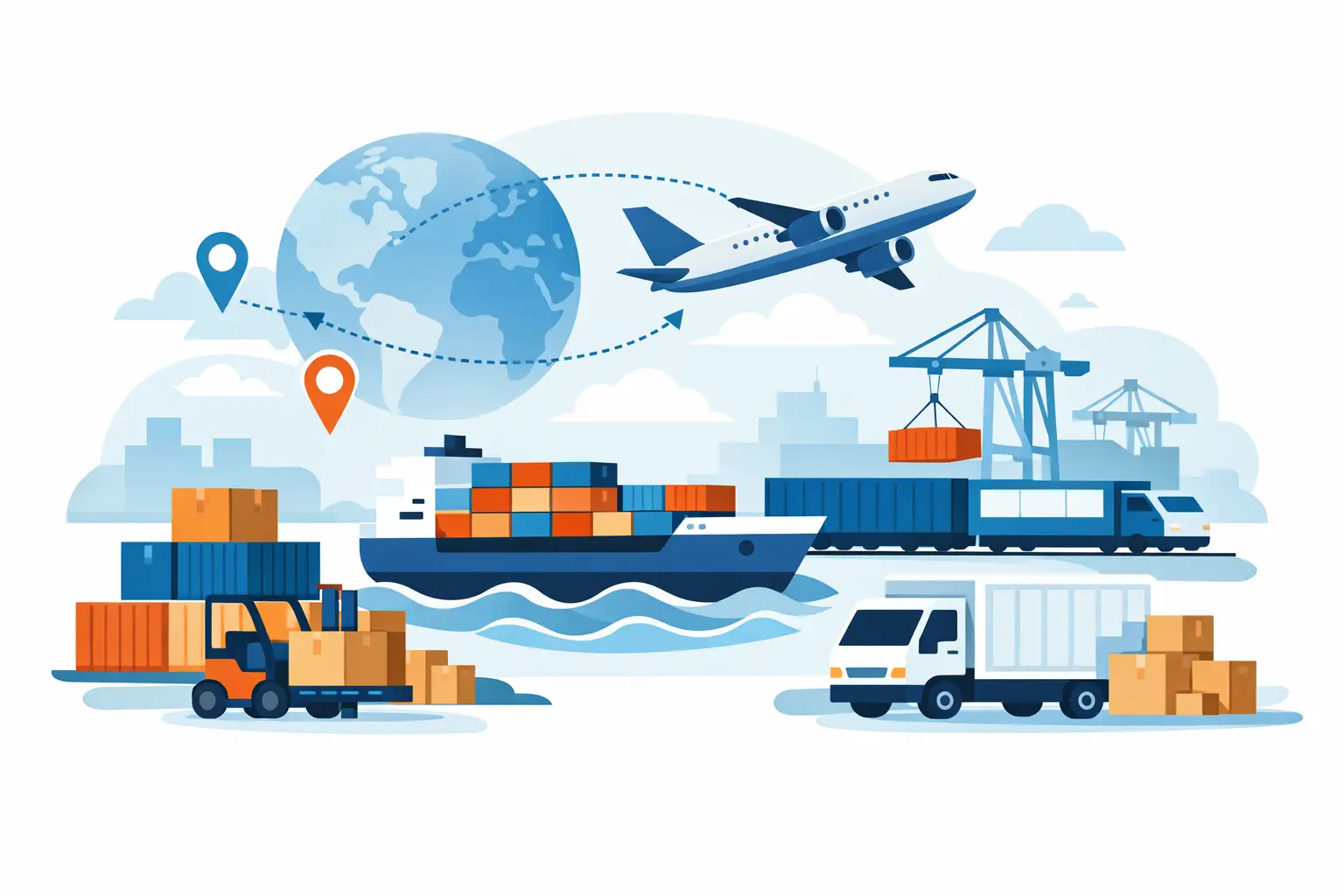
What Is Freight Forwarding?
A late shipment rarely fails for just one reason. It is usually a chain of issues – missed documents, poor routing, customs delays, limited carrier space, or weak coordination between warehouses, transport providers, and consignees. That is why businesses ask, what is freight forwarding, and why does it matter so much in daily operations? The short answer is that freight forwarding is the management of cargo movement from origin to destination through a coordinated shipping process.
For businesses moving goods across borders or across multiple transport modes, freight forwarding is less about booking space and more about control. A freight forwarder organizes the shipment, aligns carriers, manages paperwork, supports customs processes, and keeps cargo moving with fewer disruptions. If your business depends on inventory availability, delivery commitments, or import compliance, freight forwarding sits close to the center of that performance.
What Is Freight Forwarding in Practical Terms?
Freight forwarding is a logistics service that arranges and manages the transportation of goods on behalf of a shipper. The forwarder does not always move the cargo with its own planes, trucks, or vessels. Instead, it acts as the operational coordinator that builds the shipment plan and oversees execution.
In practical terms, that can include choosing the best route, booking air or ocean space, preparing shipping documents, arranging pickup, coordinating warehousing, supporting customs clearance, and monitoring the shipment until final delivery. For many businesses, the value is not in one single task. It is in having one accountable operator managing multiple moving parts.
This is especially relevant when shipments cross borders, involve time-sensitive inventory, or require storage and final-mile delivery as part of the same process. A forwarder helps reduce friction between each stage so the cargo does not stall between handoffs.
What a Freight Forwarder Actually Does
A freight forwarder manages the shipment lifecycle. That starts before cargo leaves the shipper’s facility and often continues until delivery is completed and documents are closed out.
At the planning stage, the forwarder reviews the shipment requirements. Weight, dimensions, commodity type, urgency, destination, and compliance requirements all influence the transport plan. Air freight may be appropriate for speed, while ocean freight may offer better cost efficiency for heavier or less urgent cargo. Land transport may be used for regional movement or as part of a multimodal route.
Once the plan is set, the forwarder secures capacity with carriers and prepares the documents needed for movement. Depending on the shipment, that may include commercial invoices, packing lists, transport documents, certificates, customs declarations, and other supporting paperwork. Accuracy matters here. Documentation errors can lead to storage charges, inspection delays, or shipment holds.
The forwarder also coordinates with customs brokers, warehouses, transport providers, and consignees. That coordination becomes more valuable as complexity increases. A straightforward shipment may need only pickup and delivery. A more demanding one may require temporary storage, customs clearance, inspection handling, relabeling, or split distribution to multiple locations.
How Freight Forwarding Differs From Courier or Basic Shipping
Many businesses first encounter international shipping through courier services. That works well for parcels and smaller consignments. Freight forwarding is different because it is built for larger, more complex, or more operationally sensitive cargo.
A courier usually offers a standardized service. Freight forwarding is more flexible and more involved. It can combine air, sea, and land transport, support commercial documentation, and integrate services such as warehousing, palletization, customs handling, and distribution. The more moving parts your shipment has, the more relevant freight forwarding becomes.
This distinction matters for importers, wholesalers, retailers, project cargo operators, and e-commerce businesses that need ongoing shipping support rather than one-off delivery. Freight forwarding is not just transport. It is shipment management.
Why Businesses Use Freight Forwarding
The main reason businesses use freight forwarding is operational reliability. Internal teams often do not have the time or specialized knowledge to manage every carrier booking, customs requirement, routing decision, and delivery milestone themselves. A freight forwarder closes that gap.
Cost control is another factor, but it should be viewed realistically. A forwarder does not automatically make every shipment cheaper. In some cases, the fastest or most secure option costs more. The real advantage is better decision-making. Businesses can choose between speed, price, and service level with clearer visibility into the trade-offs.
Freight forwarding also helps reduce risk. Compliance mistakes, poor packaging decisions, and weak coordination can create delays that cost far more than the transport charge itself. For businesses handling frequent imports or exports, a structured forwarding process supports continuity and improves predictability.
What Is Freight Forwarding for Importers and Exporters?
For importers, freight forwarding helps ensure cargo leaves the supplier correctly, arrives with the right documentation, clears customs, and reaches the warehouse or delivery point on schedule. That is critical when inventory is tied to sales cycles, production planning, or contractual delivery dates.
For exporters, freight forwarding supports outbound planning, document preparation, carrier booking, and destination coordination. Export shipments often depend on timing, especially when buyers expect fixed delivery windows or when goods are moving into regulated markets.
In both cases, the forwarder helps connect commercial requirements with transport execution. That includes practical decisions such as whether to consolidate cargo, whether to store goods before distribution, and whether a direct route is worth the additional cost.
The Core Modes in Freight Forwarding
Air freight is used when speed matters most. It suits high-value cargo, urgent replenishment, time-sensitive documents, electronics, healthcare products, and other shipments where delays can interrupt operations. The trade-off is cost. Air freight is usually more expensive than sea freight, so it works best when urgency justifies the rate.
Sea freight is often the preferred option for larger volumes and more cost-sensitive cargo. It supports containerized shipments and bulk international trade, but transit times are longer and schedules can be affected by port congestion, equipment availability, and transshipment delays. Businesses using sea freight need stronger planning discipline.
Land freight plays a major role in regional distribution and cross-border GCC movements. It is often part of a broader forwarding plan, connecting ports, airports, warehouses, and final delivery destinations. For some businesses, road transport is the primary mode. For others, it is the link that completes the shipment.
Customs and Documentation Are Central to the Job
Freight forwarding is often misunderstood as a transport-only service, but customs and documentation are central to performance. A shipment can be physically ready to move and still fail because the paperwork is incomplete or incorrect.
That is why experienced forwarders focus heavily on classification, invoice accuracy, consignee details, packaging data, and compliance requirements. Customs handling is not identical in every market, and shipment requirements vary by commodity and destination. A standard commercial shipment and a regulated cargo movement do not follow the same path.
For businesses shipping regularly, this is where a dependable logistics partner becomes especially valuable. Good execution at the documentation stage prevents avoidable delays later.
When Freight Forwarding Becomes More Valuable
Freight forwarding becomes more valuable as shipment complexity increases. If your business manages recurring imports, seasonal peaks, urgent replenishment, multiple suppliers, or cross-border distribution, the need for coordination grows quickly.
It also becomes more relevant when storage, domestic delivery, and visibility matter as much as the international movement itself. Many businesses do not just need cargo transported. They need it received, cleared, stored, tracked, and distributed without losing control between stages. That is where an integrated provider can create real operational stability.
For companies in Kuwait and the GCC, this is often a practical issue rather than a strategic theory. Regional shipping can involve tight delivery schedules, customs timing, temperature concerns, retail launch dates, and warehouse capacity planning. Freight forwarding helps align those pieces into one managed flow.
Choosing the Right Freight Forwarding Partner
Not every freight forwarder offers the same level of service. Some focus mainly on bookings. Others provide deeper control across transport, warehousing, customs, and delivery. The right choice depends on your volume, urgency, cargo profile, and how much accountability you need from one provider.
A strong freight forwarding partner should offer clear communication, shipment visibility, operational follow-through, and the ability to manage exceptions when the plan changes. Because it will. Weather, capacity constraints, customs queries, and supplier delays are part of logistics. The difference is how quickly those issues are identified and resolved.
For businesses that cannot afford disruption, freight forwarding should be evaluated as part of business continuity, not just as a shipping expense. That is why many shippers prefer working with operators that can support end-to-end execution under one structure, as K-Line does across freight, warehousing, customs, and delivery.
Freight forwarding is ultimately about keeping cargo moving with control, accuracy, and accountability. If your shipments affect inventory, sales, production, or customer commitments, that kind of coordination is not optional. It is what keeps operations on track when the shipping environment is anything but simple.