


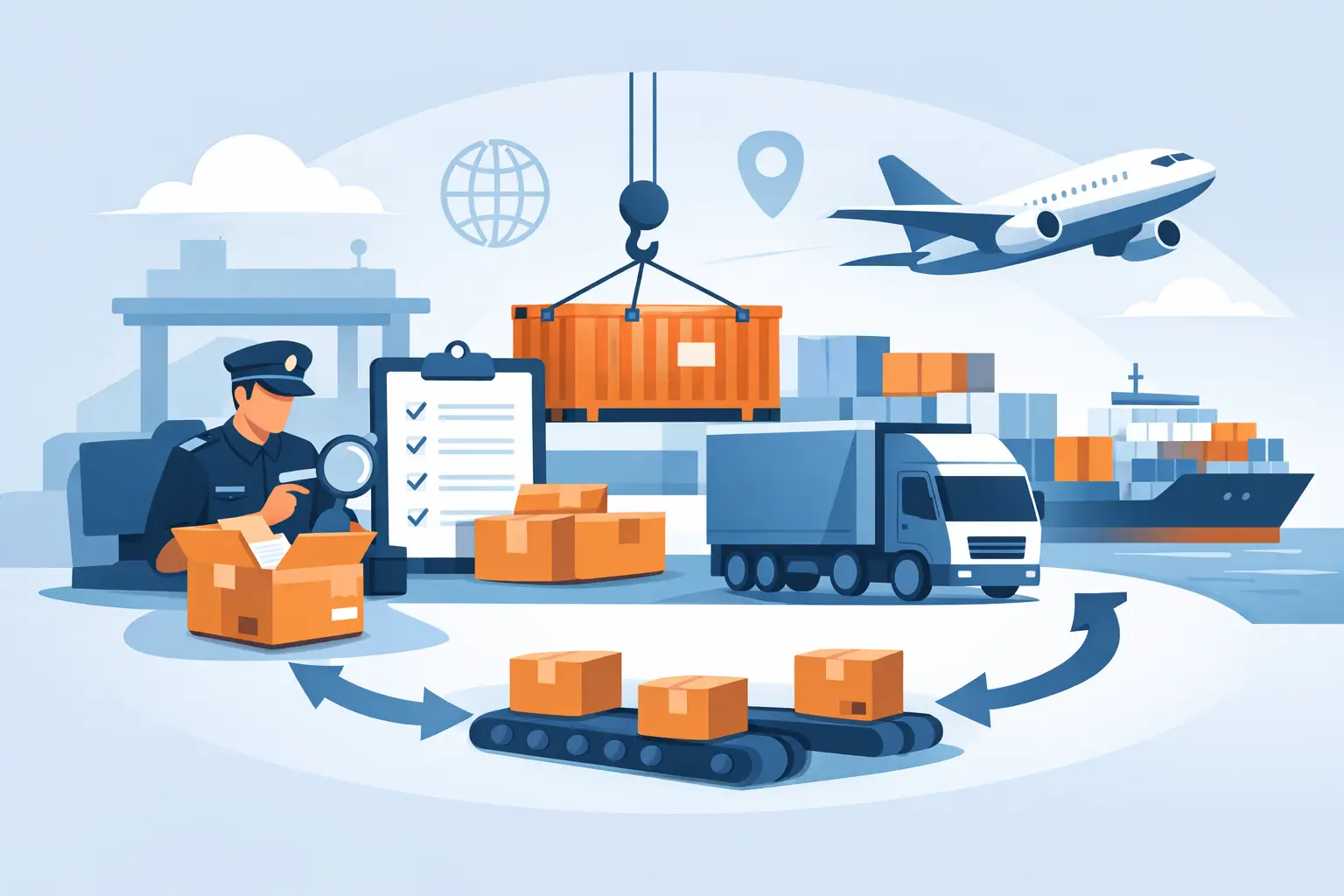
How Customs Clearance Works in Practice
A shipment can move on schedule for days, then lose critical time at the border over one missing code, one valuation mismatch, or one document that does not match the cargo. That is why understanding how customs clearance works matters for any business shipping across borders. Customs is not just a checkpoint. It is a formal control process that affects lead times, landed cost, inventory availability, and customer commitments.
For importers, exporters, and supply chain teams, customs clearance is where compliance and operations meet. If the paperwork is accurate, the goods are properly classified, and the shipment aligns with local regulations, cargo moves. If not, delays, inspections, storage charges, and penalties can follow. The process is manageable, but it rewards preparation.
What customs clearance actually means
Customs clearance is the process of obtaining approval from the customs authority for goods to enter or leave a country. The authority reviews the shipment details, checks whether duties and taxes apply, confirms compliance with import or export rules, and decides whether the cargo can be released.
In practical terms, customs wants answers to a few basic questions. What is the product? Where did it come from? What is it worth? Who is buying it or selling it? Does it require any permits, certificates, or restrictions? Those answers come from the shipping documents and the customs declaration.
This is why customs clearance is not a single event. It is a chain of checks that starts before the cargo arrives and often continues until the shipment is formally released.
How customs clearance works step by step
The exact sequence varies by country, transport mode, and commodity, but the operating logic is broadly consistent.
1. Document preparation starts before arrival
The process usually begins with collecting and reviewing the commercial invoice, packing list, transport document, and any supporting certificates or permits. Depending on the cargo, that could include a certificate of origin, product registration, conformity certificate, import license, or special approvals for regulated goods.
At this stage, accuracy matters more than speed. Product descriptions should be specific, declared values should match the transaction, and quantities, weights, and package counts should be consistent across all documents. Even small discrepancies can trigger questions later.
2. Goods are classified for customs purposes
Each product is assigned a tariff classification code, often referred to as an HS code. This code determines how customs identifies the goods and often affects duty rates, taxes, restrictions, and documentation requirements.
Classification is one of the most sensitive parts of the process. A generic or incorrect code can lead to underpayment, overpayment, or a compliance issue. Some products also sit in gray areas, where the correct code depends on material, use, composition, or degree of processing. That is why experienced review is valuable, especially for mixed shipments or technical items.
3. Customs value is declared
Customs authorities also assess the value of the shipment. This is typically based on the transaction value, but the exact calculation can depend on local rules, including freight, insurance, assists, royalties, or other additions.
If the declared value appears unusually low or does not align with the supporting documents, customs may request clarification. That can delay release while the importer provides backup information. For businesses managing frequent shipments, a consistent valuation method helps reduce avoidable questions.
4. The customs declaration is submitted
Once the shipment data is ready, the importer, exporter, or appointed customs broker files a customs declaration. In many markets this is done electronically through a customs portal or authorized system.
This declaration combines the key shipment data: shipper and consignee details, product descriptions, quantity, value, country of origin, tariff code, and applicable permits. Customs uses this filing to assess risk, calculate charges, and determine whether the shipment can be cleared directly or needs further review.
5. Duties, taxes, and fees are assessed
After review, customs calculates any applicable duties, taxes, and processing fees. The amount depends on the country, commodity, origin, and the declared customs value. Some shipments qualify for exemptions or preferential rates under trade agreements, but only if the documentation supports that treatment.
This is where planning affects cost control. Incorrect classification or missing origin documents can increase landed cost. On the other hand, trying to force a lower-duty position without proper basis creates a much bigger risk.
6. Customs may inspect or hold the cargo
Not every shipment is physically inspected. Many are cleared based on the declaration and supporting documents. But customs can still select cargo for inspection based on risk profiles, commodity type, origin, random selection, or inconsistencies in the filing.
An inspection does not always mean there is a problem. It means customs wants to verify the cargo. Still, it adds time. If the inspection reveals undeclared goods, valuation issues, or restricted items, the delay can become more serious.
7. Cargo is released for delivery or onward movement
If customs is satisfied and all charges are paid, the shipment is released. At that point it can move to final delivery, warehouse intake, distribution, or export loading depending on the shipment type.
For businesses, release is the moment that matters operationally. Inventory becomes available, production schedules stay on track, and customer orders can be fulfilled. That is why customs should be treated as part of supply chain planning, not just paperwork at the border.
The documents that usually drive clearance
Most customs files rely on the same core set of documents. The commercial invoice establishes the transaction and declared value. The packing list confirms how the cargo is packed, counted, and weighed. The bill of lading or air waybill ties the goods to the transport movement. Certificates of origin may affect duty treatment, while licenses or permits may be mandatory for controlled products.
What matters is not just having these documents, but having them align. If the invoice says one thing and the packing list says another, customs will notice. If the origin declaration conflicts with the actual sourcing, that can create a larger compliance issue than a simple delay.
Why customs delays happen
Most delays come from preventable causes. The common ones are incomplete paperwork, vague product descriptions, missing permits, classification errors, valuation concerns, and consignee details that do not match registration records.
There are also delays that sit outside the importer’s direct control. Peak season congestion, regulatory changes, system outages, port backlogs, and increased inspection activity can all slow release. That is the trade-off with international shipping. Even well-prepared cargo moves through an environment that can change quickly.
The practical response is not to expect zero risk. It is to build enough document control, lead time, and communication into the process that a routine customs query does not disrupt the whole business.
How customs clearance works for different shipment types
Air freight usually moves faster, but customs timelines still depend on document readiness and commodity risk. Sea freight allows more transit time to prepare, yet it can generate higher storage and demurrage exposure if customs release is delayed. Land freight across regional borders may involve repeated document checks and country-specific requirements that demand close coordination.
The type of cargo matters too. Consumer goods, electronics, cosmetics, food items, chemicals, and industrial equipment often carry different compliance expectations. A low-risk shipment of standard packaged goods does not face the same scrutiny as regulated products or high-value technical items. That is why there is no single clearance timeline that fits every shipment.
How businesses can reduce customs risk
The most effective approach is operational discipline. Keep product data standardized. Use clear and consistent descriptions. Confirm tariff classifications before goods ship, not after they arrive. Make sure invoices reflect the actual transaction. Validate origin claims. And keep permits current for regulated categories.
It also helps to work with one accountable logistics partner that can coordinate freight, warehousing, customs handling, and delivery as a connected process. When the transport side and customs side are operating from the same shipment data, it is easier to catch issues early and respond quickly if customs raises a question. For businesses moving frequent or time-sensitive cargo, that control matters.
What importers should expect from a customs partner
A reliable customs process is not built on speed alone. It depends on review, accuracy, and visibility. Businesses should expect clear document checks before filing, practical guidance on classification and requirements, timely notice of holds or inspections, and straightforward communication on duty exposure and release status.
That level of support is especially important when shipments affect store replenishment, e-commerce fulfillment, project deadlines, or production continuity. In those situations, customs is not just an administrative function. It is part of service performance.
Customs clearance works best when it is treated as a controlled process, not a last-minute task. The border rewards preparation. If your shipment data is accurate, your documents are aligned, and your compliance requirements are handled early, customs becomes far more predictable – and your supply chain stays easier to manage.