


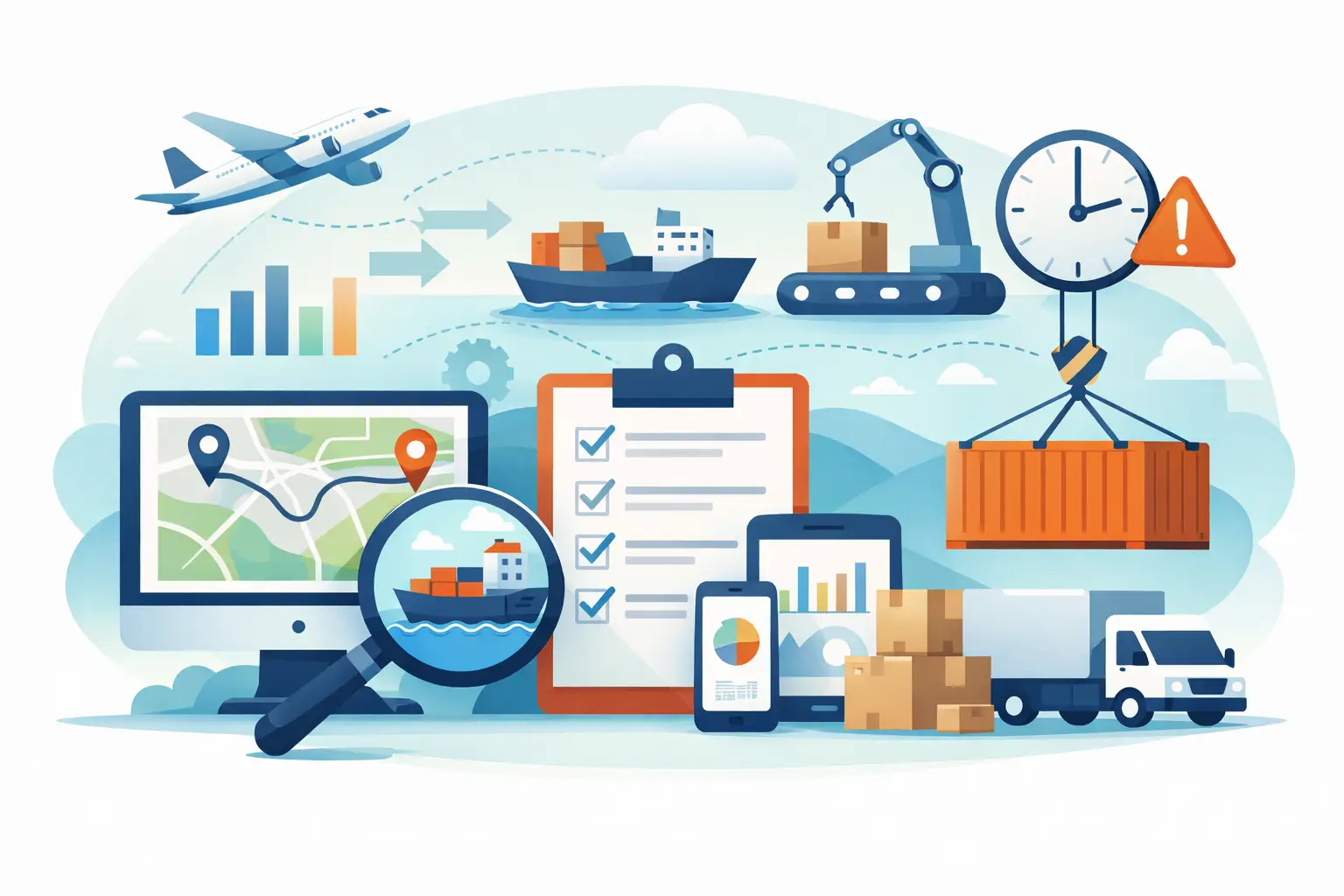
How Supply Chain Visibility Tools Prevent Delays
A shipment can be technically in transit and still create a major operational problem. If a retailer does not know a container is held for documentation, or an e-commerce team cannot see that orders missed a warehouse cutoff, they cannot notify customers, adjust inventory, or protect the next delivery window. Supply chain visibility tools turn those unknowns into actions.
For businesses moving cargo through Kuwait and across the GCC, visibility is not simply a tracking screen. It is the ability to see where freight is, understand what is affecting it, and assign responsibility before a small exception becomes a missed delivery, stockout, or customer escalation.
What supply chain visibility tools should provide
Basic tracking answers one question: where is the shipment? A useful visibility system answers the next questions as well: Has it cleared customs? Is it moving according to plan? Is the delivery appointment still achievable? Which orders or customers are affected if it is not?
The right supply chain visibility tools bring shipment data together across air freight, sea freight, land transport, warehouses, customs clearance, and final-mile delivery. They provide a common operating view for the teams responsible for purchasing, logistics, customer service, and fulfillment.
For a business importing products into Kuwait, that may mean following a shipment from origin pickup through international departure, port or airport arrival, customs processing, warehouse receiving, and domestic delivery. For a GCC distributor, it may also include border movements, cross-docking activity, proof of delivery, and returns.
Visibility must be timely enough to support decisions. A status update received after a truck has already missed its delivery slot has limited value. Operations teams need exception alerts early enough to reschedule transport, prepare documents, contact a consignee, or redirect stock from another location.
Why visibility matters beyond shipment tracking
The cost of poor visibility is usually felt before it is measured. A buyer orders more stock because inbound inventory is uncertain. A warehouse team prepares for goods that do not arrive. A sales team promises availability based on outdated information. Each department responds to incomplete data, and the business absorbs avoidable cost and pressure.
Better visibility creates operational control in several areas.
Earlier exception management
Delays are part of logistics. Weather disruptions, port congestion, documentation gaps, vehicle breakdowns, border requirements, and capacity constraints can all affect a shipment. The difference is whether the delay is identified early and handled by a responsible team.
An effective system flags changes against the planned milestone, not just the last recorded location. If a shipment is expected at a warehouse on Tuesday but has not cleared customs by Monday afternoon, the issue should be visible immediately. The team can then review the cause, confirm required documents, and set a realistic revised plan.
More accurate inventory decisions
Inventory planning depends on reliable arrival dates. When inbound freight status is unclear, companies often keep excess stock or make rushed replenishment decisions. Both can reduce margin.
Visibility allows procurement and warehouse teams to distinguish between inventory that is available, inventory that is confirmed inbound, and inventory that is at risk. This is especially useful for FMCG businesses, retailers, and industrial suppliers managing fast-moving or project-critical products.
Better customer communication
Customers do not expect every shipment to be perfect. They do expect accurate information when a delivery changes. A business that can provide a confirmed status and revised delivery plan protects trust far better than one that says it is still checking.
For e-commerce operations, visibility also supports proactive notifications, delivery coordination, and faster responses to customer inquiries. For B2B shipments, it helps receivers plan labor, storage space, and site access around realistic arrival times.
Clearer performance accountability
A single shipment may involve carriers, agents, customs brokers, warehouses, and delivery providers. Without shared milestones, it becomes difficult to identify where time was lost or who needs to act.
Visibility creates an audit trail across the movement. Over time, that data helps businesses review carrier performance, customs clearance lead times, warehouse receiving delays, and delivery success rates. It replaces assumptions with measurable operational facts.
The features that matter most
Not every company needs a complex control tower. A growing online retailer may need clear order and delivery status, while a large importer may require multi-country freight milestones, customs documentation control, and detailed reporting. The right level depends on shipment volume, transport modes, customer commitments, and internal processes.
However, several capabilities consistently deliver value:
- End-to-end milestones: Visibility should cover pickup, departure, arrival, customs status, warehouse receipt, dispatch, and proof of delivery rather than only one part of the journey.
- Exception alerts: The system should identify late movements, missed milestones, incomplete documentation, failed delivery attempts, and other conditions requiring action.
- Centralized shipment records: Teams need one reliable reference for shipment details, documents, contact information, and current status.
- Reporting and performance data: Historical data should show where delays occur, how long each stage takes, and whether service providers meet agreed expectations.
- Integration capability: Visibility is stronger when freight data connects with warehouse, order management, inventory, or customer service processes.
Data quality is as important as the software itself. A platform cannot provide dependable control if milestones are not updated, shipment references do not match, or staff use different processes for the same type of movement. The operational discipline behind the tool determines whether the information can be trusted.
Applying visibility across freight and fulfillment
The value of visibility changes by transport mode. Air freight generally requires close attention to flight schedules, handover points, customs release, and urgent final delivery. Sea freight requires longer-range planning around vessel departures, transshipment, port arrival, container release, and demurrage risk. Land freight across GCC borders requires disciplined document control, route coordination, and status updates at border crossings.
Warehousing adds another layer. Receiving visibility confirms what has physically arrived, what is pending inspection, and what is available for fulfillment. For businesses with frequent order volumes, warehouse and delivery visibility should work together. There is little benefit in knowing inventory is in stock if customer orders are not dispatched or delivery exceptions are not visible.
This is where an integrated logistics provider can reduce handoffs. K-Line combines freight forwarding, customs handling, warehousing, and domestic delivery capabilities so customers can manage more of the shipment lifecycle through one accountable operating partner. That model is particularly practical when an import delay affects warehouse receiving and downstream deliveries at the same time.
How to choose a visibility approach
Start with the operational question that is causing the most disruption. It may be uncertainty around inbound cargo, repeated customs delays, missed delivery appointments, or limited status information for customers. A tool should solve a defined business issue before it adds more data for teams to manage.
Then map the milestones that matter. A sea shipment might require booking confirmation, container gate-in, vessel departure, port arrival, customs clearance, container release, warehouse receipt, and delivery completion. An e-commerce order may need payment confirmation, pick completion, dispatch, out-for-delivery status, proof of delivery, and return status. If the milestones do not match the real workflow, the system will not support useful decisions.
It is also necessary to define ownership. Every exception needs a clear next step and a responsible person. If an alert is sent to a general inbox with no action process, visibility becomes another source of noise. Operations teams should agree on escalation rules, response times, and the information required to close an issue.
Finally, measure results in business terms. Track on-time delivery, customs clearance time, receiving accuracy, order cycle time, customer inquiries, and the number of exceptions resolved before they affect delivery. The goal is not more status updates. The goal is fewer surprises and better control of the work that follows.
A practical visibility process gives your team a clear next action for every shipment that matters. When cargo status, documents, warehouse activity, and delivery commitments are managed from the same operating view, delays can be handled while there is still time to protect the customer promise.