Commercial Invoice Preparation That Clears Customs
A shipment can be packed correctly, collected on time, and booked on the right service, yet still stop at the border because of one incomplete document. Commercial invoice preparation is the control point that connects what was sold, who sold it, what it is worth, and how customs should assess it. For businesses shipping from Kuwait across the GCC or internationally, accuracy here protects delivery schedules, customer commitments, and cash flow.
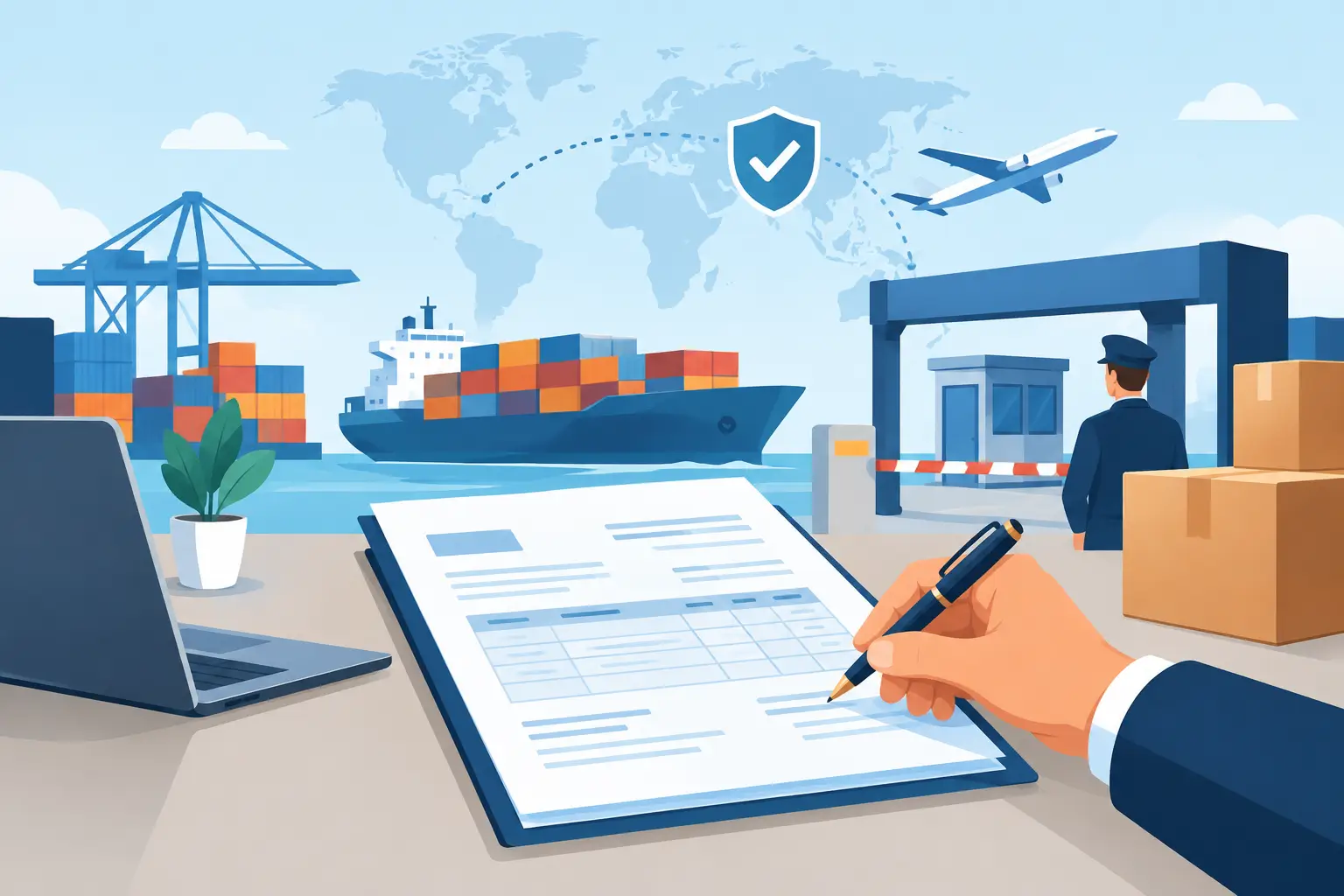
A commercial invoice is more than a request for payment. It is a customs document used to identify the buyer and seller, describe the goods, establish their value, and support the calculation of duties, taxes, and other border requirements. Customs authorities, freight carriers, brokers, and receiving teams may all rely on it. When the information conflicts with the shipment or supporting documents, the result can be a hold, a request for clarification, or a reassessment of charges.
Why Commercial Invoice Preparation Affects Delivery Performance
Customs officials need enough information to determine whether goods can enter a country and what charges apply. A vague description such as “samples,” “parts,” or “merchandise” does not provide that clarity. It may trigger questions about the material, use, quantity, country of origin, or declared value.
For an operations team, the cost is not limited to a delayed carton. A held shipment can affect retail replenishment, project schedules, customer delivery promises, and warehouse capacity. If documents are corrected after departure, the consignee may also receive unexpected duties or clearance requests at the worst possible time.
The strongest commercial invoices are prepared before collection, not assembled after a carrier asks for them. This creates time to confirm product data with procurement, finance, sales, or the warehouse. It also ensures the invoice matches the physical shipment, packing list, purchase order, and transport booking.
There is no single invoice format that solves every shipment. Requirements depend on the destination, commodity, shipment value, Incoterms, and whether the shipment is a sale, repair return, replacement, sample, or transfer between company locations. The principle remains constant: the document must be truthful, specific, and internally consistent.
What a Customs-Ready Commercial Invoice Should Include
Start with the parties involved. State the full legal name, address, contact details, and tax or registration information where applicable for both the exporter and consignee. If a different party will receive the shipment or handle import duties, identify that party clearly. Avoid using informal department names or incomplete delivery addresses when a registered business name is required.
The invoice should have its own number and date, along with the purchase order or reference number where relevant. These references make it easier to reconcile the shipment with the sale, payment records, and customs entry. Reusing an invoice number can create confusion for accounting teams and border authorities, particularly on repeat shipments.
Product descriptions deserve the most attention. Each line item should describe the item in terms a customs officer can understand without internal product knowledge. Include the product name, material or composition when relevant, intended use, model or part number, and quantity. “Men’s cotton knit T-shirt, 100% cotton, adult size” is more useful than “apparel.” “Stainless steel industrial valve for water pipeline control” is clearer than “spare part.”
The invoice must show the quantity and unit of measure for each item, the unit value, line total, currency, and total invoice value. State the reason for export when it is not a normal commercial sale. A no-charge replacement, marketing sample, warranty return, or intercompany transfer may have no selling price, but it still needs a realistic customs value. Declaring a value of zero for goods that have market value can lead to a clearance problem.
Country of origin should be listed for each product line when required. Origin is where the goods were manufactured or substantially transformed, not necessarily where they were shipped from. Goods departing Kuwait may have origins in several different countries, so a generic statement may be inaccurate.
Include the applicable Incoterms rule and named place, such as FCA Kuwait City or DAP Dubai, when used in the transaction. This helps clarify which party bears transportation costs, insurance, import duties, and risk at each stage. An Incoterms term without a named location is incomplete and can cause disputes between buyer, seller, and freight provider.
Depending on the destination and goods, the invoice may also need Harmonized System codes, freight and insurance amounts, package details, export license references, or a signed declaration. These fields should be added because they are required or operationally useful, not copied blindly from an old template.
Invoice Value: Accurate Does Not Always Mean Simple
Declared value is one of the most closely reviewed fields. Customs wants a credible transaction value supported by records. The amount should align with the sales invoice, purchase order, contract, or transfer-pricing documentation where applicable.
Discounts can be declared when they are genuine and documented. However, under-valuation to reduce duties is a compliance risk that can result in reassessment, penalties, delayed releases, and damage to a company’s import record. Over-valuation also creates unnecessary duty exposure and can distort insurance or accounting records.
For free-of-charge items, use a fair market value, manufacturing cost, or another defensible valuation method based on the shipment type and destination rules. Keep the supporting record available. The commercial invoice can explain that the item is a warranty replacement or sample while still showing the value used for customs purposes.
Match the Invoice to the Goods and Other Documents
A commercial invoice should never tell a different story from the packages. If the invoice says 24 units and the packing list shows 20, clearance may pause until the discrepancy is resolved. The same applies to weights, package counts, consignee names, product models, and country-of-origin details.
Before dispatch, compare the invoice against the packing list and physical pick confirmation. Confirm that product descriptions are consistent with any certificates, permits, or labels. For regulated goods, a small wording difference can have a larger effect than expected. Batteries, cosmetics, food products, medical items, chemicals, and controlled industrial equipment often require additional precision.
A Practical Preparation Process for Shipping Teams
Build commercial invoice preparation into the shipment workflow rather than treating it as an administrative task at the end. The following process works well for recurring B2B and e-commerce exports:
- Confirm the buyer, importer of record, delivery address, Incoterms rule, and reason for export before goods are released from inventory.
- Pull product details from a controlled product master, including descriptions, SKUs, origin, units of measure, and HS codes where your business uses them.
- Verify quantities and package counts against the warehouse pick list and packing list.
- Validate pricing, currency, discounts, freight, insurance, and the total declared value with finance or the sales record.
- Review destination-specific requirements with the customs broker or freight forwarder before collection, especially for first-time destinations or regulated products.
- Keep a final version with shipment records so the team can respond quickly if customs requests clarification.
This process is especially useful when several departments contribute data. Sales may own the commercial value, procurement may know the country of origin, the warehouse confirms quantities, and logistics manages carrier documentation. Assigning clear ownership for each field prevents last-minute assumptions.
Common Errors That Cause Avoidable Delays
The most frequent issue is an overly broad item description. Internal SKU names, abbreviations, and product families are efficient inside a company but often meaningless at a border. Translate internal language into a clear commercial description without changing the nature of the goods.
Another common error is showing the wrong currency or failing to identify it. A figure of “5,000” has very different duty implications in U.S. dollars, Kuwaiti dinars, or euros. Similarly, mixing product value with freight charges without making the breakdown clear can complicate valuation.
Teams also overlook who is responsible for duties and taxes. If terms are unclear, the recipient may refuse charges, causing a shipment to wait while parties decide who will pay. Confirm the agreed Incoterms and confirm that the consignee is prepared to act as importer where required.
Finally, do not rely on copied invoices without reviewing the current shipment. Previous templates may contain outdated addresses, discontinued products, old prices, or descriptions that do not apply to the goods being sent. A repeat order still deserves a document check.
When to Involve a Freight Forwarder or Customs Specialist
Routine, low-risk shipments can often follow a controlled internal template. More complex moves need earlier review. Seek specialist input when shipping regulated products, high-value equipment, goods with multiple origins, temporary exports, repairs, returns, or shipments into a new market. The right guidance before dispatch is usually faster and less expensive than correcting a customs entry after arrival.
For businesses managing regular freight, K-Line can coordinate shipping documentation alongside customs clearance and freight movements, giving operations teams a single point of accountability from collection through delivery. The shipper remains responsible for the truth and completeness of commercial data, but experienced logistics support helps identify missing details before they affect transit.
Treat the commercial invoice as part of your shipment’s operating plan, not a form to complete after the cargo is ready. Clear data, defensible values, and a final cross-check give every shipment a stronger start at the border and a better chance of arriving as promised.