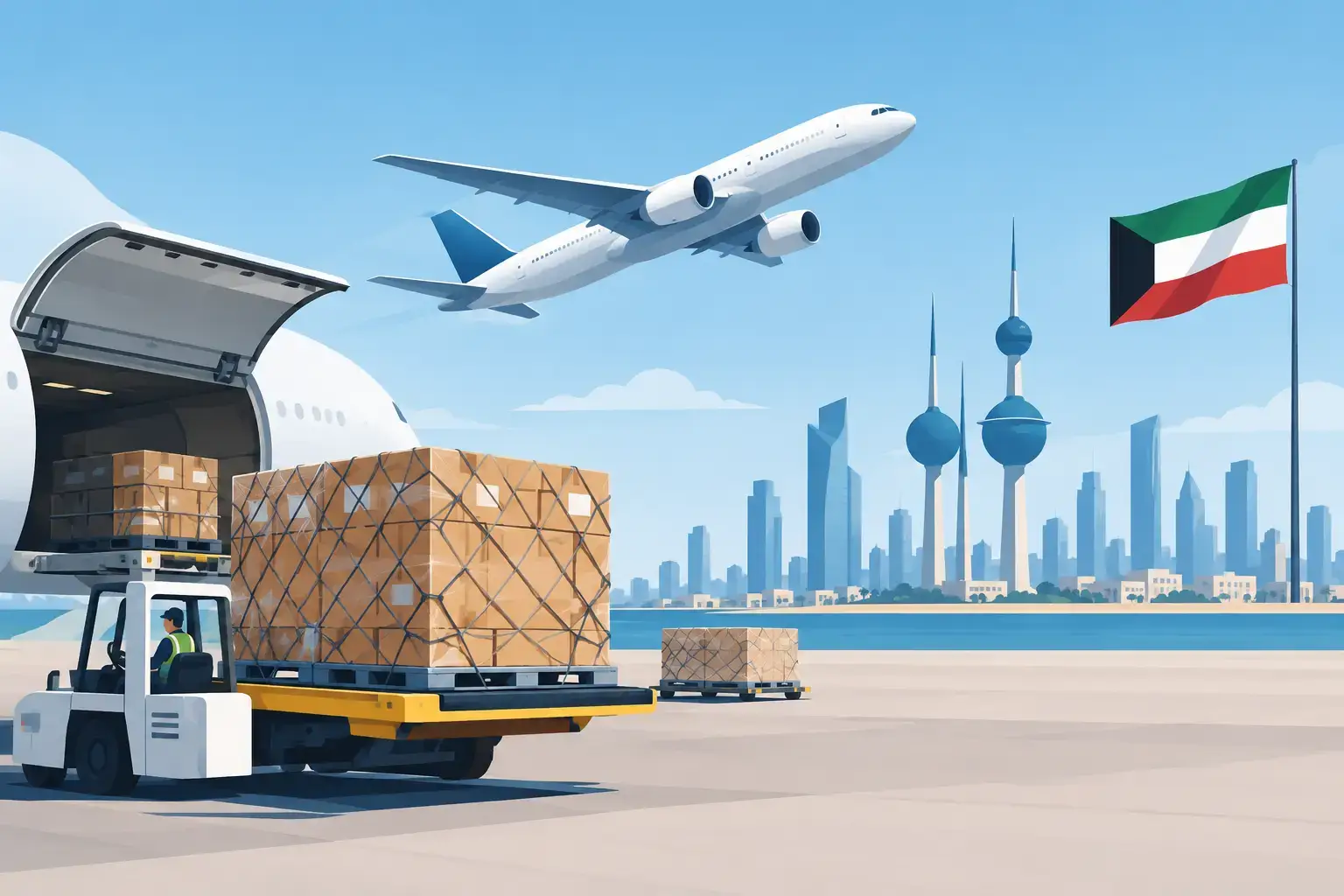
Domestic Delivery That Keeps Kuwait Business Moving
A missed local delivery rarely stays a delivery problem. For a retailer, it becomes an unhappy customer and a potential lost sale. For an FMCG supplier, it can mean an empty shelf. For an operations team, it creates calls, rework, and uncertainty around the next dispatch. Dependable domestic delivery gives businesses in Kuwait a controlled way to move orders from warehouse to customer without allowing daily transport issues to disrupt the wider operation.
Local delivery may cover shorter distances than international freight, but the operating standard is no less demanding. Orders must be collected accurately, assigned to the right route, handled safely, delivered within the agreed window, and recorded clearly. When volumes rise, those requirements do not change. The delivery operation simply has to perform at a larger scale.
Domestic Delivery Is an Operating Function
Businesses sometimes treat local transport as the final, simple step after inventory has been received or an order has been packed. In practice, it is the point where warehouse accuracy, customer service, vehicle capacity, route planning, and proof of delivery meet.
A delivery partner must understand more than the destination. It needs to know the shipment type, delivery deadline, handling requirements, recipient availability, and any documentation needed at handover. A pallet for a business location, a carton for a retail branch, and a same-day e-commerce parcel may all move within Kuwait, but they require different planning and service controls.
This is why the lowest per-delivery price is not always the lowest operational cost. A low rate loses its value if it leads to failed delivery attempts, unclear status updates, damaged goods, or staff time spent following up on exceptions. The right model is one that protects service quality while keeping delivery costs predictable.
What Reliable Domestic Delivery Requires
Reliable local distribution is built through repeatable processes, not last-minute dispatch decisions. The strongest operations connect inventory, order release, transport capacity, and shipment visibility from the start.
Accurate Order Handover
Delivery performance begins before a vehicle leaves the facility. Each order needs a correct address, contact information, product count, delivery instruction, and service priority. Incomplete or inconsistent data creates avoidable delays, especially when customers are unavailable or a commercial location has restricted receiving hours.
For businesses with recurring deliveries, standardized order files and cut-off times reduce manual work. They also make it easier to separate urgent orders from routine replenishment without disrupting the full delivery schedule.
Route Planning That Reflects Real Demand
Efficient routes are not only about selecting the shortest distance. They should account for delivery windows, vehicle type, shipment size, traffic patterns, geographic density, and the ability to make additional stops if an exception occurs.
A business delivering to multiple retail branches may benefit from scheduled routes by area. An e-commerce seller may need flexible dispatch capacity for daily order peaks. B2B distributors often require timed deliveries that support a customer’s receiving schedule. The delivery plan should match the commercial requirement rather than force every shipment into one standard service level.
Capacity for Normal Days and Peak Days
Daily volumes are rarely fixed. Promotional campaigns, seasonal demand, new product launches, month-end replenishment, and urgent customer orders can increase dispatch requirements quickly. A domestic delivery provider needs sufficient fleet access and operational coordination to absorb those changes without leaving standard shipments behind.
This does not always mean using the largest possible transport solution. Oversized vehicles can raise costs and reduce flexibility. The practical approach is to align vehicle capacity with shipment profiles, then maintain a clear plan for extra demand. Businesses should ask how their provider handles volume spikes, same-day requests, and route changes after dispatch has started.
Shipment Visibility and Proof of Delivery
Customers and internal teams need clear answers: Has the order left the warehouse? Is it out for delivery? Was it received? If there was an issue, what happened and what is the next action?
Tracking visibility reduces unnecessary follow-up and allows customer service teams to respond with confidence. Proof of delivery is equally important for commercial shipments, high-value goods, and deliveries where payment, documentation, or recipient confirmation is required. A completed route is not enough. The delivery record must be accessible, accurate, and tied to the correct order.
Choosing the Right Local Delivery Model
There is no single domestic delivery structure that suits every business. The right option depends on order volume, delivery geography, product type, customer expectation, and the level of control required.
Scheduled delivery is often effective for retailers, distributors, and suppliers with predictable replenishment cycles. It allows routes to be planned in advance and helps control transport costs. Express or same-day delivery is more suitable for urgent documents, replacement parts, time-sensitive stock, or e-commerce orders where speed is a clear part of the customer promise.
Some businesses need direct point-to-point transport for larger shipments or sensitive cargo. Others benefit from multi-stop distribution that consolidates deliveries across a defined area. The decision should be based on service outcomes, not only on whether a vehicle is available.
For companies that store inventory locally, integrating warehousing and delivery can improve accuracy and response time. Orders can be picked, packed, staged, and dispatched under one operating plan. This reduces handoffs between providers and gives the business a clearer view of inventory movement from storage location to final recipient.
Common Gaps That Create Delivery Delays
Many local delivery issues are preventable. They usually begin with a process gap rather than a road delay. Operations teams should monitor recurring exceptions and address their cause, not just the individual shipment.
The most common issues include:
- Incomplete addresses, incorrect contact numbers, or missing delivery instructions
- Orders released after the daily dispatch cut-off without a clear priority decision
- Poorly labeled cartons or inaccurate shipment counts at warehouse handover
- No agreed process for failed delivery attempts, returns, or recipient disputes
- Limited communication between sales, customer service, warehouse, and transport teams
These gaps become more expensive as shipment volumes grow. A formal exception process helps teams decide quickly whether to reattempt delivery, contact the recipient, return the shipment, or arrange an alternative delivery time. The objective is not to eliminate every exception. It is to prevent exceptions from becoming untracked and unresolved.
Measuring Delivery Performance That Matters
Businesses need more than a count of completed deliveries. A delivery operation can show high completion numbers while still creating customer dissatisfaction through late arrivals, repeated attempts, or unclear communication.
Useful performance measures include on-time delivery rate, first-attempt delivery success, proof-of-delivery completion, damage or shortage incidents, average exception resolution time, and delivery cost by order type or area. These metrics show where the service is performing well and where process changes are needed.
For high-volume operations, regular reporting supports better planning. If a particular area generates repeated failed deliveries, address validation or customer communication may need improvement. If certain routes consistently run late, dispatch timing or vehicle allocation may need adjustment. Measured performance turns delivery management into an operational control rather than a daily reaction.
A Delivery Partner Should Be Accountable
Domestic delivery works best when one provider takes responsibility for execution, communication, and escalation. K-Line supports local distribution requirements with transportation, warehousing, fulfillment, and shipment visibility designed for businesses that need dependable day-to-day movement across Kuwait.
The value of an accountable provider is not limited to moving goods from one location to another. It is the ability to respond when priorities change, provide clear shipment status, and maintain service continuity when volumes increase. For operations managers, that means fewer disconnected handoffs and a more reliable basis for planning.
The most effective next step is to review your current delivery flow before the next peak period. Look at where orders slow down, where customers ask for updates, and where teams rely on manual follow-up. Those points will show whether your domestic delivery operation is simply completing trips or actively supporting the business behind every order.