


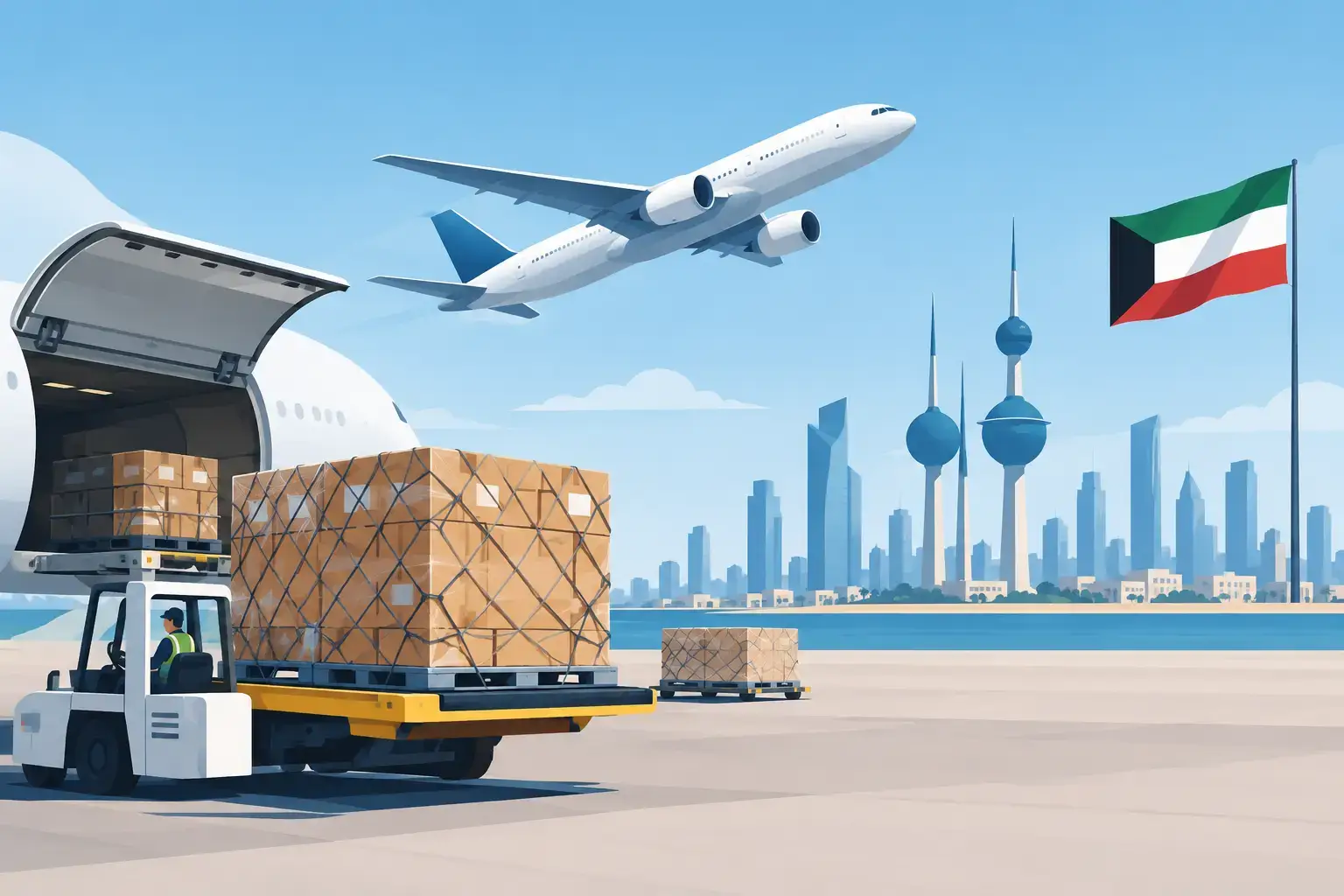
When Air Freight Makes Sense for Kuwait Businesses
A missed component, an unexpected stockout, or a customer order with a fixed delivery date can quickly turn transport into a business-critical decision. Air freight gives Kuwait businesses the fastest practical option for moving cargo across borders when timing, product value, and supply continuity matter more than the lowest shipping cost.
For operations teams, the question is rarely whether air transport is fast. The real question is whether its speed protects revenue, prevents disruption, or meets a commitment that cannot move. The answer depends on the cargo, the route, the customs requirements, and how well the shipment is planned from pickup through final delivery.
When Air Freight Is the Right Business Decision
Air freight is most effective when delay carries a clear commercial cost. This may include production parts needed to keep equipment running, fast-moving retail inventory, samples for a tender or product launch, medical or controlled items, or replacement goods required to resolve a customer issue.
For e-commerce businesses, air transport can help prevent popular products from disappearing from online inventory during a peak campaign. For industrial suppliers, it can reduce the downtime risk created by a missing spare part. For retailers, it can support seasonal launches where delivery after the selling window has limited value.
The cost of air freight should be assessed against the cost of waiting. A lower-cost sea or land route may be the better option for replenishment stock with a flexible timeline. But when delayed cargo causes lost sales, contractual penalties, idle labor, or customer dissatisfaction, faster transport can be the more controlled financial decision.
Air freight also suits cargo that is compact but valuable. Charges are generally based on the higher of actual weight or volumetric weight, so large, lightweight shipments can become expensive. Dense cargo with high commercial value often produces a more favorable cost-to-speed calculation.
How Air Freight Moves From Origin to Delivery
An air shipment is more than a flight booking. Reliable execution requires coordination across collection, packaging, export documentation, airline handling, customs clearance, and local delivery. A gap at any stage can reduce the advantage of choosing air transport in the first place.
The process normally begins with a shipment review. The freight forwarder confirms the origin, destination, cargo dimensions, actual weight, commodity type, required delivery date, and any handling restrictions. This information determines available flight options, expected transit times, documentation needs, and the most suitable service level.
Cargo is then collected or delivered to the export handling facility. It must be packed to withstand handling, screening, loading, and transfer. Packaging is not a minor detail. Weak cartons, unclear labels, or improperly secured pallets can cause damage, rejection, or delays during acceptance.
Once the cargo is accepted, it is screened and prepared for uplift. Depending on the route and service, it may travel on a passenger aircraft, a dedicated freighter, or through a hub airport. Direct flights can reduce handling points, while connecting routes may offer greater capacity or more competitive pricing. The right choice depends on the urgency and the reliability of the schedule, not simply the quoted transit time.
At destination, the shipment enters the import process. Customs clearance, duty and tax handling, inspection requirements, and release procedures all affect the final delivery date. In Kuwait, local knowledge and accurate paperwork are particularly valuable because clearance delays can leave urgent cargo waiting after it has already completed the flight.
Documents That Keep Cargo Moving
Documentation is one of the most common sources of preventable delay. Commercial cargo typically requires an air waybill, commercial invoice, packing list, and any certificates or permits relevant to the product. The requirements can vary by origin, destination, commodity, and declared value.
The commercial invoice should accurately describe the goods, their value, country of origin, quantity, and intended use where required. Generic descriptions such as “parts” or “samples” may trigger questions if they do not give customs authorities enough information to classify the cargo properly.
Businesses shipping regulated products need additional attention. Batteries, chemicals, cosmetics, food items, electronics, medical products, and goods with controlled components may require product documentation, approvals, safety data, or specialized packing. Dangerous goods are subject to strict airline and handling rules. They should be declared early, not added as an afterthought after a booking has been made.
A dependable freight partner reviews documents before departure, identifies inconsistencies, and helps establish a workable clearance plan. This is especially important for recurring importers that need predictable inbound schedules and fewer exceptions at customs.
Managing Cost Without Losing Speed
Air freight pricing is influenced by more than distance. Weight, dimensions, origin airport, destination airport, airline capacity, fuel-related charges, security requirements, handling, customs services, and final-mile delivery can all affect the total cost.
Volumetric weight deserves close attention. Airlines allocate space as well as weight, so a shipment of light but oversized cartons may be charged as though it weighs much more than it does. Reviewing carton dimensions before production or pickup can create meaningful savings. Consolidating smaller packages into a properly designed shipment may also reduce handling and improve control.
Businesses can manage spend by separating genuinely urgent cargo from routine replenishment. Rather than sending every item by air, many supply chains use a mixed model: fast-moving or critical products travel by air, while planned inventory moves by sea or land. This approach protects service levels while keeping transportation costs aligned with product margins.
Forecasting is equally useful. When purchase orders, promotions, and seasonal peaks are visible in advance, businesses have more options. Last-minute bookings usually mean fewer choices and higher exposure to capacity constraints. Early planning does not eliminate the need for expedited shipping, but it limits how often an urgent shipment becomes the default solution.
Choosing the Right Air Freight Service Level
Not every shipment requires the same speed. Express services are designed for highly urgent, smaller shipments where rapid pickup and delivery are central to the requirement. Standard air freight may be more appropriate for commercial cargo that needs fast international transport but can accept a planned flight schedule and normal handling windows.
For larger or frequent shipments, consolidation can offer a practical balance between cost and timing. Cargo is combined with other compatible shipments moving on a similar route. This may take longer than a dedicated priority movement, but it can be more economical for businesses that need air transport without the highest premium.
The correct service level should be based on the delivery commitment, not a vague request for the “fastest” option. A clear delivery deadline allows the logistics team to select a service that protects the requirement without adding unnecessary cost.
What to Expect From an Air Freight Partner
Air freight works best when one accountable provider manages the handoffs that customers should not have to chase. That includes shipment booking, cargo collection, airline coordination, document review, customs support, tracking updates, and delivery planning.
Visibility matters because urgent cargo often affects several teams at once. Procurement needs confirmation that a supplier shipment has moved. Operations needs an expected arrival time. Sales or customer service may need a reliable delivery update. Clear status reporting reduces internal follow-up and lets teams respond early if a flight change or clearance issue requires action.
For businesses with recurring volume, a structured shipping account can improve consistency. Agreed processes, known cargo profiles, approved contacts, and regular reporting help turn freight from a series of exceptions into a controlled operating function. K-Line supports this approach by combining freight forwarding, customs handling, warehousing, and local delivery under one operational process.
Preparing Your Next Shipment
Before requesting a quote, have the pickup location, delivery location, ready date, package dimensions, actual weight, cargo description, declared value, and target delivery date available. Also identify whether the goods contain batteries, liquids, chemicals, or other restricted materials. Accurate information at the start produces a more realistic quote and reduces avoidable delays later.
If the shipment is time-sensitive, build time for customs and final delivery into the plan. Airport-to-airport transit is only one part of the journey. The best air freight decision is the one that gets the right cargo to the right location on schedule, with documentation, cost, and accountability under control.