8 Business Shipping Account Benefits
If your team is still booking shipments one by one, chasing rate confirmations by email, and treating shipping as a daily admin task, the cost is larger than it looks. The real value behind business shipping account benefits is not just lower pricing. It is better control, faster execution, and fewer operational gaps when shipment volume increases or timelines tighten.
For companies that move inventory regularly, shipping is part of business continuity. A delayed pickup can affect store replenishment, order fulfillment, production schedules, or customer commitments. A business shipping account helps reduce those points of friction by replacing ad hoc shipping with a structured operating model.
Why business shipping account benefits matter in daily operations
Many companies first look at an account for commercial reasons. They want better rates, payment terms, or a more organized shipping process. Those matter, but the larger advantage is consistency.
When shipments are managed through a business account, the process becomes more predictable. Pickup requests follow a standard workflow. Documentation is easier to prepare and repeat. Teams know who to contact when something changes. That kind of structure matters most when volume rises, when customs requirements become more complex, or when multiple departments rely on the same logistics partner.
A small business sending a few parcels a week may be able to work informally for a while. An e-commerce operation, distributor, retailer, or industrial supplier usually cannot. Once shipping becomes part of the core operation, informal processes start creating delays, errors, and unnecessary cost.
Better pricing is one of the clearest business shipping account benefits
The most obvious reason companies open an account is access to more favorable pricing. Regular shipping volume gives logistics providers a basis for offering commercial rates that are often stronger than one-off transactional pricing.
That does not always mean every shipment will be cheaper in every lane. Pricing depends on volume, destination, service level, cargo type, dimensional weight, and urgency. Still, account-based pricing usually creates more stability. Instead of treating each shipment as a separate negotiation, your business works within a clearer commercial framework.
For budgeting and procurement, that matters. It becomes easier to forecast delivery costs, compare service types, and decide when express, freight, or consolidated movement makes the most sense. It also helps teams avoid the hidden cost of inconsistent rate decisions made under time pressure.
Faster dispatch and less internal administration
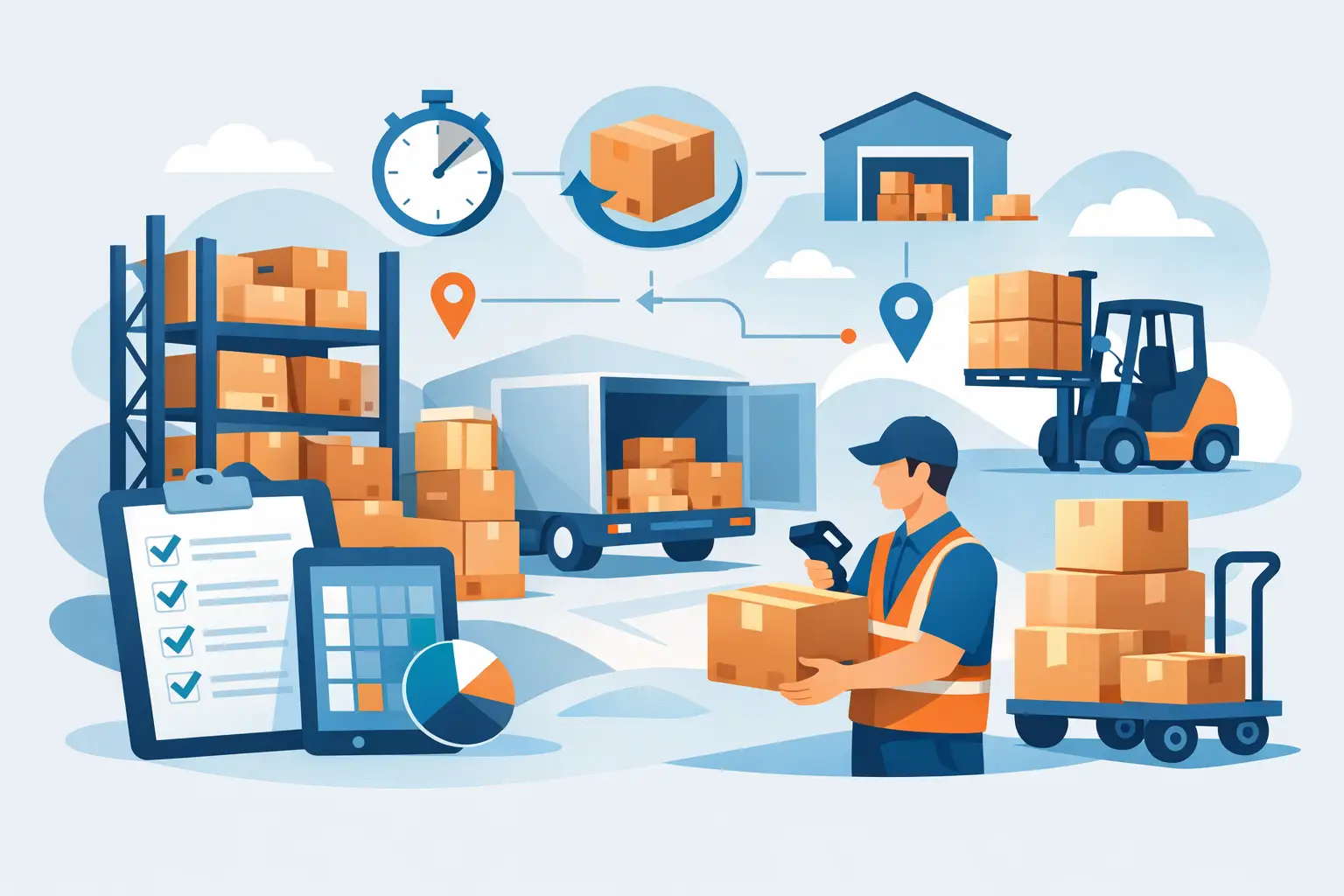
A business shipping account should reduce the amount of manual work your team handles before the shipment even moves. That includes quoting, booking, documentation, dispatch coordination, and status follow-up.
Without an account, staff often spend too much time repeating the same information. Company addresses, billing details, shipment preferences, and contact points get re-entered for every request. That may seem manageable at low volume, but it becomes a bottleneck quickly.
With an account structure in place, routine shipping becomes faster. Your provider already knows your operating profile, collection locations, billing setup, and service requirements. That shortens response time and reduces the chance of avoidable booking mistakes.
For operations managers, this is where time savings become measurable. Staff can spend less effort arranging movement and more effort managing stock, exceptions, fulfillment accuracy, and customer service.
Standardization improves speed
Standardization does not sound exciting, but it keeps logistics running. When shipping instructions, packaging requirements, service levels, and escalation paths are defined in advance, teams make fewer reactive decisions.
That is especially useful for businesses shipping across domestic and regional networks, where timing, paperwork, and handoffs need to stay aligned.
Stronger shipment visibility and reporting
One of the most practical business shipping account benefits is access to better visibility. Businesses do not just need to know that a shipment was booked. They need to know where it is, whether it cleared on time, whether delivery is on schedule, and what needs action if something changes.
An account relationship generally supports more structured tracking and communication. Instead of chasing updates through scattered messages, teams can work from a clearer reporting flow. For frequent shippers, that improves planning across sales, customer support, procurement, and warehouse operations.
Visibility also helps when management wants answers. If a shipment is delayed, the issue is not only operational. It can affect revenue, service levels, or contractual commitments. A business account gives companies a more reliable way to monitor movement and respond quickly.
This is particularly relevant for sectors such as retail, FMCG, healthcare support, spare parts, and B2B supply, where missed timing can create immediate downstream pressure.
Easier customs coordination and compliance support
Cross-border shipping becomes expensive when documentation is incomplete or timing is not aligned with customs requirements. Businesses shipping within the GCC or internationally often need more than transportation. They need process discipline.
A business account can make customs coordination more manageable because the logistics provider already understands the client’s shipment profile, product categories, paperwork patterns, and urgency levels. That familiarity reduces repeated explanations and helps prevent documentation errors that lead to clearance delays.
This does not remove compliance responsibility from the shipper. Product classification, permits, commercial invoices, and regulatory accuracy still matter. But an established account setup gives businesses a more reliable operating environment for managing those obligations.
For organizations moving time-sensitive goods, this is not a minor advantage. Clearance delays can create warehouse congestion, customer dissatisfaction, or missed project milestones. Account-based support helps reduce that risk.
Scalable support when volume changes
Shipping demand is rarely flat. E-commerce businesses deal with seasonal surges. Distributors face replenishment cycles. Project-based industries may move from low activity to high urgency with little notice.
One of the overlooked business shipping account benefits is scalability. When your logistics partner already knows your business, increasing shipment volume is easier than starting from scratch every time demand rises.
That matters during promotions, peak retail periods, tender deliveries, product launches, and urgent restocking events. A provider with account-level visibility can plan resources better, align warehousing and transportation more effectively, and respond with less friction.
Of course, not every provider scales equally well. Businesses should look beyond the promise of an account and ask what support actually sits behind it. Does the provider have warehousing capacity, domestic delivery coverage, freight options, customs handling, and an accountable support structure? If not, the account may improve administration without solving the larger logistics challenge.
Better accountability across services
A major operational problem appears when shipping, storage, customs, and delivery are split across too many vendors. Every exception creates a chain of calls, and accountability becomes difficult to pin down.
A business shipping account works best when it supports an integrated service model. If the same provider can manage freight movement, warehousing, customs coordination, domestic transportation, and fulfillment support, the client gains a clearer line of responsibility.
That does not mean single-provider models are always the cheapest option. In some cases, specialized vendors can offer savings on a specific lane or service. But many businesses find that the operational value of one accountable logistics partner outweighs the marginal savings of a fragmented setup.
For companies in Kuwait and the GCC managing recurring shipments, that trade-off is often worth reviewing carefully. A dependable logistics account is not only a purchasing decision. It is an operating decision.
Business shipping account benefits for different types of companies
The exact value depends on the business model. An e-commerce company may benefit most from dispatch speed, returns handling, and order visibility. A retailer may care more about store replenishment timing and warehousing coordination. An industrial supplier may focus on freight planning, customs accuracy, and urgent parts movement.
Procurement teams often focus first on rates and payment terms. Operations teams usually look at service consistency and escalation speed. Finance may value consolidated billing and cleaner reporting. Leadership tends to care about reliability and business continuity.
That is why choosing an account should not be based on price alone. The right setup depends on shipment frequency, cargo type, service geography, compliance needs, and the cost of failure when something goes wrong.
When an account makes the most sense
A business shipping account is usually the right move when your company ships regularly, uses multiple service types, needs recurring pickups, manages cross-border movement, or wants stronger control over fulfillment performance.
If shipping is occasional and low-risk, a transactional model may still be enough. But once logistics starts affecting customer experience, stock availability, or project timing, the lack of structure becomes expensive.
Choosing an account that supports real operations
Not all business accounts deliver the same value. Some are mainly a pricing arrangement. Others are built to support day-to-day logistics execution.
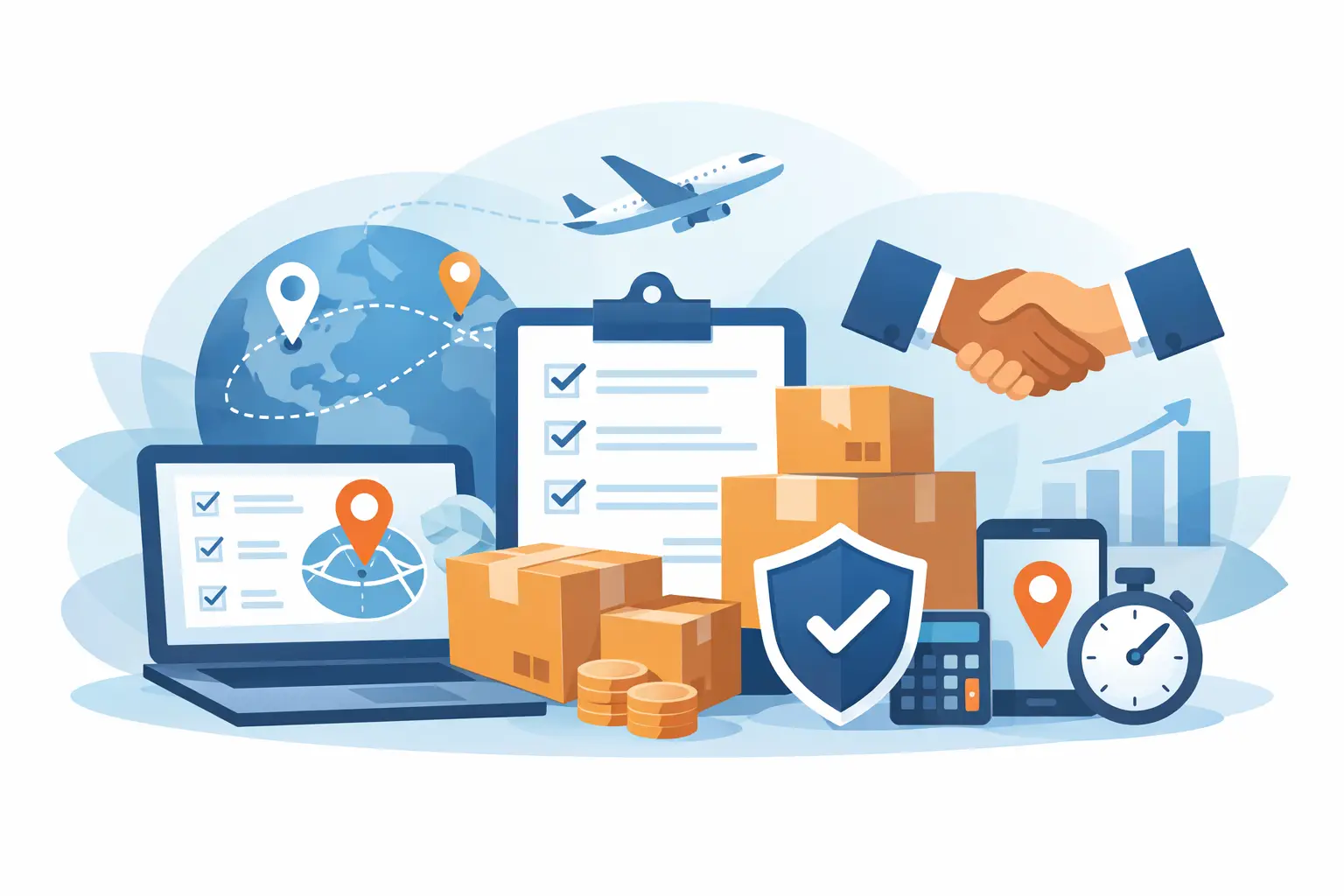
The stronger option is the one that gives your business a clear operating framework: commercial terms, shipment coordination, tracking visibility, customs support where needed, and service continuity when demand changes. For many businesses, that is where a provider such as K-Line becomes relevant, because the account sits within a broader logistics model that includes freight, warehousing, delivery, and operational support under one structure.
The question is not whether an account sounds useful. The question is whether it reduces friction where your business actually feels it – in dispatch, visibility, compliance, cost control, and response time when something needs attention.
A good business shipping account should make shipping less reactive and more manageable, especially when the stakes are high. If your logistics process still depends on too much follow-up, too many handoffs, or too many one-off fixes, that is usually the point where an account starts paying for itself.