Supply Chain Resilience Trends Shaping GCC Logistics
A delayed container, an unexpected border requirement, or a sudden sales peak can quickly become a customer-service problem. Supply chain resilience trends are therefore moving beyond contingency plans and into daily operating decisions for businesses that depend on consistent inventory flow across Kuwait, the GCC, and international markets.
For operations teams, resilience is not simply the ability to recover after a disruption. It is the ability to identify pressure early, make controlled adjustments, and continue serving customers with minimal delay. That requires practical coordination across freight, warehousing, customs clearance, delivery, and order fulfillment.
Why Supply Chain Resilience Is Now an Operating Priority
Many businesses previously optimized their supply chains around cost and speed. Those measures still matter, but they are no longer enough on their own. A low-cost route has limited value if capacity becomes unavailable. Lean inventory can reduce carrying costs, but it can also expose a retailer or distributor when replenishment is delayed.
The most effective approach balances efficiency with options. This does not mean holding excess stock everywhere or using premium freight for every shipment. It means understanding which products, customers, routes, and delivery commitments are most sensitive to disruption, then building appropriate safeguards around them.
For a Kuwait-based importer, for example, a short delay may be manageable for nonessential items but unacceptable for fast-moving FMCG products, spare parts, or promotional inventory tied to a fixed campaign date. Resilience planning should reflect that difference rather than apply one inventory rule to every SKU.
Supply Chain Resilience Trends Affecting GCC Businesses
Multi-route freight planning is replacing single-lane dependence
Businesses are reducing reliance on one port, one carrier, one border crossing, or one transport mode. The goal is not to duplicate every shipment path. It is to maintain realistic alternatives for critical cargo before an interruption occurs.
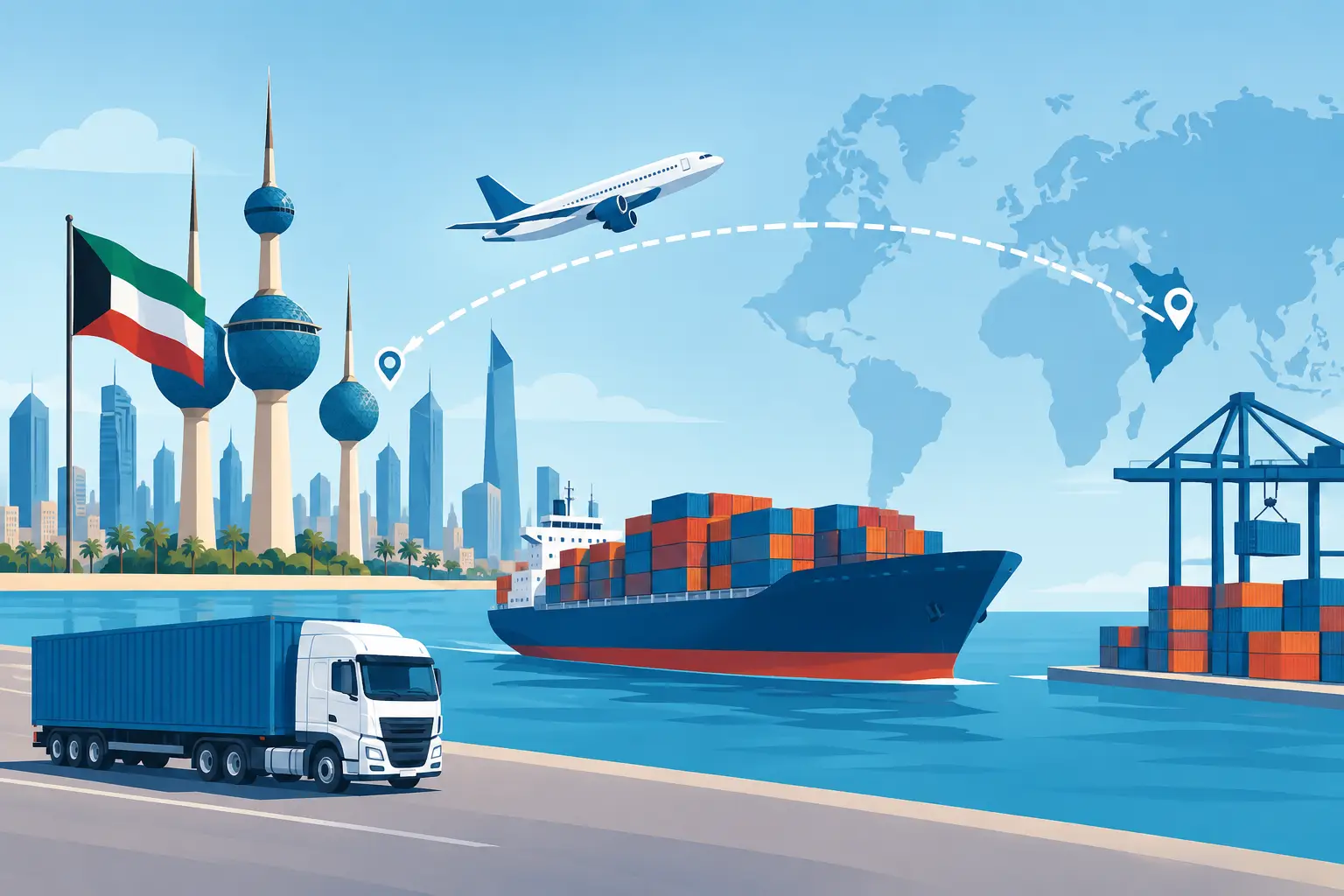
Sea freight remains an efficient option for planned, high-volume replenishment. Air freight can protect service when inventory is urgently needed or when a high-value shipment cannot wait. Land freight supports regional movement across GCC markets and can be a practical alternative depending on origin, destination, border processes, and cargo type.
The trade-off is cost and complexity. Managing multiple freight options requires current rate information, clear transit-time expectations, and a logistics provider that can coordinate the handoff between modes. A backup route that has not been assessed for customs, capacity, and final delivery is not a reliable backup.
Inventory decisions are becoming more selective
The trend is not toward carrying more inventory across the board. It is toward carrying the right inventory in the right location. Businesses are segmenting products based on demand volatility, margin, lead time, shelf life, and the operational cost of a stockout.
Fast-moving or business-critical products may justify safety stock held closer to customers. Slow-moving goods may be better managed through scheduled replenishment or consolidated freight. Products with strict storage requirements need a different plan again, especially when temperature control, security, or handling standards are involved.
Warehousing plays a central role here. Storage capacity alone does not create resilience. Inventory must be accurately received, organized, counted, and available for fulfillment when needed. Clear stock visibility helps commercial and procurement teams act before a shortage becomes an urgent freight request.
Visibility is shifting from tracking to exception management
Shipment tracking has become a basic expectation. The more valuable capability is knowing which delays require action and who owns the next step. Operations teams do not need more status updates if those updates do not explain the effect on delivery commitments, inventory availability, or customs release.
Effective visibility connects freight milestones, warehouse receipts, clearance progress, and final-mile delivery status. It should help a business answer direct questions: Has the shipment arrived? Is documentation complete? Is cargo released? Which customer orders are affected? What is the earliest recovery option?
This is particularly relevant for high-volume importers and e-commerce businesses, where a small exception can affect hundreds of orders. Early intervention is often less expensive than responding after customers have already experienced a delay.
Customs readiness is being treated as business continuity
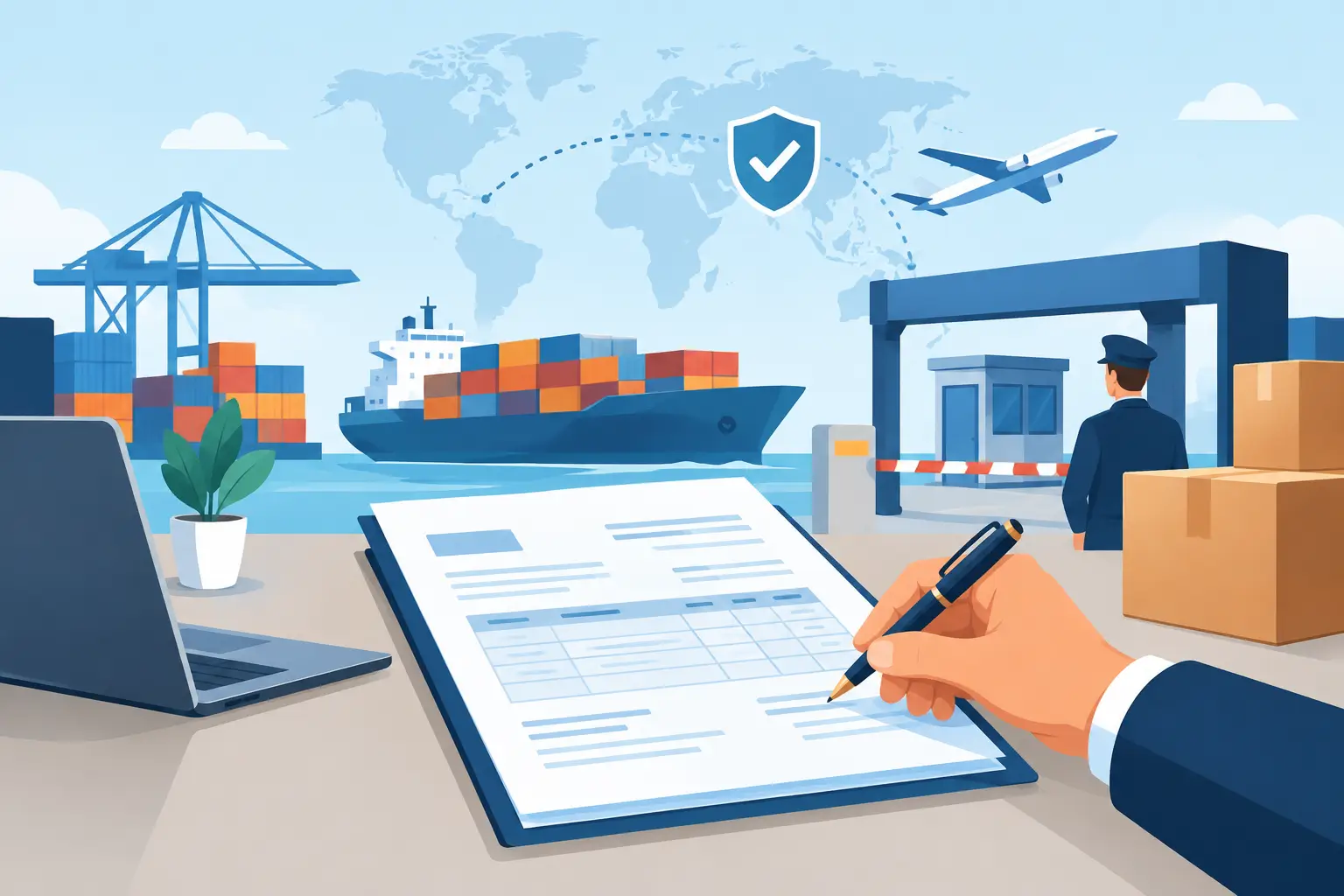
Customs documentation is sometimes treated as an administrative task completed near the arrival date. That approach creates unnecessary risk. Incomplete invoices, inconsistent product descriptions, missing permits, classification issues, or incorrect consignee details can delay cargo at the point where timing matters most.
Resilient businesses prepare documentation earlier and maintain clear internal ownership for commercial invoices, packing lists, product data, certificates, and approvals. They also recognize that requirements can differ by commodity and destination. A process that works for one shipment category may not be sufficient for another.
Working with an experienced customs clearance partner can reduce uncertainty, but the shipper still needs disciplined source data. Accurate documents support faster release, more predictable delivery, and better control of avoidable costs.
Fulfillment capacity is becoming a resilience measure
A business can have inventory in the country and still fail to meet demand if orders cannot be picked, packed, dispatched, and delivered at the required pace. This is why fulfillment capacity is increasingly part of supply chain resilience planning.
Retail peaks, seasonal demand, promotional campaigns, and marketplace sales can place pressure on warehouse labor, packing materials, delivery routes, and customer communication. The right operating model should scale without losing order accuracy or delivery control.
For some businesses, outsourced fulfillment provides flexibility during variable demand. For others, a dedicated storage and dispatch arrangement is more appropriate. The decision depends on order volume, product handling needs, delivery coverage, system requirements, and the level of process control required.
Build Resilience Around Decisions You Can Control
Disruptions cannot always be prevented, but their impact can be reduced through defined operating controls. A practical resilience program should include four connected actions:
- Map critical products, suppliers, transport lanes, and customer commitments so priorities are clear when capacity is constrained.
- Establish approved freight and delivery alternatives for time-sensitive cargo, including the cost and lead-time implications of each option.
- Set inventory thresholds that trigger replenishment decisions before stock reaches a critical level.
- Create an exception process that identifies the responsible team, escalation timing, customer communication, and recovery action for delayed shipments.
These controls are most effective when reviewed regularly. Supplier performance, carrier schedules, customs requirements, demand patterns, and regional transport conditions can change quickly. A plan based on last year’s conditions may not protect current service levels.
The Role of an Integrated Logistics Partner
Fragmented logistics management often creates blind spots. One provider may handle international freight, another stores inventory, a third manages local delivery, and internal teams are left coordinating exceptions across multiple systems and contacts. This can work for stable, low-volume activity, but it becomes difficult during a disruption.
An integrated partner can provide clearer accountability across freight forwarding, warehousing, customs handling, fulfillment, and domestic distribution. The value is not just convenience. It is faster coordination when cargo is delayed, inventory needs to be reprioritized, or urgent deliveries must be arranged.
K-Line supports this type of operating control by bringing shipping, storage, clearance, and delivery services under one accountable logistics framework. For businesses moving frequent or time-sensitive cargo, coordinated execution can reduce handoffs and improve the response when plans need to change.
What to Measure Beyond On-Time Delivery
On-time delivery remains essential, but it does not show the full picture. Businesses should also measure how quickly exceptions are identified, how long cargo remains pending customs release, the accuracy of inventory records, the frequency of stockouts, and the time required to shift to an alternate route or transport mode.
These measures reveal where disruption is actually entering the operation. If delivery performance declines because inventory was received late, the solution may be inbound freight planning rather than final-mile capacity. If orders are delayed despite available stock, the issue may sit in fulfillment processes or order data quality.
The right supply chain resilience strategy is not the most expensive one. It is the one that protects the commitments your business cannot afford to miss, while keeping freight, inventory, and fulfillment decisions commercially disciplined. Start with the products and routes that create the greatest exposure, then build the visibility and logistics support needed to keep service moving when conditions change.