


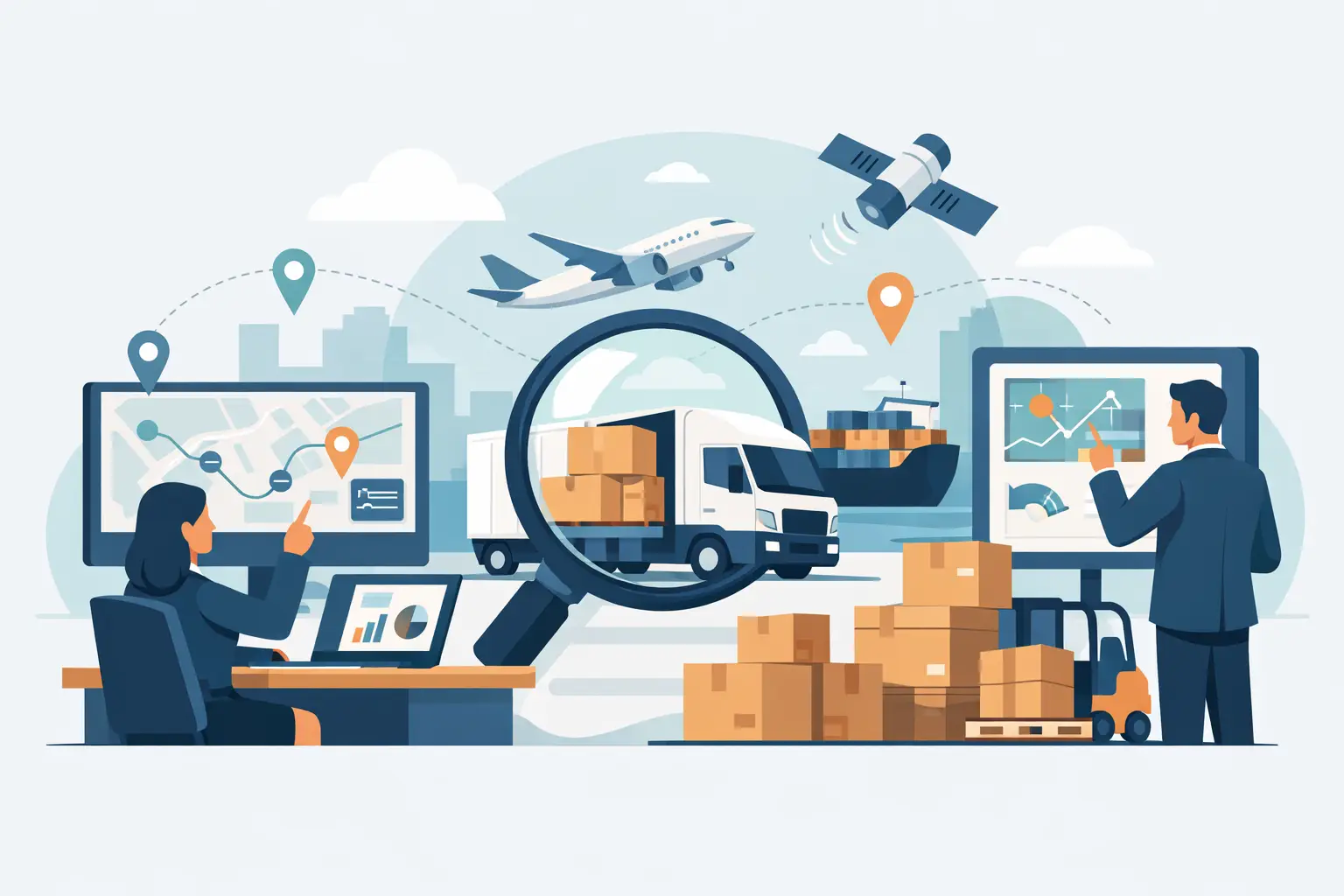
Shipment Tracking for Businesses That Need Control
A late shipment rarely stays a shipping problem for long. It turns into a stock issue, a customer service issue, a production issue, or a cash flow issue. That is why shipment tracking for businesses matters far beyond knowing where cargo is. For companies managing frequent deliveries, import cycles, retail replenishment, or time-sensitive freight, tracking is part of operational control.
The real value is not visibility for its own sake. It is the ability to make decisions early, communicate clearly, and reduce disruption when plans change. For businesses in Kuwait and across the GCC, that becomes even more important when shipments move through multiple transport modes, customs processes, warehousing points, and final delivery steps.
Why shipment tracking for businesses matters
Business shipping is rarely a single handoff from origin to destination. A shipment may move from supplier pickup to consolidation, then to air or sea freight, then customs clearance, storage, local transport, and final delivery. Every transition creates a point where delays, documentation gaps, or missed updates can affect downstream operations.
Without dependable tracking, teams start working from assumptions. Procurement assumes a container will arrive on schedule. Sales promises a delivery date based on old information. Warehouse teams hold space for cargo that is still pending release. Customer support chases answers manually because there is no clear status to share.
With proper shipment visibility, the business can respond before a delay becomes a larger operational problem. If customs is holding a shipment for documentation review, the right team can act immediately. If a delivery route changes, customers can be informed before they begin following up. If inbound stock will miss a promotional window, planning can be adjusted while there is still time.
That is the difference between tracking as a convenience and tracking as a business function.
What good shipment tracking looks like in practice
Effective shipment tracking for businesses is not just a tracking number on a screen. It should support day-to-day decisions across operations, finance, procurement, and customer service. The standard is simple. Teams should be able to see shipment status clearly, understand what stage the cargo is in, and know whether action is required.
For some businesses, basic milestone updates are enough. A small importer may only need confirmation that cargo has departed, cleared customs, and is out for delivery. For higher-volume operations, that is usually not enough. An e-commerce brand, distributor, or industrial supplier may need visibility across multiple shipments, locations, and service types at the same time.
In practical terms, useful tracking includes status accuracy, timely updates, shipment references that match internal records, and enough detail to identify where delay risk exists. It also helps when tracking is connected to the broader logistics operation, not separated from warehousing, customs handling, and transport execution.
The operational risks of poor visibility
Most businesses can tolerate the occasional delay. What causes real damage is uncertainty. When a team does not know whether a shipment is delayed at origin, in transit, pending customs release, or waiting for delivery scheduling, they cannot manage the impact properly.
This uncertainty often shows up in expensive ways. Businesses hold extra stock as a buffer because inbound timing is unreliable. Staff spend hours contacting carriers and forwarders for updates. Customers receive inconsistent information because internal teams are relying on different shipment statuses. Urgent replacement shipments are booked at higher cost simply because no one trusted the original delivery timeline.
There is also a compliance side to this. In cross-border shipping, visibility is tied to documentation, customs readiness, and chain-of-custody awareness. If a shipment stalls because paperwork is incomplete or a declaration needs correction, delayed reporting can extend the issue. A well-managed tracking process helps surface those exceptions quickly.
Where tracking delivers the most value
Not every business uses shipment tracking in the same way. The right level of visibility depends on shipment volume, cargo type, lead times, and customer commitments.
For e-commerce businesses, tracking supports order confidence. Customers expect accurate delivery updates, and internal teams need to know when to escalate exceptions or adjust fulfillment plans. For retailers and FMCG brands, tracking protects shelf availability and replenishment timing. For B2B suppliers and industrial operators, it helps coordinate receiving schedules, production planning, and site readiness.
Businesses that import regularly often gain the most from integrated tracking because their risk sits across several stages at once. Cargo may arrive on time at port but still be delayed by customs clearance, trucking availability, or warehouse intake capacity. In those cases, a shipment update only helps if it reflects the full movement, not just one leg of the journey.
Shipment tracking for businesses across freight and fulfillment
A common mistake is treating tracking as something that only applies to courier deliveries. In reality, businesses need visibility across air freight, sea freight, land transport, domestic distribution, and warehousing-related movements.
Air freight tracking matters when time is critical and delays affect sales, project deadlines, or urgent replenishment. Sea freight tracking matters when inventory planning depends on long lead times and high shipment values. Land freight tracking matters when cross-border regional transport must stay aligned with receiving schedules and route commitments. Domestic delivery tracking matters when final-mile execution affects customer experience and proof of service.
The strongest model is one where these movements are managed within a connected logistics structure. If freight, storage, customs, and delivery are handled in separate silos, visibility often breaks at handoff points. If they are managed through a single accountable provider, businesses typically get clearer updates and faster issue resolution because the operation is coordinated end to end.
That is one reason many commercial shippers prefer a partner that can handle transport, warehousing, customs support, and delivery together. The tracking experience improves when it reflects the full operational chain rather than isolated status checks.
What businesses should expect from a logistics partner
A logistics provider does not need to promise perfect predictability. Shipping will always involve variables such as port congestion, flight changes, inspections, weather, and border processes. What businesses should expect is timely visibility, reliable communication, and a clear escalation path when something changes.
That means tracking should be easy to access, but it should also be backed by operational support. If a shipment status raises a question, the business should be able to reach a team that understands the movement, not just read a generic update. For recurring shippers, account-level support becomes especially important because shipment decisions often affect multiple orders, customers, or locations.
It also helps when a provider can align tracking with service execution. A company managing warehousing and fulfillment, for example, should be able to connect inbound visibility with storage planning and outbound delivery scheduling. A freight forwarder handling customs should be able to explain whether a delay is due to transit, clearance, or documentation. That context matters more than a simple delayed label.
How to evaluate your current shipment tracking process
If your team is still relying on phone calls, email chains, and manual spreadsheets for shipment updates, the issue is not just speed. It is consistency. Different departments may be working from different versions of the same shipment status, which leads to avoidable errors.
A better question is whether your current process helps people take action. Can your operations team identify exceptions early? Can customer-facing teams provide accurate delivery information without chasing updates? Can procurement and inventory teams trust inbound timelines enough to plan inventory levels properly? If the answer is no, then the tracking process needs improvement even if shipments are technically traceable.
Another useful test is handoff visibility. Many delays become harder to manage when cargo moves from freight to customs, from customs to warehousing, or from warehouse release to local delivery. If those transitions are not visible, your business is only seeing part of the picture.
For companies scaling across Kuwait and the GCC, this becomes a growth issue as much as a logistics issue. More orders, more suppliers, and more delivery points increase the cost of weak visibility. K-Line supports this kind of environment by combining freight movement, storage, customs handling, and delivery execution under one operating structure, which helps businesses keep control as shipment volume grows.
Tracking is not just visibility. It is accountability.
When shipment tracking is handled properly, it changes the way a business runs. Teams stop reacting late. Customer communication becomes more accurate. Inventory planning becomes more disciplined. Problems still happen, but they are identified earlier and managed with better information.
For businesses with frequent shipments, that level of control is not optional. It is part of maintaining service levels, protecting margin, and keeping operations moving without unnecessary friction. The best tracking process is the one that gives your team confidence to act before a delay affects the rest of the business.