


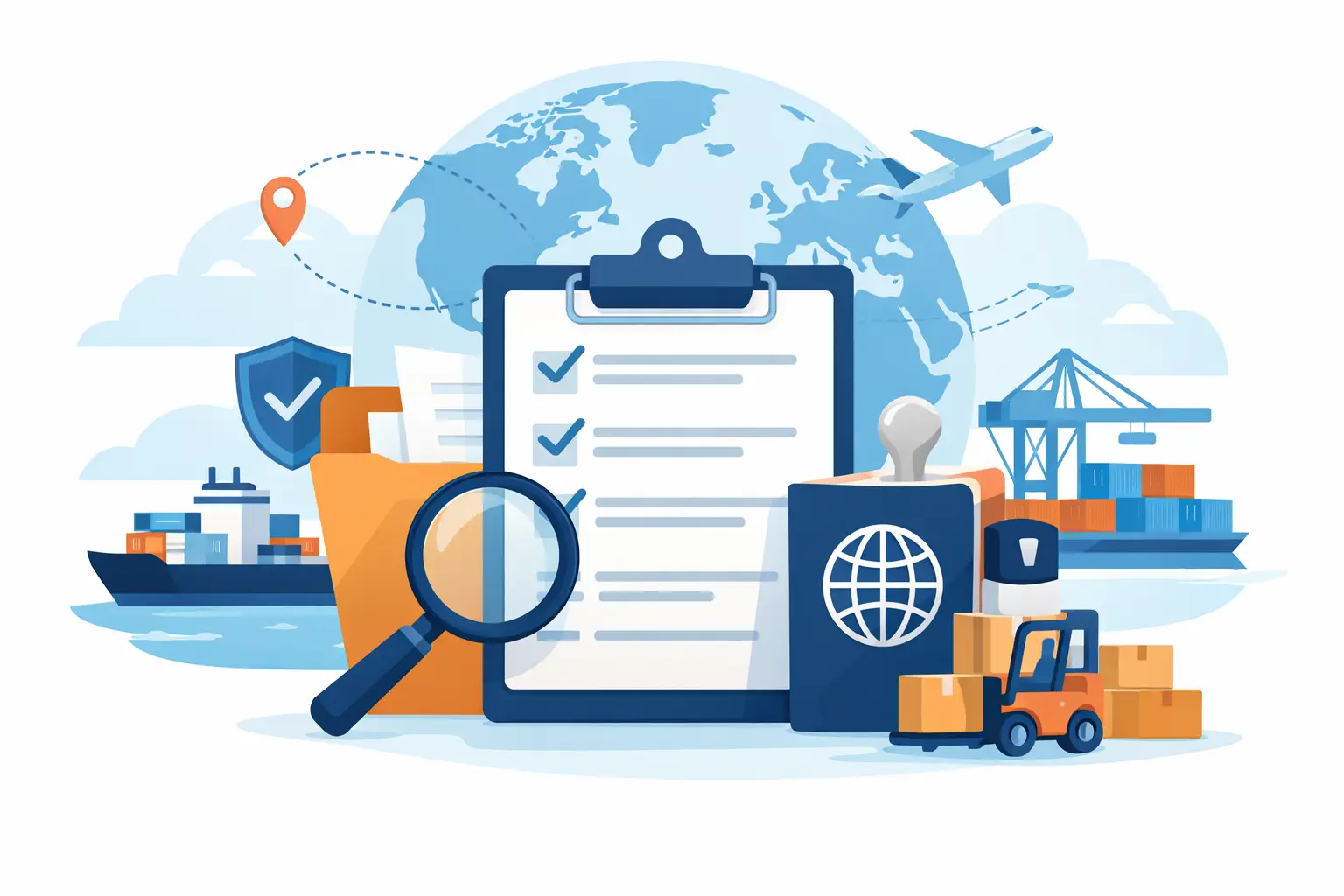
International Shipping Documentation Guide
A shipment can be packed correctly, booked on time, and priced competitively – then still miss its delivery window because one document is incomplete, inconsistent, or filed too late. For importers, exporters, and distribution teams, an international shipping documentation guide is not paperwork for its own sake. It is part of shipment control.
When documentation is handled well, cargo moves with fewer inspections, fewer customs questions, and less risk of storage charges or delivery disruption. When it is handled poorly, the costs show up fast – delays at origin, holds at destination, rejected entries, demurrage, and strained customer commitments. That is why documentation should be treated as an operational process, not an afterthought.
What this international shipping documentation guide covers
The exact documents required depend on the cargo, the countries involved, the mode of transport, and whether the shipment is commercial, regulated, or temporary. Still, most cross-border shipments rely on a core set of documents that must align with one another.
The commercial invoice is usually the starting point. Customs authorities use it to understand what is being shipped, who is buying it, what it is worth, and how it should be classified. If the invoice description is vague, or if the value does not match supporting records, that can trigger questions immediately. A line that says “parts” or “samples” is rarely enough. Customs needs a usable commercial description.
The packing list supports the physical side of the shipment. It should show how goods are packed, the number of cartons or pallets, weights, dimensions, and item references where needed. This document helps with inspections, warehouse handling, receiving, and claims. A weak packing list creates avoidable confusion, especially when shipments are split across multiple units or delivered to a busy receiving location.
The transport document also matters. For sea freight, that may be a bill of lading. For air freight, it is usually an air waybill. These documents confirm carriage details and must match the shipment data used in customs filings and destination handling. If the consignee name, cargo count, or weights differ from other documents, the discrepancy can slow release.
Certificates of origin, import permits, export declarations, product certificates, and special regulatory paperwork may also be required. This is where many businesses underestimate complexity. The documentation for textiles is not the same as the documentation for food products, chemicals, electronics, or machinery. The more regulated the product category, the less room there is for approximation.
Why document accuracy matters before cargo moves
Most shipment problems linked to documentation begin before the goods leave the warehouse. Teams often focus on booking space, loading deadlines, and freight cost while assuming documents can be finalized later. In practice, late corrections create more disruption than early review.
For example, if the product description on the commercial invoice does not support the tariff classification, customs clearance can stall. If the declared Incoterms do not match the transport arrangement, there may be confusion around charges and responsibility. If the shipper and exporter of record are mixed up, a filing may need to be amended. None of these are unusual issues, but all of them consume time.
Accuracy is also about consistency. Customs authorities, carriers, brokers, and receiving teams compare data across documents. That means names, addresses, SKU references, values, quantities, gross and net weights, and country of origin should align. One typo may not stop a shipment. A pattern of inconsistencies often will.
Core documents businesses should manage closely
An effective international shipping documentation guide should distinguish between documents that are standard on most shipments and those that are conditional.
Standard documents usually include the commercial invoice, packing list, shipping instructions, and the main transport document. Businesses moving inventory regularly should have approved templates for each of these. That reduces variation between teams, suppliers, and shipment types.
Conditional documents depend on trade lane and cargo type. These can include a certificate of origin, inspection certificate, insurance certificate, dangerous goods declaration, health certificate, conformity certificate, import license, or export license. The challenge is that these requirements are not static. A shipment that moved smoothly last quarter can face new controls this quarter if local regulations change or a consignee changes product use.
That is why documentation planning should start at order stage, not dispatch stage. If a purchase order includes controlled goods, country-specific labeling rules, or restricted materials, those details affect documents long before pickup is scheduled.
Common documentation errors that cause delays
Most customs and carrier issues are not caused by rare legal disputes. They come from routine mistakes repeated at scale.
A common one is incomplete product descriptions. Another is undervaluation or inconsistent declared values between invoice and internal records. Incorrect consignee details are also frequent, especially when a buyer operates multiple legal entities or delivery sites. Wrong HS codes can create duty errors, compliance exposure, or customs holds. Missing signatures, outdated certificates, and poor formatting can also become a problem depending on destination requirements.
There is also a timing issue. Some documents must be available before departure, while others are needed before customs entry or final release. Businesses that gather paperwork too late often end up paying for urgency. Expedited corrections are expensive, but the bigger cost is interrupted supply.
How to build a workable documentation process
For businesses shipping regularly, documentation needs ownership. It should not sit vaguely between procurement, warehouse staff, finance, and a freight provider. Clear responsibility reduces errors.
Start by defining who creates each document, who reviews it, and who approves release. The commercial team may own invoice accuracy. Operations may confirm quantities and dimensions. Compliance or logistics may validate classification, country of origin, and special permits. What matters is that the process is structured before shipment volume increases.
Templates help, but review points matter more. A good process includes a pre-shipment check for product details, values, Incoterms, consignee data, and document match across systems. It also includes version control. If a packing list is updated after loading, the transport team and customs filing team need the same final version.
It is also worth separating low-risk and high-risk shipments. A standard replenishment order of known goods may only require routine checks. A first-time import into a new country, a regulated product line, or a government-related shipment should receive a higher level of document review. Not every shipment needs the same effort, but every shipment needs the right level of control.
Working with freight and customs partners
Even when an internal team prepares documents, execution still depends on coordination with carriers, forwarders, and customs clearance teams. Delays often happen in the handoff.
A logistics partner should receive complete and final document sets early enough to review filing requirements, identify missing items, and flag inconsistencies. If that handoff happens after cargo reaches the port or airport, options narrow quickly. For businesses managing frequent regional and international movement, this is where an experienced operator adds practical value – not just by moving cargo, but by helping maintain document readiness across the shipment cycle.
It also helps to agree on escalation points. If customs requests additional information, who responds? If a certificate is missing, who obtains it? If invoice values need clarification, does finance approve directly or through the shipper? These sound like small questions until a shipment is on hold and every hour matters.
International shipping documentation guide for scaling businesses
As shipment volume grows, documentation risk grows with it. More orders, more suppliers, more SKUs, and more destinations create more opportunities for inconsistency. A process that works for ten shipments a month can break at one hundred.
Scaling businesses should standardize product master data, maintain approved document formats, and review destination-specific requirements regularly. They should also monitor the reasons behind customs delays instead of treating each issue as isolated. If the same invoice problem appears three times, that is a process issue. If clearance slows on one trade lane repeatedly, the document workflow may need to be adjusted before booking.
For companies in Kuwait and the GCC managing retail, e-commerce, industrial, or project cargo movement, the pressure is usually not just speed. It is speed with accountability. Customers expect inventory availability, procurement teams expect predictable landed cost, and management expects fewer exceptions. Documentation supports all three.
K-Line approaches shipping with that same operational discipline: clear process, visibility, and accountability at each stage where cargo can be delayed or protected.
Good documentation does not make shipping simple. Cross-border trade will always involve changing rules, country-specific controls, and shipment-by-shipment judgment. But it does make shipping more manageable, more predictable, and far less exposed to avoidable disruption. The businesses that treat documents as part of cargo execution usually see the difference where it counts most – on-time delivery, cleaner customs release, and stronger control when volume increases.