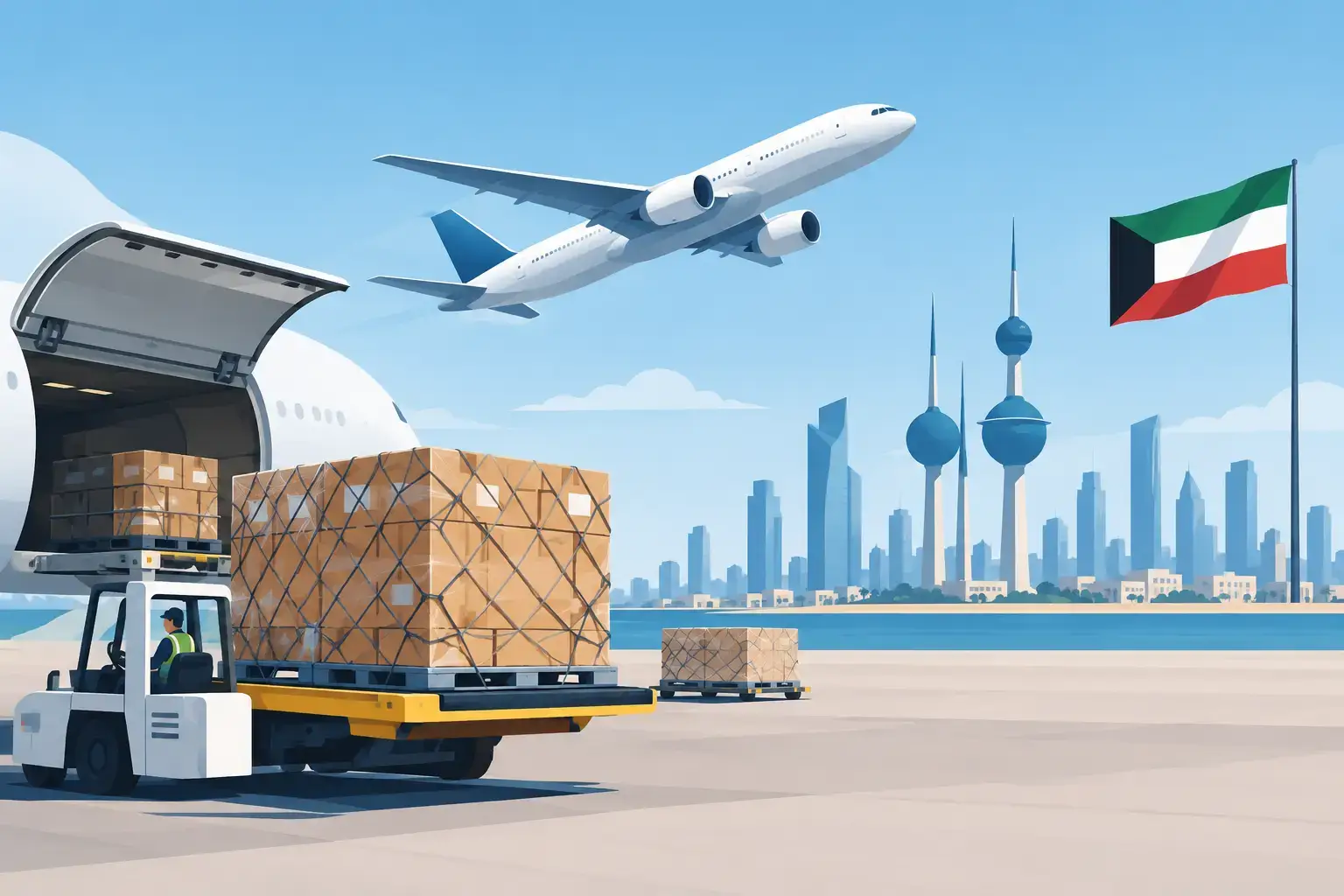
A Practical GCC Distribution Example for Retail
A GCC distribution example is most useful when it reflects the decisions operations teams make every day: where to hold stock, how to clear goods, when to replenish, and who remains accountable when a shipment is delayed. For a retailer serving Kuwait, Saudi Arabia, the UAE, Qatar, Bahrain, and Oman, distribution is not simply moving cartons across borders. It is a controlled process that connects inventory availability, compliance, transport capacity, and customer delivery promises.
Consider a Kuwait-based FMCG retailer importing personal care products from Europe and supplying supermarkets, pharmacies, and online customers across the Gulf. The company needs to protect product availability without carrying excessive inventory in every market. It also needs traceable deliveries, documented customs clearance, and a plan for promotional peaks.
GCC Distribution Example: Kuwait as the Operating Hub
In this example, the retailer uses Kuwait as its primary receiving and distribution hub. Containerized stock arrives by sea freight at Shuwaikh Port, while urgent replenishment items and high-value products arrive by air freight. Once customs procedures are completed, products move to a warehouse where they are checked against purchase orders, inspected for damage, and entered into the inventory system.
The warehouse is not just a holding location. It becomes the control point for the regional operation. Goods are stored by SKU, batch, and expiry date, which is especially relevant for FMCG, cosmetics, food, and regulated consumer products. The warehouse team applies first-expiry, first-out handling where required, so older eligible stock is dispatched before newer inventory.
From Kuwait, the retailer serves domestic orders daily and consolidates export shipments for neighboring GCC markets. Saudi-bound orders may leave on scheduled land freight departures, while shipments to the UAE, Qatar, Bahrain, and Oman may move by land, air, or sea depending on order size, urgency, and total landed cost.
This hub model works best when Kuwait has enough inbound volume to justify dedicated storage and regular outbound movements. If the majority of demand sits in Saudi Arabia or the UAE, a Kuwait-only model can add transit time and repeated border processing. In that case, the business may still receive stock in Kuwait but place fast-moving items in a secondary regional stock point.
Step 1: Plan Inventory by Market, Not by Total Demand
A common distribution failure occurs when a business forecasts one GCC total and assumes stock can be moved anywhere at short notice. Demand is rarely even. A product may sell quickly through pharmacies in Kuwait and Saudi Arabia but move slowly in Bahrain. A campaign in Dubai can create a sudden requirement for inventory that was originally allocated to another market.
The retailer therefore sets minimum and maximum inventory levels by country, customer channel, and SKU category. Fast-moving products receive higher safety stock. Slow-moving or high-value products remain in the Kuwait hub until an order is confirmed or a local market reaches a defined replenishment point.
For example, the company may hold 45 days of domestic stock in Kuwait, 21 days of expected demand for Saudi Arabia, and only limited reserve stock for smaller markets. The exact levels depend on supplier lead time, border transit time, sales volatility, product shelf life, and the cost of stockouts. The objective is not to keep every warehouse full. It is to keep service levels stable with the least avoidable inventory exposure.
Step 2: Build Customs Documentation Into the Order Process
Cross-border distribution can slow down before a truck even leaves the warehouse. Commercial invoices, packing lists, certificates of origin, product registrations, commodity classifications, and market-specific labeling may all affect clearance. Requirements vary by product and destination, particularly for food, cosmetics, electronics, chemicals, medical items, and controlled goods.
In this GCC distribution example, the retailer maintains a master file for every exportable SKU. It includes the product description, harmonized code, country of origin, unit value, package dimensions, weight, shelf-life information, and required certificates. The file is reviewed before launch, not after the first border delay.
Sales teams must also use the same product descriptions and units of measure as the warehouse and customs documentation. A mismatch between an invoice, packing list, and declaration can create inspections, amendments, storage charges, or delivery delays. Centralized document control reduces this risk and gives the operations team a clear record when questions arise.
Step 3: Choose Transport Based on Service Need
The lowest freight rate is not always the lowest distribution cost. A full truckload of replenishment stock may be the right choice for regular deliveries into Saudi Arabia. A small urgent order may need air freight or an express service to prevent a retail shelf from going empty. For a less urgent pallet shipment, consolidated road freight may provide a more economical option.
The retailer creates a transport matrix rather than selecting service case by case. It defines service standards for each lane and order type. For instance, store replenishment orders above a set pallet volume may depart on planned road freight days, while e-commerce orders move through parcel networks with trackable proof of delivery. High-priority orders are approved separately because expedited transport should solve a genuine business risk, not compensate for poor planning.
Shipment consolidation is particularly valuable when serving multiple customers in the same destination market. Combining compatible orders can lower transport cost per unit and reduce handling. However, consolidation should not delay time-sensitive goods beyond their promised delivery window. The right balance depends on customer commitments and order frequency.
Operating Controls That Keep Distribution Reliable
A regional distribution plan needs clear ownership at every handoff. Receiving teams confirm inbound quantities and condition. Warehouse teams maintain stock accuracy and picking discipline. Customs coordinators manage declarations and document status. Transport teams monitor departures, border milestones, delivery appointments, and proof of delivery.
For the retailer in this example, a daily control report covers open inbound shipments, inventory exceptions, orders awaiting documents, dispatched loads, delayed deliveries, and upcoming replenishment needs. This report allows commercial and operations teams to work from the same facts. It also prevents last-minute requests from becoming hidden operational risks.
Tracking visibility matters beyond customer reassurance. When a shipment is held at a border or misses a delivery appointment, the business needs to know the issue early enough to act. That could mean submitting a revised document, rerouting a delivery, notifying a customer, or releasing reserve stock from another location.
K-Line can support this type of model by combining freight forwarding, customs clearance, warehousing, domestic delivery, and GCC transportation under one accountable operating structure. For businesses with frequent regional movement, fewer handoffs between providers can make exception management faster and reporting easier to control.
Managing Peak Demand Without Disrupting Daily Orders
Promotions, Ramadan demand, back-to-school periods, product launches, and seasonal gifting can change distribution requirements quickly. The retailer should identify these events weeks in advance and reserve warehouse labor, transport capacity, and packaging materials before order volume rises.
During a peak period, the business may use a separate picking area for promotional bundles, extend dispatch cutoffs, and schedule additional linehaul departures. It may also temporarily move selected fast sellers closer to the market with the highest demand. These measures cost money, but they can protect revenue and customer confidence when standard capacity is under pressure.
The key is to distinguish predictable peaks from genuine emergencies. Predictable volume should be planned into labor and transport schedules. Emergency capacity should remain available for disruptions such as supplier delays, port congestion, sudden demand spikes, or regulatory holds.
When This Distribution Model Needs to Change
A Kuwait hub is a practical starting point, but it is not the permanent answer for every GCC business. A company with rising order volume in the UAE may benefit from holding local inventory there. A supplier with direct production access to Saudi Arabia may reduce cost and transit time by shipping there first. Businesses selling regulated goods may need country-specific registration and storage processes that make centralized fulfillment less practical.
The distribution design should be reviewed when delivery performance declines, freight costs rise faster than sales, inventory transfers become frequent, or customers in one market consistently wait longer than promised. These are operational signals that the network no longer matches demand.
A workable GCC distribution plan is built around measured demand, complete documentation, disciplined warehouse control, and transport choices that match the service promise. Start with the lanes and products that matter most, measure performance at each handoff, and expand the network only when the data supports the next move.