Hazardous Materials Shipping Guide for Safer Freight
A shipment can be packed correctly, booked on the right route, and still be stopped before departure because one battery, aerosol, chemical sample, or cleaning product was declared incorrectly. This hazardous materials shipping guide is designed for operations teams that need controlled freight movement, dependable documentation, and fewer preventable delays.
Hazardous materials shipping is not a standard freight task with extra labels attached. It is a regulated process that affects product classification, packaging, warehouse handling, carrier acceptance, customs clearance, and final delivery. The correct approach depends on the material, its quantity, its condition, and whether it moves by air, sea, road, or a combination of modes.
Start With Accurate Classification
The first operational question is not how quickly the cargo can move. It is whether the product is regulated and, if so, how it must be described for transport. A product can be hazardous even when it is commonly used in homes, stores, offices, or industrial facilities. Examples include lithium batteries, paint, perfume, adhesives, aerosols, fuel-powered equipment, corrosive cleaners, refrigerants, and certain medical or laboratory products.
Classification normally identifies the product’s proper shipping name, UN number, hazard class or division, packing group where applicable, and any special provisions. This information is usually supported by the Safety Data Sheet, often called an SDS. The SDS is useful, but it should not be treated as the shipping declaration itself. A trained shipper or qualified logistics provider must confirm that the transport classification matches the product and the intended mode of transport.
Small differences matter. A lithium battery installed in equipment may move under different requirements than spare batteries packed separately. A sample shipped in limited quantity may have different packaging and marking rules than a commercial drum shipment. If the product is damaged, recalled, leaking, or temperature-sensitive, normal acceptance rules may no longer apply.
Match the Shipment to the Transport Mode
Air freight generally has the most restrictive hazardous materials requirements because of pressure, temperature, and emergency response considerations. Many products accepted by road or sea are restricted, limited, or prohibited on passenger aircraft. Carrier policies can also be more restrictive than the baseline rules, particularly for batteries, flammable goods, and substances requiring temperature control.
Sea freight can be practical for larger volumes, but it requires careful container planning, segregation, stowage, and port acceptance. Incompatible materials cannot simply be loaded together because they fit in the same container. The cargo’s classification determines where it may be stowed and which goods must be separated during transport.
Road transport is often part of the shipment even when the main movement is by air or sea. The first-mile collection, transfer to a freight terminal, customs movement, and final-mile delivery all need compliant handling. A shipment is only as controlled as its least prepared handoff.
For international freight, teams should verify the requirements that apply across the full route, not only at origin. Transit countries, destination authorities, airlines, shipping lines, ports, and local delivery partners may each impose acceptance conditions. Planning this before cargo reaches the warehouse protects delivery commitments and avoids storage charges caused by a rejected shipment.
Package for Containment, Not Appearance
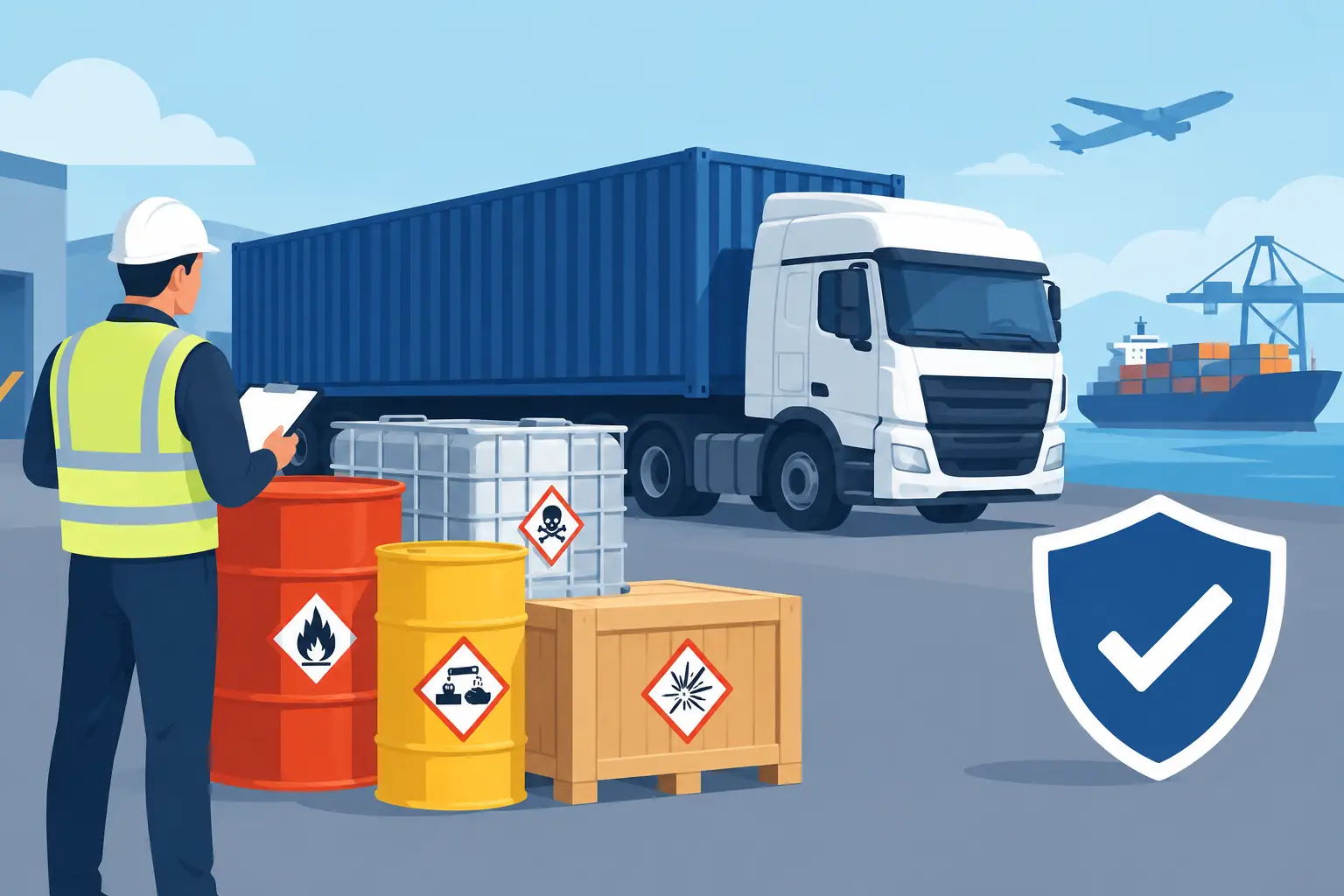
Hazardous materials packaging must contain the product under normal transport conditions. That includes vibration, stacking, pressure changes, temperature variation, and handling activity across multiple facilities. Retail packaging is not automatically suitable for freight transport.
The selected packaging must be compatible with the product. A corrosive liquid, for example, may require packaging that resists chemical attack, while a flammable liquid needs secure closures and protection against leakage. Inner packaging, absorbent material, cushioning, outer cartons, drums, and overpacks all have distinct roles.
Where required, use approved performance-tested packaging and follow its permitted configuration. Do not substitute a smaller bottle, different closure, or alternative carton without checking whether the approved package instructions still apply. Seemingly minor changes can invalidate the packaging method.
Before tendering freight, conduct a practical inspection:
- Check that closures are tight and there is no evidence of leakage, swelling, damage, or residue.
- Confirm the quantity per inner package, outer package, and shipment is within the permitted limit.
- Verify required hazard labels, handling labels, marks, orientation arrows, and UN numbers are visible and durable.
- Ensure pallets and overpacks do not hide required marks or labels.
- Separate incompatible products during storage, staging, and loading.
This inspection should be documented within the shipper’s release process. It creates accountability and gives warehouse and transport teams a clear standard before the cargo enters the network.
Documentation Is a Freight Control Point
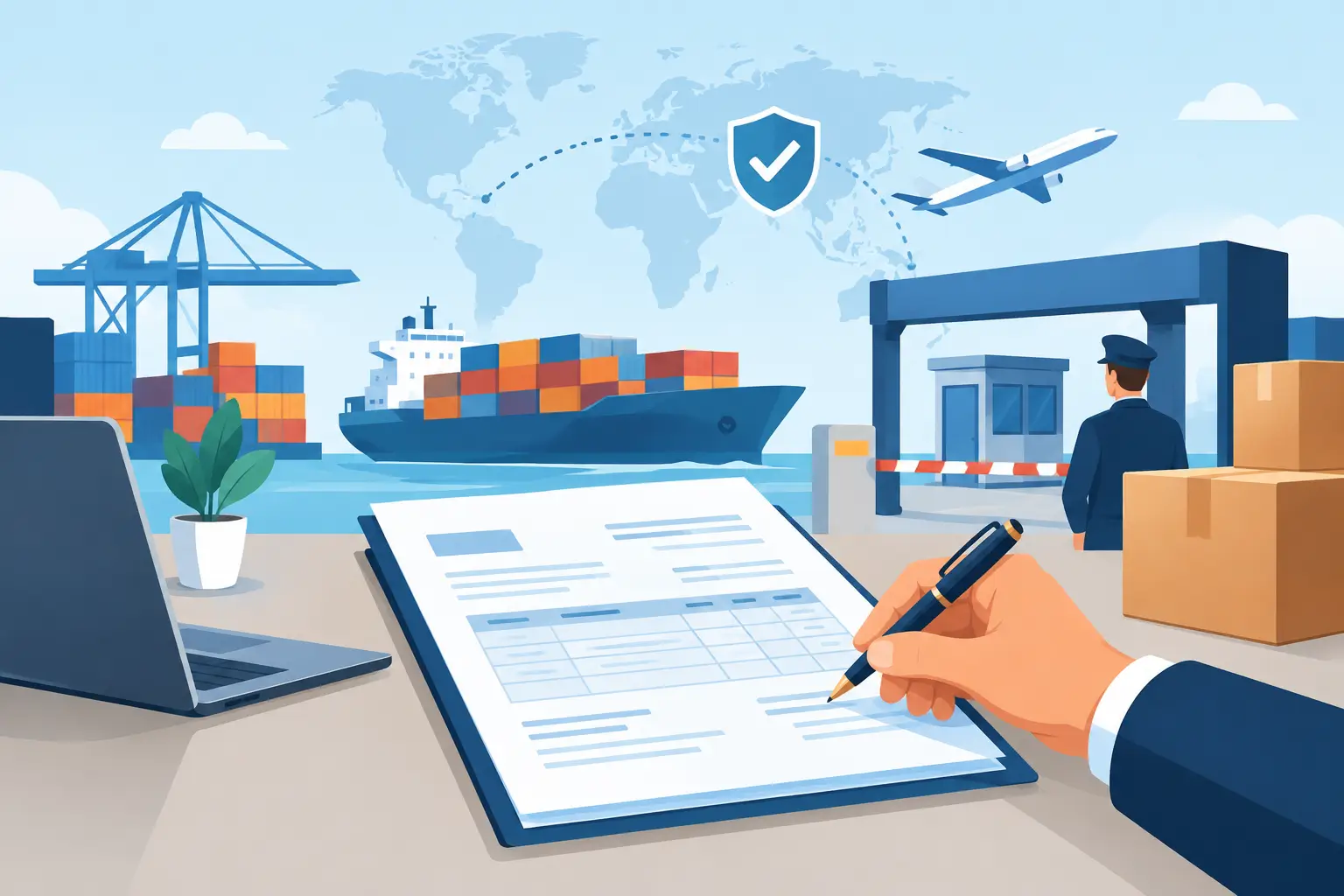
Incorrect documentation is one of the most common reasons hazardous cargo is delayed. The shipping documents must accurately reflect the actual goods, packaging, quantities, and transport method. Documentation requirements vary by mode and destination, but the operational principle remains the same: the paperwork, package markings, and physical contents must agree.
Depending on the shipment, the file may include a dangerous goods declaration, commercial invoice, packing list, SDS, air waybill or bill of lading instructions, permits, certificates, and emergency contact details. Some materials also require approvals or advance notification before booking.
Use the official product description consistently. Avoid vague terms such as “chemicals,” “samples,” “electronics,” or “parts” when the goods are regulated. Vague cargo descriptions create risk for carriers and customs teams because they prevent accurate screening and handling decisions.
A useful control is to assign one internal owner for hazardous materials data. Procurement may hold product specifications, the warehouse may prepare packages, and the freight team may book transport, but one accountable reviewer should confirm that all shipment information aligns before release.
Build Hazardous Materials Controls Into Daily Operations
Compliance should not begin when a shipment is ready to leave. For businesses shipping regulated goods regularly, hazardous materials controls belong in product onboarding, inventory management, warehouse procedures, and supplier coordination.
Start by maintaining a current product register that identifies regulated SKUs, classification data, SDS versions, storage requirements, approved packaging instructions, and shipping restrictions. This is particularly valuable for e-commerce, FMCG, industrial supply, and spare-parts operations, where products may look similar but carry different transport rules.
Warehouse teams need clear segregation and labeling practices. Hazardous goods should be identifiable in the inventory system and physically controlled to prevent accidental mixing, incorrect picking, or release through an unsuitable delivery service. Training must be role-specific. A person preparing packages needs different working knowledge than a customer service agent accepting booking instructions, but both need to know when to escalate a concern.
Incident readiness also matters. Teams should know how to isolate damaged packages, stop a release, notify the appropriate parties, and preserve shipment records. Speed is valuable, but moving questionable cargo quickly creates a larger operational problem later.
Work With a Freight Partner Before the Booking Stage
A freight forwarder can help coordinate the correct transport option, documentation workflow, carrier acceptance, customs process, warehouse handling, and shipment visibility. That support is most effective when the conversation starts before goods are packed and collected.
Provide complete product information early, including the SDS, photos of the product and packaging, planned quantities, destination, preferred timing, and whether batteries or chemicals are contained within equipment. This allows the logistics team to assess feasibility rather than react to a rejection at the terminal.
For recurring volume, establish a documented shipping profile for each product line. This reduces repeated clarification, supports consistent booking decisions, and helps commercial teams quote delivery expectations responsibly. K-Line can coordinate freight, customs handling, storage, and onward delivery within a controlled operating process, helping businesses manage hazardous shipments without losing visibility across handoffs.
A Practical Release Check Before Cargo Moves
Before authorizing collection, confirm the product classification, packaging instructions, labels and marks, documentation, carrier acceptance, and destination restrictions. Then confirm that the warehouse and transport teams received the same final instruction set. If any element changes – product formulation, battery type, package size, route, or carrier – review the shipment again rather than relying on a previous approval.
Hazardous materials freight rewards preparation. A disciplined release process protects people, cargo, schedules, and customer commitments while giving your team the confidence to move regulated goods with control.