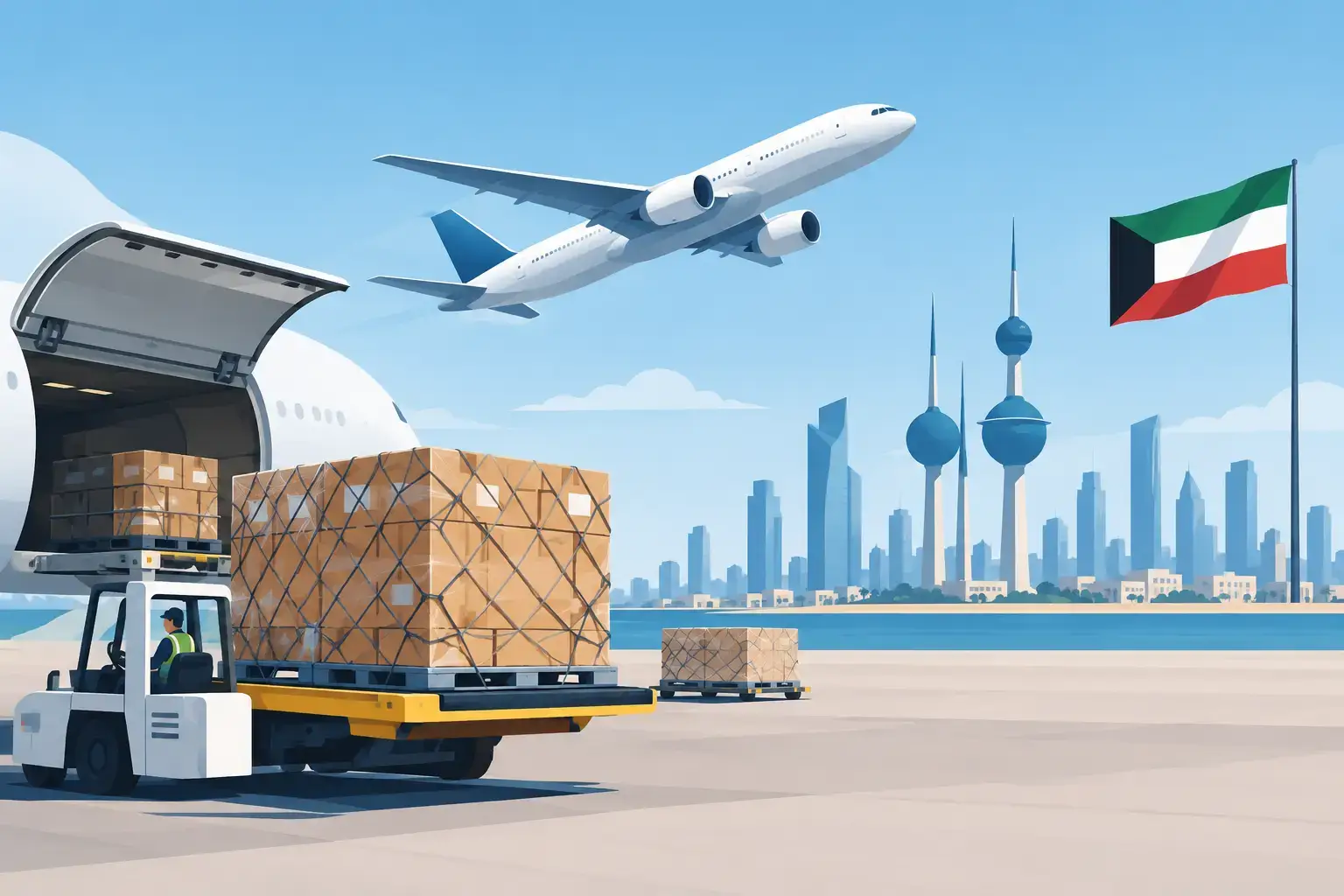
Regional Distribution Network Planning That Performs
A late delivery to a retail customer is rarely caused by the final delivery vehicle alone. More often, the problem began earlier: inventory was placed in the wrong location, a replenishment route was too slow, customs timing was missed, or a warehouse was asked to handle more volume than it could process. Regional distribution network planning addresses these connected decisions before they disrupt service.
For businesses serving Kuwait and the GCC, the goal is not simply to move goods farther or faster. It is to create a controlled network of storage, transport, customs processes, and delivery capacity that supports daily demand and remains dependable when volume changes.
Start With the Service Promise
Network design should begin with the service level customers expect. A B2B supplier delivering planned orders to industrial sites operates differently from an e-commerce seller promising next-day local delivery. FMCG products, spare parts, high-value goods, and project cargo each create different requirements for stock availability, handling, security, and delivery timing.
Define practical service commitments before choosing warehouse locations or transport lanes. These may include order cut-off times, delivery windows, acceptable lead times by market, proof-of-delivery requirements, temperature controls, and procedures for failed deliveries. Without these standards, a network can appear cost-efficient on paper while consistently missing customer expectations.
It also helps to separate what must be fast from what can be scheduled. High-frequency items may require local inventory and frequent replenishment. Slow-moving or specialized products may be better held centrally and supplied on demand. Treating every SKU as urgent adds cost without improving the customer experience.
Map Demand Before Adding Capacity
A regional network should follow actual demand patterns, not assumptions about where demand might emerge. Review order history by customer location, product group, shipment weight, delivery frequency, and season. Include returns, transfers, promotional peaks, and large project orders, since each can change the workload placed on a facility or transport lane.
For a Kuwait-based business, domestic demand may justify a local fulfillment center with scheduled city deliveries, while GCC demand may require a different model. Some markets may be efficiently served through consolidated cross-border road freight. Others may require air freight for urgent replenishment or sea freight for larger, planned imports. The right answer depends on volume consistency, delivery promise, cargo type, border requirements, and the cost of holding stock in multiple locations.
Demand mapping should also identify concentration risk. If one customer, product category, or delivery zone represents a large share of volume, the network needs contingency capacity. A single delayed shipment or unavailable vehicle should not stop the entire operation.
Choose Inventory Locations With Care
Every additional stocking point can shorten delivery time. It can also increase inventory carrying cost, create stock imbalances, and require tighter control. This is the central trade-off in regional distribution network planning: proximity improves responsiveness, while centralization usually improves inventory efficiency.
A single central warehouse is often appropriate when products have moderate demand, cross-border delivery times are acceptable, and stock accuracy is a priority. Multiple regional facilities become more compelling when demand is stable in several markets, lead-time expectations are strict, or transport cost from a central point becomes excessive.
The decision should consider more than rent. Evaluate inbound freight access, customs capability, labor availability, warehouse handling capacity, vehicle access, security, utility reliability, and expansion potential. A low-cost facility that creates daily delays in receiving, picking, or dispatch can become the most expensive option in the network.
Segment Stock by Its Operating Role
Not all inventory needs the same placement strategy. Fast-moving items should be close to demand where possible. Critical spare parts may need strategically held safety stock because a stockout can stop a customer operation. Bulky, low-turn goods may remain in a central location until an order is confirmed.
Use clear replenishment rules between central and local facilities. Set minimum and maximum inventory levels, reorder triggers, transfer schedules, and ownership of stock decisions. Without these controls, satellite warehouses can accumulate excess stock while priority items run short elsewhere.
Design Transport Lanes Around Reliability
A lane is more than a route on a map. It includes the mode of transport, border process, carrier capacity, departure schedule, loading method, documentation, delivery handoff, and exception process. A dependable lane has defined responsibilities at every point.
For regular GCC distribution, consolidated road freight can provide predictable cost and frequency when volumes are planned. Air freight is better suited to urgent, high-value, or time-sensitive shipments where the cost of delay is greater than the freight premium. Sea freight can support planned replenishment and high-volume imports, but it requires stronger forecasting and sufficient buffer stock. Most mature networks use a mix rather than relying on one mode for every shipment.
Build realistic transit times that account for warehouse processing, documentation, customs clearance, border queues, and final delivery. Quoting only vehicle travel time creates false expectations. Operations teams need planned cut-off times and escalation procedures for missed departures, documentation issues, and delivery exceptions.
Make Customs Part of the Network Design
Cross-border distribution can fail even when inventory and transport capacity are well planned. Customs requirements, product classification, commercial documentation, permits, duties, and country-specific restrictions must be considered when the network is designed, not after cargo is ready to move.
Maintain a consistent document process for invoices, packing lists, certificates, product details, and shipment references. Product master data should be accurate enough to support classification and customs review. When recurring shipments use incomplete or inconsistent documentation, clearance delays become predictable rather than exceptional.
Compliance also affects where stock should be held. In some cases, holding inventory closer to the destination market reduces recurring border activity. In other cases, centralized stock remains preferable because demand is uncertain or local storage requirements would add unnecessary cost. The best model balances duty exposure, clearance reliability, inventory risk, and customer lead times.
Build Visibility Into Daily Operations
A network plan is only useful when teams can see whether it is working. Visibility should cover inbound cargo, warehouse receipt, inventory availability, order status, dispatch, border milestones, final delivery, and proof of delivery. Customers need accurate updates, but internal teams need earlier signals so they can prevent problems rather than explain them afterward.
Track a focused set of operating measures: on-time dispatch, on-time delivery, order accuracy, inventory accuracy, fill rate, customs clearance time, transport cost per shipment, and exception volume. Review them by market, customer type, product category, and carrier where needed. A network-wide average can hide a recurring issue on one important lane.
Data should lead to action. If deliveries are late in a specific zone, determine whether the cause is inventory placement, dispatch timing, route planning, consignee availability, or carrier performance. If a warehouse has high order accuracy but misses cut-off times, its process may need more labor or different wave planning rather than a new system.
Plan for Peaks and Disruption
Peak periods reveal whether a network has real operating capacity. E-commerce campaigns, seasonal demand, government project deadlines, port congestion, weather events, and border delays can all change the flow of goods quickly. Capacity planning must account for more than average daily volume.
Prepare for disruption through documented alternatives. This should include secondary transport options, overflow storage, priority allocation rules, approved packaging standards, backup communication paths, and clear authority for operational decisions. The purpose is not to eliminate every delay. It is to prevent a local issue from becoming a business-wide interruption.
K-Line supports this discipline by bringing freight forwarding, warehousing, customs handling, and domestic delivery into one accountable operating model. For businesses managing recurring regional flows, coordinated execution reduces the gaps that often appear when several providers manage separate parts of the journey.
Review the Network as Demand Changes
Network planning is not a one-time facility decision. Review the model when sales expand into new markets, customer service promises change, products are added, freight rates move materially, or delivery performance begins to decline. Small changes in demand can alter the economics of a warehouse location or a transport lane.
Start with a practical operating baseline: where inventory sits, how it moves, what service is promised, and where exceptions occur. Then improve the highest-impact constraint first. A distribution network earns its value when customers receive the right goods on time and your team retains control when conditions change.