


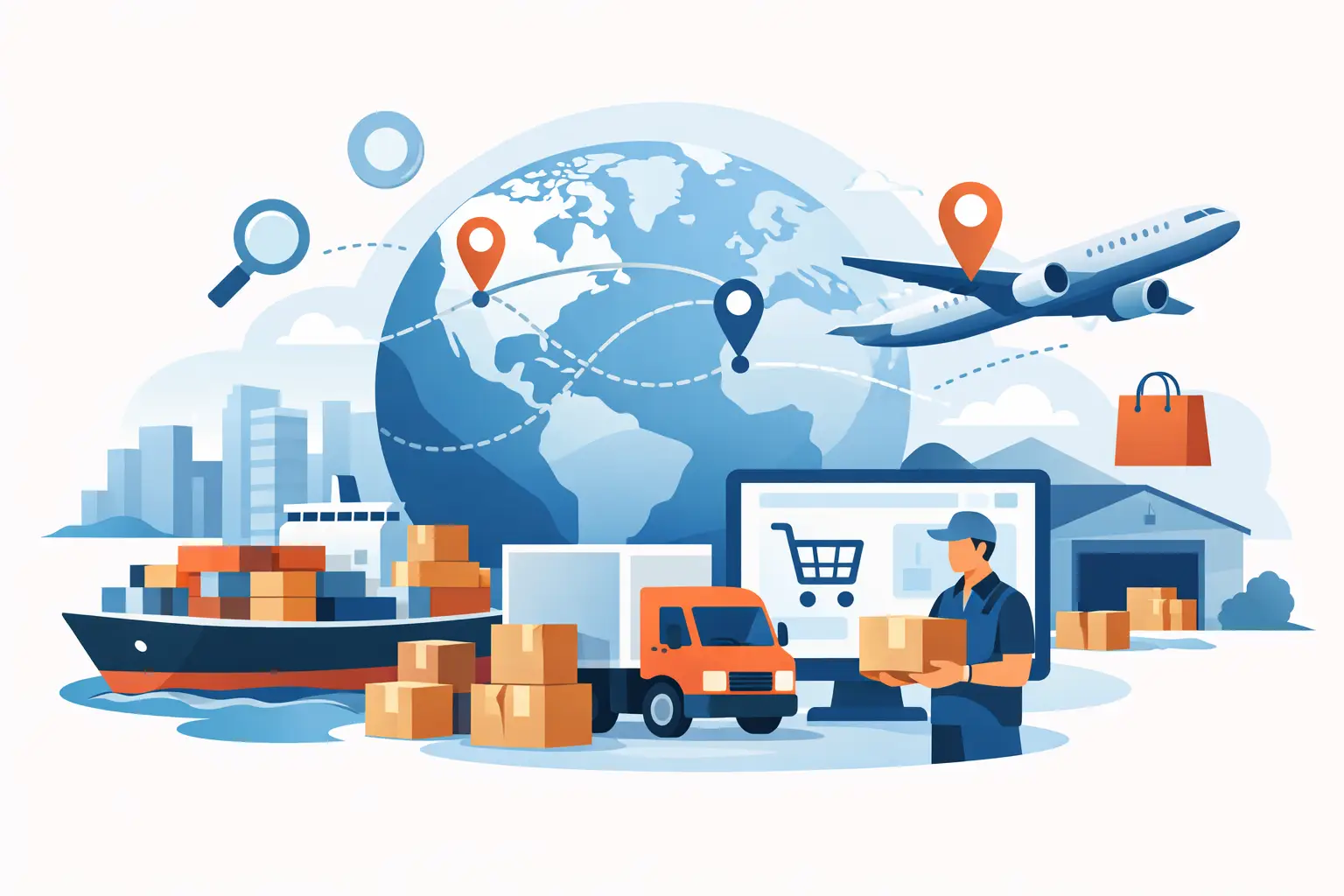
Freight Forwarding Services for Ecommerce
When an online store starts missing delivery promises, the issue is rarely just transportation. It is usually a chain problem – supplier pickup, export paperwork, customs timing, storage capacity, order processing, and final-mile coordination all start affecting customer experience at the same time. That is why freight forwarding services for ecommerce matter well beyond moving cargo from one country to another.
For ecommerce businesses in Kuwait and across the GCC, freight forwarding is not a back-office task. It is part of how margin is protected, how inventory stays available, and how customers decide whether to order again. A delayed container, a customs hold, or poor shipment visibility can quickly create stockouts, refund pressure, and operational disruption.
What freight forwarding services for ecommerce actually cover
In ecommerce, freight forwarding is often misunderstood as booking freight space only. In practice, the service is much broader. A capable freight forwarder coordinates the movement of goods across air, sea, and land networks while also managing the operational steps that keep shipments compliant and on schedule.
That includes origin coordination, shipment consolidation, documentation, customs support, transit planning, warehousing, and handover into fulfillment or domestic delivery. For ecommerce businesses, this matters because products do not create revenue while sitting at a port, waiting for paperwork, or moving through an unplanned transfer point.
The best freight forwarding model for ecommerce connects inbound shipping with storage and order fulfillment. That connection is where many businesses either gain control or lose it. If freight, customs, warehousing, and last-mile delivery are handled by separate providers with limited coordination, delays become harder to trace and harder to fix.
Why ecommerce logistics fail without structured forwarding support
Ecommerce demand is rarely stable. Promotions, seasonal spikes, marketplace activity, and supplier lead-time changes can all shift inventory needs quickly. If freight planning is reactive, businesses often end up paying for urgency they could have avoided.
Air freight can solve a stock emergency, but using it too often damages margins. Sea freight lowers unit cost, but only if lead times, customs clearance, and inventory planning are managed properly. Land freight can support regional replenishment, but timing and cross-border handling still need control. Freight forwarding services for ecommerce help businesses choose the right mode for the product, order cycle, and customer promise.
Without that support, common issues start stacking up. Inventory arrives late to the warehouse. Customs requirements are handled too late. Storage fills up unexpectedly. Orders are released before stock is fully received. Customer support teams are left explaining delays they cannot see clearly.
This is why visibility matters as much as transportation. Businesses need to know what is shipping, where it is, what documents are pending, when it will clear, and when it can move into fulfillment. Reliable execution starts with reliable information.
Choosing freight modes based on ecommerce priorities
There is no single best mode for every ecommerce shipment. The right setup depends on product type, reorder frequency, order value, and customer delivery expectations.
Air freight for speed-sensitive inventory
Air freight is usually the right choice for high-value items, urgent replenishment, new product launches, and fast-moving stock that cannot wait for ocean transit. It supports shorter lead times and helps businesses recover from demand surprises. The trade-off is cost. If air freight becomes the default rather than the exception, profitability starts to erode.
Sea freight for cost control at scale
Sea freight makes more sense for larger volumes, planned replenishment, and products with more predictable demand. It gives ecommerce businesses better landed cost control, especially when inventory planning is strong. The trade-off is time. Longer transit windows mean forecasting needs to be more accurate, and customs or port delays have a wider effect on inventory availability.
Land freight for regional movement
For businesses serving GCC markets, land freight can play an important role in regional distribution and transfers. It is practical for certain cross-border routes and recurring commercial movements. The trade-off depends on border processes, product sensitivity, and how tightly delivery windows are managed.
Customs clearance is not a side task
For ecommerce operators moving products across borders, customs is one of the biggest pressure points. Even when transportation is booked correctly, weak document control can delay cargo, increase storage charges, or interrupt planned delivery schedules.
Product classification, invoice accuracy, permits, declarations, and import regulations all need attention before cargo arrives, not after. This is especially true for businesses selling regulated goods, promotional bundles, electronics, cosmetics, or products with market-specific labeling requirements.
A freight forwarding partner with customs capability reduces the gap between shipment movement and compliance handling. That matters because customs delays affect more than one shipment. They can disrupt warehouse receiving plans, order allocation, and customer delivery commitments across multiple sales channels.
The role of warehousing in ecommerce freight forwarding services
Freight forwarding works better for ecommerce when warehousing is part of the operating model rather than an afterthought. Imported inventory usually does not go straight from port to customer. It moves into storage, inspection, sorting, pallet breakdown, or order preparation first.
When warehousing and forwarding are disconnected, handoffs create delays and accountability becomes less clear. If the forwarder says cargo is delivered but the warehouse says receiving is incomplete, the ecommerce business is left managing the gap.
Integrated warehousing improves control in several ways. It shortens transfer time after clearance. It supports organized inbound processing. It helps maintain stock accuracy. It also gives businesses more flexibility during peak periods when shipments arrive in clusters rather than on a stable weekly pattern.
For brands managing retail and direct-to-consumer channels at the same time, warehousing becomes even more important. Inventory may need to be split between bulk distribution, marketplace orders, and individual parcel fulfillment. That takes coordination, not just storage space.
What to look for in a freight forwarding partner
Ecommerce businesses should not evaluate forwarders on freight rates alone. Cost matters, but low transport pricing does not help if shipments arrive without visibility, miss clearance timelines, or create downstream fulfillment problems.
A stronger evaluation starts with operating fit. Can the provider support air, sea, and land options under one structure? Can they manage customs with consistency? Do they have warehousing capacity that can absorb inbound volume during peak periods? Can they support domestic delivery after inbound receipt? Can the business get clear shipment updates without chasing multiple parties?
Accountability is another major factor. Ecommerce operations move quickly, and issues need escalation paths that are clear and immediate. A provider should be able to explain not just where cargo is, but what happens next and who is responsible for the next step.
This is one reason many growing businesses prefer a single logistics partner with end-to-end capability. When forwarding, customs, storage, and delivery work under one accountable operating model, there are fewer blind spots. For ecommerce teams trying to maintain service levels during growth, that structure is often more valuable than chasing small savings across fragmented vendors.
When freight forwarding becomes a growth function
At a certain stage, logistics stops being purely operational and starts shaping commercial performance. Freight planning affects launch timing, stock depth, customer satisfaction, and the ability to expand into new markets.
If a business wants to widen its product range, enter additional GCC destinations, or improve delivery reliability during promotions, freight forwarding needs to support that plan. It must scale with order volume, handle recurring imports efficiently, and connect inbound cargo to fulfillment without unnecessary delay.
That is where experienced providers can make a measurable difference. A company such as K-Line, with freight forwarding, customs support, warehousing, transportation, and fulfillment under one structure, is built for businesses that need execution and continuity rather than isolated shipping transactions.
The right freight forwarding setup does not just move cargo. It gives ecommerce businesses better control over timing, inventory, and customer commitments. When that control is in place, growth becomes easier to manage and much less expensive to recover when conditions change.
A good logistics partner should make your operation feel more stable, not more complicated. For ecommerce businesses under constant pressure to ship faster, stay in stock, and protect margin, that difference shows up every day.