


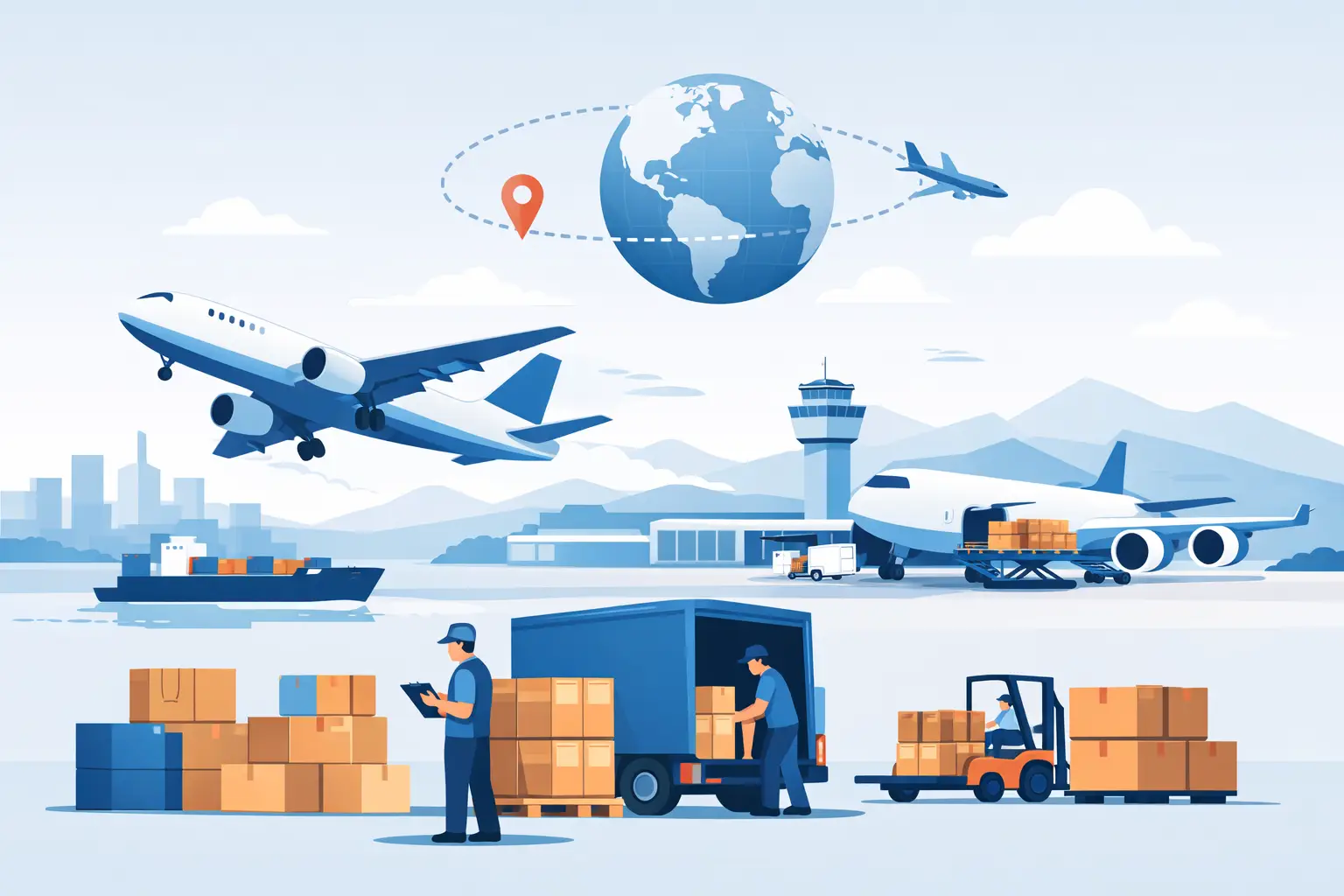
How Air Freight Works for Business Shipping
A delayed component can stop a production line. A missed retail launch can leave shelves empty. That is why understanding how air freight works matters for businesses that move time-sensitive cargo. Air freight is built for speed, but speed only works when the process is controlled from pickup through customs and final delivery.
For operations teams, procurement managers, and growing shippers, air freight is not just putting cargo on a plane. It is a coordinated chain of booking, documentation, security checks, airport handling, airline uplift, customs clearance, and last-mile delivery. Each step affects transit time, cost, and shipment visibility.
How air freight works from origin to destination
At its core, air freight moves cargo by commercial or cargo aircraft between airports, then connects that movement with ground transport on both ends. The shipment usually begins at the shipper’s facility, warehouse, or supplier location. From there, the cargo is collected, checked, and prepared for export.
Before freight reaches the aircraft, the shipment has to be measured, documented, and matched with the right service level. That includes confirming cargo dimensions, actual weight, and chargeable weight, which is often based on whichever is greater between physical weight and volumetric weight. This point matters because air freight pricing is strongly tied to the space cargo occupies, not only what it weighs.
Once the booking is confirmed, cargo is packed for air transport and sent to the airport terminal or a consolidation facility. There, it goes through cargo acceptance procedures. Handlers inspect packaging condition, verify labels and documents, and complete security screening. Depending on the commodity, there may also be checks related to temperature requirements, hazardous materials rules, or airline-specific restrictions.
After acceptance, the shipment is built onto a pallet or unit load device, or kept as loose cargo, depending on size and routing. It is then loaded onto the booked flight. When the aircraft arrives at destination, the process runs in reverse. Cargo is unloaded, transferred into the terminal, inspected against the manifest, and presented for import clearance before release for final delivery.
The main stages in the air freight process
The first stage is planning. Shippers need to decide whether air freight is the right mode based on urgency, cargo value, shelf life, and supply chain impact. Air freight costs more than sea freight and usually more than land transport over regional routes, so it is best suited to shipments where delay would create a larger financial or operational problem.
The second stage is booking and document preparation. A freight forwarder or logistics provider secures space with an airline and issues shipping instructions. Commercial invoices, packing lists, and any required permits must match the cargo details exactly. Small errors here can create customs delays that cancel out the time advantage of flying.
The third stage is pickup and export handling. Cargo moves from the shipper to the warehouse or airport terminal, where it is weighed, screened, labeled, and prepared for departure. If the shipment is part of a consolidated load, it may be grouped with other cargo heading to the same destination or region. Consolidation can reduce cost, but it may add handling time, so the right choice depends on the deadline.
The fourth stage is linehaul by air. This is the airport-to-airport movement itself. Direct flights are generally faster and involve fewer transfer risks, but they are not always available for every route or commodity. Indirect services can be more economical or offer better capacity, although they may increase transit time and handling points.
The fifth stage is destination handling and customs clearance. When cargo lands, it does not move straight to the consignee. It must be received by the terminal, checked against documentation, and cleared by customs authorities. Duties, taxes, inspections, or commodity-specific approvals may apply depending on the shipment and destination country.
The final stage is release and delivery. Once customs and terminal procedures are complete, cargo is transferred to a truck for delivery to the warehouse, distribution center, retail site, or end customer. For many businesses, this last segment is where visibility matters most, because internal teams are waiting to replenish stock, complete production, or fulfill customer orders.
Documentation keeps air freight moving
Air freight depends on accurate paperwork. The air waybill is one of the key transport documents because it records shipment details, routing, parties involved, and handling instructions. It is not the only document that matters, but it is central to airline movement and tracking.
The commercial invoice and packing list support customs review by describing the goods, value, quantity, and packaging. If the cargo includes regulated goods, additional documents may be required, such as certificates, declarations, or import approvals. This is where experienced handling becomes valuable. A fast flight does not help if documents are incomplete or inconsistent.
For businesses shipping regularly, standardized document processes reduce risk. Clear product descriptions, correct HS classification, declared values that match supporting records, and proper consignee details can prevent avoidable delays. In air freight, mistakes are expensive because every extra hour can affect store availability, production schedules, or customer commitments.
What affects air freight cost and transit time
Many shippers assume air freight is priced only by distance, but the actual cost depends on several variables. Weight and dimensions are major factors, especially when volumetric weight exceeds actual weight. A light but bulky shipment can cost more than a smaller dense one.
Commodity type also matters. General cargo is simpler to route than dangerous goods, high-value products, perishables, or temperature-sensitive items. Special handling, airline restrictions, and compliance checks can all influence price and timing.
Capacity conditions play a role as well. Rates can rise during peak retail periods, major holidays, or when global air capacity tightens. Transit time can also vary based on whether the shipment moves on a direct flight, a connecting service, or a deferred service level. Faster service usually costs more, but not every shipment needs the highest priority option.
Customs performance is another factor that businesses sometimes underestimate. Even when the flight is on time, import processing can extend delivery if documents need correction or if cargo is selected for inspection. That is why air freight should be managed as an end-to-end process, not just an airport booking.
When air freight makes sense
Air freight is usually the right choice when cargo is urgent, high value, time-sensitive, or critical to business continuity. This includes replacement parts, medical items, electronics, product launches, promotional inventory, and e-commerce replenishment where stockouts carry immediate revenue loss.
It is also useful when shipment reliability matters more than lowest landed cost. For example, a business may accept a higher freight charge to avoid production downtime, contractual penalties, or missed delivery windows. In those cases, the true comparison is not air versus sea on freight cost alone. It is air versus the cost of delay.
That said, air freight is not the answer for every shipment. Heavy, low-value, or non-urgent cargo may be better suited to sea freight or scheduled land transport. The right decision depends on margin, lead time tolerance, inventory strategy, and customer expectations.
Why businesses use freight forwarders for air cargo
Most businesses do not want to manage airline bookings, screening requirements, export paperwork, customs coordination, and final delivery through separate providers. They want one accountable partner that can control the movement and communicate clearly when exceptions happen.
That is where a freight forwarder adds value. A provider like K-Line can coordinate pickup, booking, documentation, customs handling, warehousing support, and delivery as one managed flow. This reduces handoff risk and gives operations teams a clearer view of status, timelines, and responsibility.
For frequent shippers, this operational control is often more valuable than the flight itself. If inventory planning, compliance, and customer commitments depend on predictable execution, the service model around the flight matters just as much as the uplift.
How to make air freight work better for your business
The strongest air freight programs start with better planning, not just faster bookings. Businesses that ship well by air usually standardize packaging, maintain accurate item data, prepare documents early, and align their internal teams on cutoff times and approval workflows.
It also helps to segment shipments by urgency. Not every order needs express priority, and treating all cargo as critical can drive unnecessary cost. Some shipments need the fastest possible uplift. Others can move on consolidated or deferred services without harming the business.
Finally, choose partners that understand the full logistics chain. Airport movement is only one part of the job. Customs readiness, warehousing support, local delivery coordination, and shipment visibility all shape the real outcome.
Air freight works best when it is treated as a business continuity tool, not just a transport mode. When the process is managed correctly, it gives companies a practical way to protect supply, respond quickly, and keep cargo moving when timing leaves little room for error.