


The Importance of Freight Forwarding
A delayed shipment rarely creates just one problem. It can stall retail replenishment, interrupt production, raise storage costs, and put customer commitments at risk. That is why the importance of freight forwarding is not limited to moving cargo from one point to another. For businesses in Kuwait and across the GCC, it directly affects continuity, cost control, compliance, and the ability to serve customers on time.
Freight forwarding sits at the center of modern trade. It connects suppliers, carriers, customs procedures, warehouses, and final delivery into one controlled process. When that process is managed well, businesses gain predictability. When it is managed poorly, the result is missed deadlines, limited visibility, and avoidable operational pressure.
Why the importance of freight forwarding keeps growing
Regional and international supply chains are more demanding than they used to be. Businesses now expect tighter delivery windows, more accurate inventory planning, and clearer shipment tracking. At the same time, regulations, documentation requirements, and cross-border coordination remain complex.
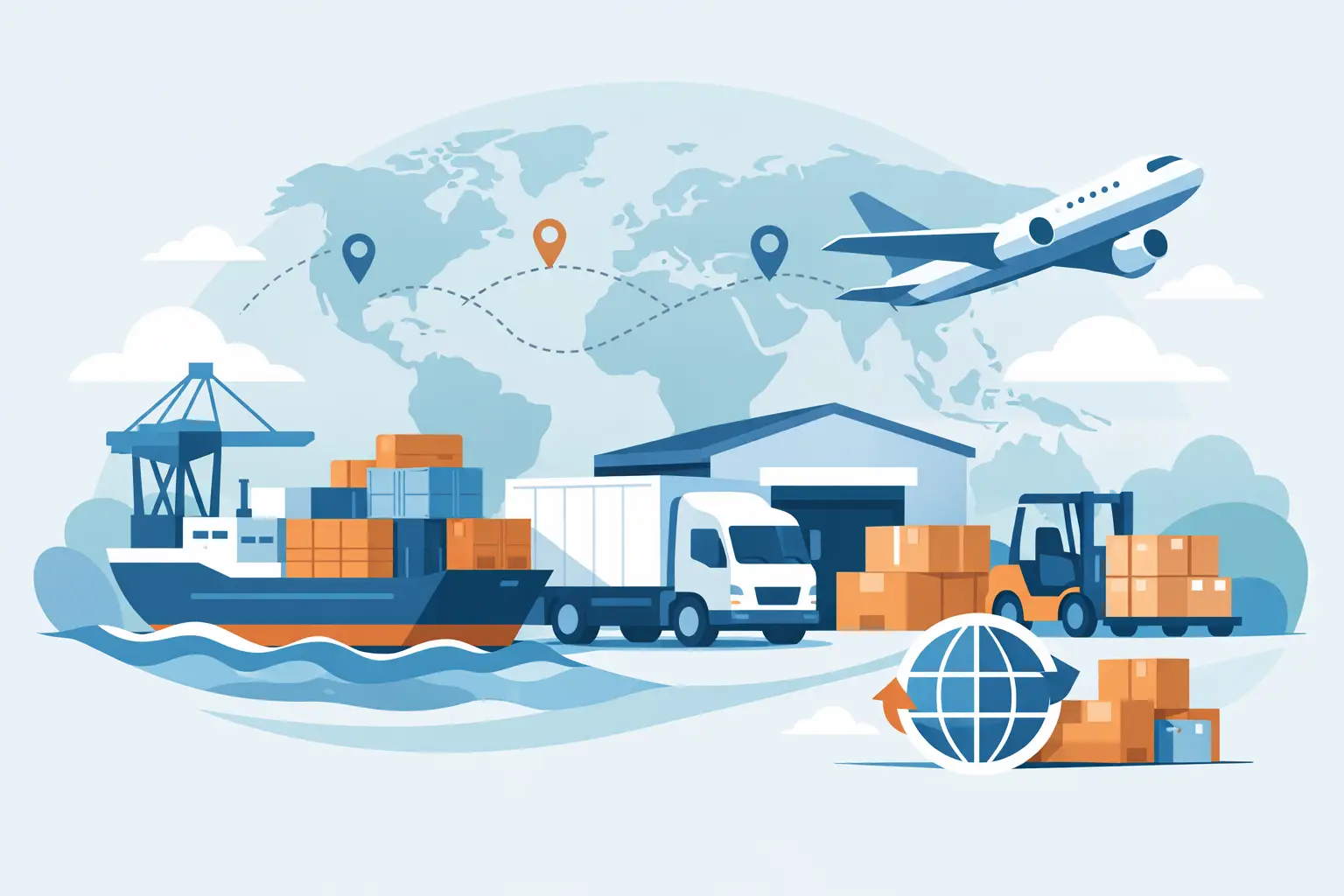
This is where freight forwarding adds real operational value. A capable freight forwarder does more than book cargo space. It organizes the movement of goods across air, sea, and land channels while aligning documentation, customs handling, transit planning, and delivery schedules. For companies shipping frequently, that coordination reduces friction across the entire supply chain.
The importance of freight forwarding becomes even more obvious when shipment volumes increase. A business may be able to manage occasional deliveries internally, but recurring imports, exports, or regional distribution often require a more structured logistics model. The more moving parts involved, the more valuable centralized control becomes.
Freight forwarding supports business continuity
For most commercial shippers, logistics is not a side function. It is a revenue function. Products must arrive to be sold, installed, processed, or distributed. Delays affect shelves, contracts, and production timelines.
Freight forwarding helps protect continuity by building process around movement. That includes selecting the right transport mode, scheduling dispatches, preparing paperwork, managing handoffs, and resolving issues before they become disruptions. Businesses that rely on regular replenishment, especially in retail, FMCG, industrial supply, and e-commerce, need that level of control.
There is also a practical risk management benefit. If one route becomes congested or one mode is no longer suitable, an experienced forwarding partner can adjust the plan. Air freight may solve urgency, sea freight may improve cost efficiency, and land freight may support regional distribution across GCC markets. The right decision depends on cargo type, margin pressure, lead time, and customer expectations.
Customs handling is a major reason freight forwarding matters
Many shipment problems begin long before cargo reaches a border. Incorrect documents, inconsistent product descriptions, valuation issues, or missing approvals can all delay clearance. That delay often creates additional costs, from storage charges to downstream delivery failures.
This is one of the clearest examples of the importance of freight forwarding. A freight forwarder helps ensure shipment data and documentation are aligned before cargo moves. That includes commercial invoices, packing lists, transport documents, declarations, and any shipment-specific requirements tied to the goods or destination.
For businesses operating in compliance-driven sectors, this matters even more. Government suppliers, industrial operators, and organizations with strict internal controls cannot afford preventable customs issues. They need a process that supports auditability, accuracy, and predictable clearance.
That does not mean every shipment will move without exception. Customs environments can change, inspections can occur, and special handling may be required. But strong forwarding support reduces avoidable errors and gives businesses a clearer response path when issues arise.
Freight forwarding improves cost control, not just transport speed
A common misconception is that freight forwarding is mainly about faster shipping. Speed matters, but cost discipline is just as important. The cheapest transport option is not always the most efficient, and the fastest option is not always commercially sensible.
Freight forwarding helps businesses match shipping decisions to actual operational needs. If stock is planned correctly, sea freight may provide better cost performance for larger volumes. If a product launch or urgent replenishment is at risk, air freight may justify the higher rate. If goods need to move across nearby markets, land freight may offer the right balance.
The value comes from making those decisions with full visibility of the trade-offs. Freight cost, transit time, customs timing, warehousing needs, and delivery commitments all affect the total logistics outcome. A forwarder that understands the broader supply chain can help avoid expensive short-term decisions that create bigger downstream costs.
This is especially relevant for businesses managing seasonal peaks or promotional demand. During high-volume periods, poor freight planning can lead to emergency shipments, warehouse congestion, and stock imbalances. Structured forwarding reduces that pressure by improving forecasting support and shipment coordination.
Visibility matters as much as movement
Operations teams do not just need cargo to move. They need to know where it is, what stage it has reached, and whether any action is required. Shipment visibility supports planning, customer service, procurement, and inventory control.
Freight forwarding plays a key role here because it brings multiple logistics stages into one managed view. Instead of chasing updates from different parties, businesses benefit from a clearer reporting line across dispatch, transit, customs, storage, and delivery.
That visibility has practical value across departments. Procurement teams can plan incoming stock more accurately. Sales teams can communicate realistic delivery timelines. Warehouse teams can prepare for arrivals. Management can identify recurring delays and improve supplier or route decisions.
For companies handling frequent shipments, visibility is not a convenience. It is part of operational control.
The importance of freight forwarding for scaling businesses
Growth puts pressure on logistics before many businesses expect it. More orders, more suppliers, more destinations, and tighter customer expectations all increase complexity. Without a structured forwarding model, internal teams often end up managing too many exceptions manually.
Freight forwarding helps businesses scale without losing control of shipment execution. It creates repeatable processes around booking, consolidation, documentation, customs, storage, and last-mile coordination. That consistency becomes valuable as order volumes rise or shipping patterns become more complex.
E-commerce brands are a good example. As order frequency increases, inbound inventory timing becomes more critical. A delay at origin or customs can affect marketplace availability, customer satisfaction, and cash flow. The same applies to retailers planning promotions and B2B suppliers working against contract schedules.
In these cases, freight forwarding is not just a transport service. It is a support structure for growth.
Integrated logistics creates stronger outcomes
Freight forwarding is most effective when it is connected to warehousing, customs support, domestic delivery, and account-based shipment management. Businesses benefit when fewer handoffs exist between service providers and when responsibility is clear.
This is where an integrated model becomes valuable. A provider that can manage freight movement alongside storage, customs handling, and distribution can reduce communication gaps and improve response times. Instead of treating each logistics stage as a separate transaction, the business gets a more coordinated operation.
That does not mean every company needs the same setup. Some only need forwarding for international cargo. Others need full support from inbound freight to warehousing and final delivery. The right model depends on shipment frequency, internal resources, product profile, and service expectations.
For many GCC businesses, however, one accountable logistics partner is easier to manage than multiple disconnected vendors. It supports speed, clarity, and responsibility when deadlines matter.
What businesses should look for in a freight forwarding partner
Not all freight forwarding services deliver the same value. Capacity matters, but process matters just as much. A dependable provider should offer route flexibility, documentation accuracy, customs capability, shipment visibility, and responsive coordination when plans change.
Industry fit also matters. A company moving retail inventory has different priorities from one handling industrial parts or government shipments. The right forwarding partner should understand those differences and build service around them.
For businesses in Kuwait and the GCC, regional execution is especially important. Cross-border movement, local delivery coordination, and storage support often need to work together. That is why many organizations prefer a logistics partner with operational depth rather than a booking-only model. K-Line reflects that approach by combining freight forwarding with warehousing, customs handling, transportation, and fulfillment under one accountable structure.
Freight forwarding is often most visible when something goes wrong. But its real value shows up when goods move on time, documents are accurate, customers are informed, and internal teams can plan with confidence. For businesses that depend on reliable cargo movement, that level of control is not optional. It is part of running a stable operation.