


Cross Border Logistics Solutions That Work
A delayed border crossing rarely looks serious at first. It starts with one missing document, one customs query, or one handoff between providers that nobody fully owns. Then stock arrives late, delivery promises slip, and operations teams spend their day chasing updates instead of moving freight. That is why cross border logistics solutions matter – not as a broad service label, but as a practical system for keeping cargo, inventory, and timelines under control.
For businesses in Kuwait and across the GCC, cross-border shipping is rarely just about transportation. It involves customs compliance, storage planning, routing decisions, shipment visibility, and the ability to respond when conditions change. If any one part of that chain is weak, the shipment may still move, but not efficiently and not predictably.
What cross border logistics solutions actually include
At the operational level, cross border logistics solutions combine several functions into one managed process. Freight has to be collected, documented, cleared, transported, tracked, and delivered. In many cases, it also needs temporary storage, order consolidation, or final-mile coordination after arrival.
That is why businesses with recurring shipment volumes usually outgrow fragmented logistics setups. One provider handles freight, another manages customs, and a third manages local delivery. On paper, that can look cost-effective. In practice, it often creates delays, duplicated communication, and unclear accountability when something goes wrong.
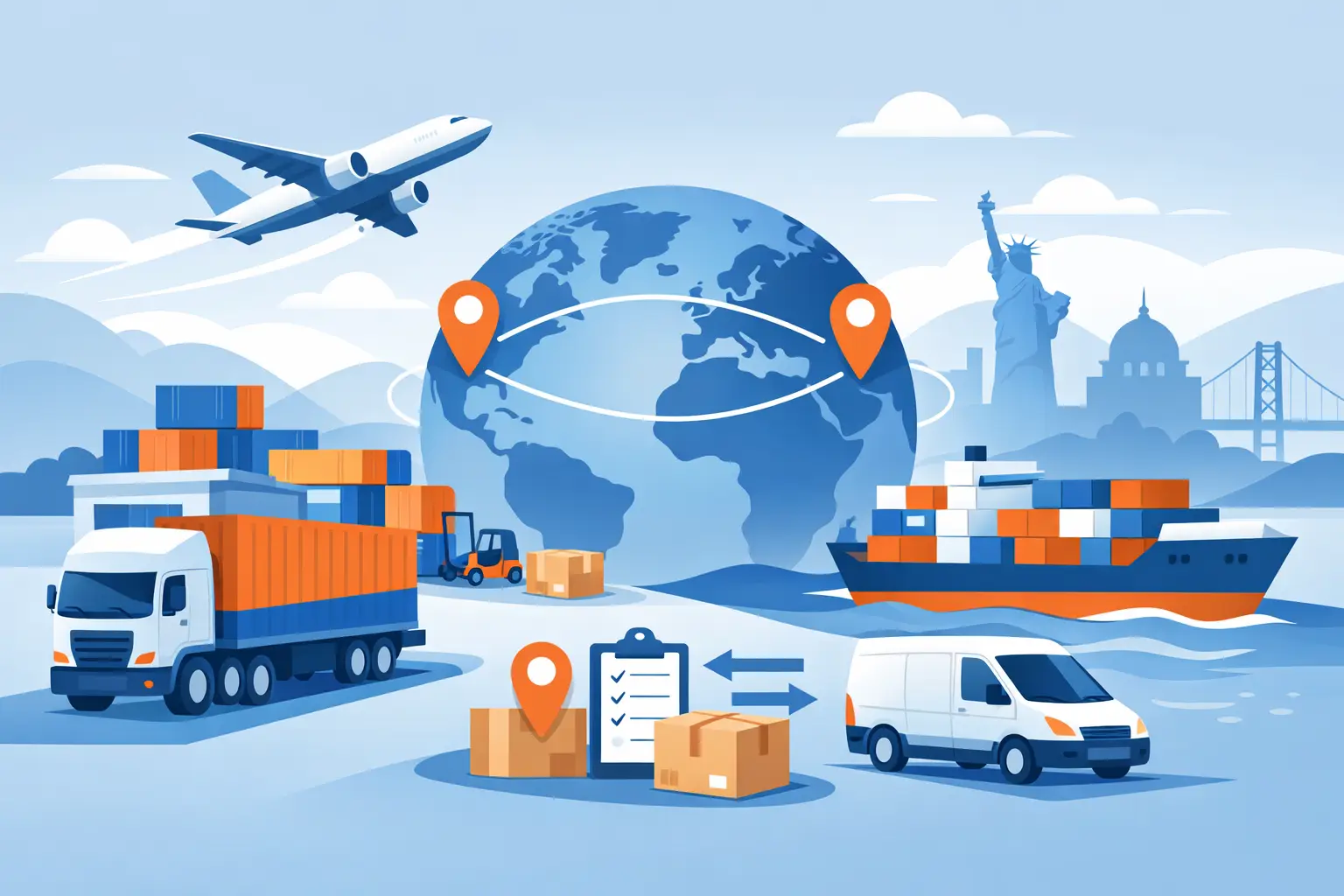
An effective cross-border model connects air, sea, and land freight with warehousing, customs clearance, and domestic distribution. It gives operations teams a clearer line of control and fewer points of failure. For importers, retailers, e-commerce operators, and industrial suppliers, that structure is often more valuable than chasing the lowest headline freight rate.
Why GCC businesses need stronger cross border logistics solutions
The GCC presents a specific logistics environment. Demand can be fast-moving, documentation standards matter, and delivery schedules often have little room for error. Retailers need replenishment before shelves run dry. E-commerce businesses need inbound and outbound flow to stay aligned. B2B suppliers may be supporting contract obligations, installation schedules, or production continuity.
In this environment, border movement is not a separate task from business performance. It directly affects inventory availability, customer satisfaction, and working capital. A shipment delayed at customs is not only a transport issue. It can disrupt promotions, slow invoicing, and increase storage pressure elsewhere in the network.
The right logistics setup also depends on cargo type. High-volume consumer goods, industrial materials, temperature-sensitive products, and urgent spare parts all move differently. The most efficient route for one shipment may be the wrong choice for another. That is where planning matters. Good cross border logistics solutions are not built around a single mode of transport. They are built around the service level, cargo profile, compliance requirement, and delivery window.
Speed matters, but control matters more
Many businesses ask for faster shipping when the real issue is poor coordination. If freight moves quickly but documents are incomplete or receiving capacity is not ready, speed alone will not solve the problem. The better question is whether the shipment is being managed end to end.
Control comes from visibility, process discipline, and having one accountable operator across key stages. That is especially relevant for frequent shippers. When shipment volumes rise, small inefficiencies become recurring costs.
Customs is not a side task
Cross-border performance often depends on customs readiness more than physical transit time. A well-routed shipment can still stall if declarations, supporting documents, commodity details, or permit requirements are not aligned.
Businesses that treat customs as an afterthought usually pay for it later through delays, storage charges, or repeated intervention by internal teams. Cross border logistics solutions should include customs handling as a core capability, not an add-on.
The main components of a reliable cross-border operation
A reliable logistics structure starts with transport planning, but it should not end there. Mode selection has to match urgency, cost tolerance, cargo volume, and destination requirements. Air freight supports speed, sea freight supports larger volumes and cost efficiency, and land freight often plays a critical role in regional movement within the GCC.
Warehousing is equally important. Cross-border cargo often needs staging before final delivery, whether for consolidation, order sorting, or inventory buffering. A warehouse is not just storage space. Used properly, it supports flow control and reduces pressure on downstream delivery operations.
Tracking visibility is another operational requirement. Businesses need status updates that help them act, not vague milestones that arrive after the fact. If a shipment is delayed, the value is in early visibility and a clear next step. That helps procurement teams update schedules, helps commercial teams manage customer expectations, and helps operations managers protect continuity.
The final component is execution ownership. When one logistics partner can manage freight movement, customs coordination, warehousing, and onward delivery, there is less room for confusion. That does not eliminate every delay, because cross-border logistics always involves external variables. But it does create a faster response when issues arise.
How to evaluate cross border logistics solutions for your business
The right setup depends on shipment pattern. A company importing occasional pallets has different needs than a business moving weekly replenishment orders across multiple markets. Before selecting a model, it helps to look at where delays, cost overruns, or communication failures are happening today.
If the problem is inconsistent transit time, the issue may be routing or carrier selection. If the problem is repeated customs delays, the issue may be documentation quality or clearance readiness. If the problem is poor delivery performance after arrival, domestic transport and warehousing may need to be integrated more tightly.
This is where many businesses benefit from working with a single logistics operator that can support multiple stages under one process. For companies in Kuwait and the GCC, that can mean fewer handoffs, better inventory coordination, and faster issue resolution. K-Line operates in that model, combining freight, customs, storage, and delivery support for customers that need day-to-day reliability rather than isolated shipment handling.
Ask practical questions, not general ones
When evaluating providers, broad promises are not enough. The useful questions are operational. Can they manage customs clearance directly? Can they support both recurring commercial freight and peak demand? Do they have warehousing capacity when inbound cargo needs staging? Can they provide shipment visibility that helps your team make decisions quickly?
It is also worth asking how exceptions are handled. Every cross-border operation faces disruption at some point. What matters is how quickly the provider identifies the issue, communicates it, and puts a corrective action in place.
Common trade-offs in cross-border shipping
There is no universal best option in logistics. Faster transport usually costs more. Lower-cost freight may extend lead times and require tighter inventory planning. Centralized warehousing can improve control, but it may add handling steps depending on the network design.
That is why the best cross border logistics solutions are built around business priorities, not generic assumptions. If the shipment supports a product launch or an urgent replenishment cycle, speed may justify the cost. If cargo is stable, forecastable, and high-volume, a slower but more economical route may be the smarter choice.
The same applies to visibility and service depth. Some businesses only need point-to-point freight. Others need customs support, storage, order management, and domestic delivery under one structure. The right answer depends on the cost of disruption in your business.
Building a logistics setup that scales
As shipment volume grows, logistics becomes less forgiving. Manual follow-up, fragmented providers, and unclear ownership create risk that may not show up during quiet periods but becomes obvious during promotions, seasonal peaks, or large contract movements.
A scalable cross-border model gives businesses room to grow without rebuilding the process every quarter. It supports recurring shipments, handles exceptions with discipline, and gives internal teams a clearer operating rhythm. That is especially valuable for businesses balancing inbound freight, fulfillment demand, and customer delivery commitments at the same time.
Cross-border shipping will always involve variables outside your control. Border procedures change, schedules shift, and demand patterns move quickly. The practical goal is not perfection. It is having a logistics structure that can absorb pressure, maintain visibility, and keep cargo moving with as little disruption as possible.
When cross-border movement is managed as one connected operation instead of a series of disconnected tasks, businesses gain something more useful than speed alone. They gain consistency. And in logistics, consistency is what protects inventory, customer commitments, and business continuity.