


Sea Freight for Bulk Cargo That Works
When a shipment involves thousands of tons of raw materials, oversized production inputs, or repeat commodity movements across borders, sea freight for bulk cargo stops being a simple transport choice and becomes an operational decision. Cost per ton matters, but so do loading methods, port handling, cargo stability, customs requirements, and the effect of delays on production schedules. For businesses moving bulk volumes, the real question is not whether ocean shipping is cheaper. It is whether the shipment plan is structured well enough to protect continuity.
That is why bulk cargo shipping needs a different standard of planning than containerized freight. A delay at origin, a mismatch in documentation, or poor coordination between port handling and inland transport can create downstream problems that cost far more than the freight itself.
What sea freight for bulk cargo actually covers
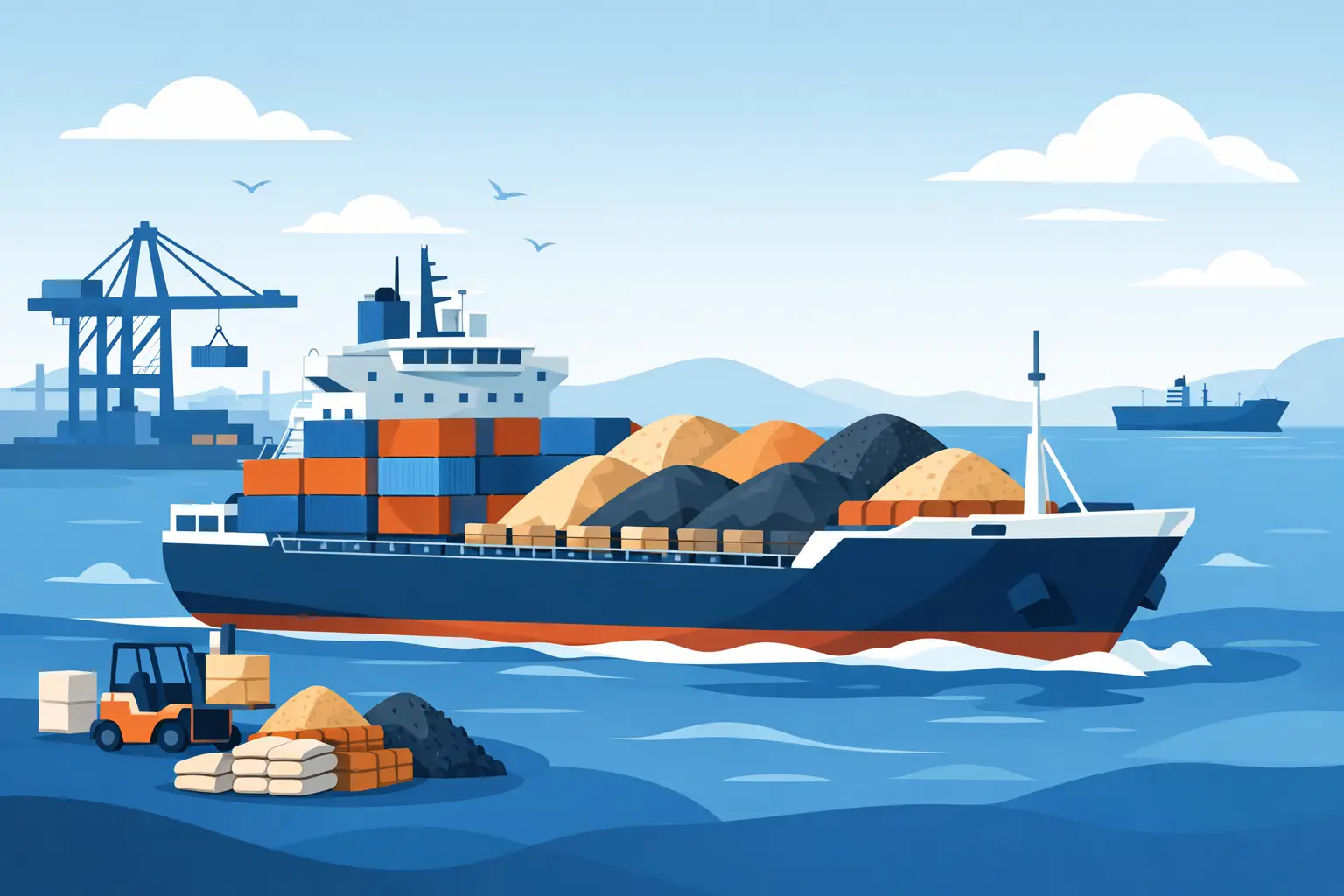
Sea freight for bulk cargo refers to ocean transport for large quantities of unpackaged or loosely packed goods that are shipped in volume rather than as standard palletized freight. This can include dry bulk such as grain, cement, minerals, fertilizer, and industrial raw materials, as well as breakbulk cargo such as steel products, heavy machinery, project materials, and oversized equipment that cannot move efficiently in standard containers.
In practical terms, bulk cargo is less about a single shipping category and more about how the cargo behaves. Some goods flow and can be loaded directly into a vessel hold. Others must be lifted, stacked, lashed, or protected individually. That difference shapes almost every operational decision, from vessel selection to terminal handling to discharge timing.
For importers, exporters, contractors, and industrial buyers in Kuwait and the GCC, this distinction matters because it affects pricing, lead times, handling risks, and the level of coordination required after arrival. Bulk freight often touches more parties than standard shipments do, including port operators, surveyors, customs teams, inland haulers, warehouse teams, and site receivers.
Why businesses choose sea freight for bulk cargo
The main advantage is cost efficiency at scale. When cargo volumes are high enough, sea freight often delivers the lowest transportation cost per unit. This is especially relevant for industries where margins are tied closely to landed cost, such as construction supply, manufacturing, agriculture, energy support, and FMCG inputs.
But cost is only one part of the decision. Bulk sea shipping also gives businesses access to vessel capacity that containers cannot always provide. If a shipment includes non-containerizable equipment, irregular dimensions, or a commodity that moves more efficiently loose, container freight may add handling complexity without adding value.
There is also a planning benefit. Bulk shipments can be aligned with production cycles, project mobilization, and long-term procurement schedules. A business importing raw materials every month, for example, may find that a structured sea freight program creates better predictability than ad hoc spot bookings.
That said, sea freight is not always the right answer simply because cargo is heavy or large. It depends on urgency, commodity sensitivity, available port infrastructure, discharge requirements, and inland delivery constraints. A low freight rate loses its value quickly if cargo arrives at a port that cannot handle it efficiently.
The operational factors that matter most
Bulk cargo moves reliably when the shipment is engineered around the cargo itself, not just the route. Weight, density, moisture sensitivity, stowage requirements, and lifting points all affect transport planning.
The first issue is cargo type. Dry bulk commodities like grain or cement require a different vessel and loading process than breakbulk cargo such as steel coils or industrial machinery. One cargo may depend on hold cleanliness and contamination control, while another may depend on crane access, dunnage, and lashing.
The second issue is port capability. Not every origin or destination port is equally equipped for bulk operations. Draft limits, berth availability, crane capacity, storage areas, and discharge speed all affect turnaround time. Businesses sometimes focus heavily on ocean transit days and overlook port congestion or handling limitations, even though those factors can create the longest delays.
The third issue is cargo protection. Bulk shipping is efficient, but it can expose cargo to handling stress, weather, shifting, and contamination if procedures are not managed correctly. This is especially relevant for materials with quality specifications, industrial equipment with vulnerable surfaces, or cargo that must reach site in ready-to-use condition.
Documentation is just as critical. Commodity descriptions, weight declarations, origin certificates, customs paperwork, and any required inspections need to match the actual shipment precisely. Bulk cargo often attracts closer attention because of its volume, value, or regulatory classification. Errors that might be corrected quickly on a smaller shipment can create serious hold-ups on a bulk movement.
Vessel choice and shipment design
A successful bulk shipment starts with matching the cargo to the right transport method. In some cases, that means a full bulk vessel. In others, it means breakbulk service, part-charter arrangements, or a multimodal plan that combines ocean freight with port storage and staged inland delivery.
This is where experience matters. A business may assume that the cheapest vessel option is the best one, but lower headline freight can come with longer waiting time, restricted handling windows, or discharge terms that shift operational risk back to the shipper or consignee. The right design depends on what the business needs most – lowest landed cost, faster rotation, minimized handling, or tighter scheduling.
For project cargo or industrial supply chains, timing can be more important than nominal freight savings. If a delayed component stops a production line or construction sequence, the freight decision needs to reflect that reality. Bulk shipping is most effective when it supports the full operating schedule, not just the transport budget.
Customs, storage, and inland coordination
Ocean transit is only one leg of the movement. Bulk cargo often creates pressure at destination because discharge happens quickly, but site readiness, customs release, or inland transport may not move at the same pace.
That is why businesses should treat customs clearance, storage capacity, and final-mile planning as part of one process. If cargo reaches port before documentation is complete, demurrage and storage charges can rise quickly. If the receiving site is not ready, cargo may need temporary warehousing or controlled staging. If inland transport cannot handle the volume or dimensions, port discharge can turn into a bottleneck.
For companies operating in Kuwait and across the GCC, this is where integrated logistics support becomes valuable. Freight forwarding alone does not solve the whole problem. The shipment also needs local execution, visibility, and accountable coordination across customs, warehousing, transport, and delivery scheduling. K-Line supports this model by combining freight movement with storage, customs handling, and domestic transport under one operating structure.
Common risks and how experienced shippers reduce them
The most common risk is assuming that bulk cargo behaves like regular freight at a larger scale. It does not. A standard shipment process often fails when cargo volume, weight, handling complexity, or compliance exposure increases.
Another common problem is incomplete pre-shipment planning. If loading equipment, lifting arrangements, cargo surveys, packaging standards, or discharge resources are not confirmed early, the shipment may still move, but not efficiently. The result is usually delay, added cost, or cargo damage that could have been prevented.
There is also the issue of visibility. Bulk shipments can involve multiple handoffs, and businesses need timely updates that mean something operationally. A generic status update is less useful than knowing whether the vessel berthed on time, whether discharge has started, whether customs documents are cleared, and whether inland delivery is booked against a confirmed receiving window.
The companies that manage bulk freight well usually do three things consistently. They define cargo specifications clearly, they align freight planning with destination operations, and they work with logistics partners who can take responsibility beyond the vessel booking.
When sea freight for bulk cargo is the right fit
Sea freight for bulk cargo is usually the right choice when shipment volumes are high, cargo urgency is manageable, and the business has a clear plan for handling at both origin and destination. It is especially effective for recurring procurement programs, large industrial inputs, construction materials, and project shipments that need structured coordination rather than one-off transport.
It may be less suitable when lead time is extremely tight, cargo value is unusually high relative to volume, or destination infrastructure is too limited to handle the shipment efficiently. In those cases, a mixed mode strategy or phased delivery plan may be more practical.
The right decision comes from looking beyond freight rates. Businesses should ask how the cargo will be loaded, protected, cleared, stored, discharged, and delivered to the point of use. That broader view is what keeps supply chains stable.
Bulk shipping rewards preparation. When the plan is accurate, documentation is controlled, and handling is matched to the cargo, sea freight can support large-scale movement with strong cost discipline and dependable execution. For businesses moving serious volume, that reliability is often what matters most when the next shipment is already on the schedule.