


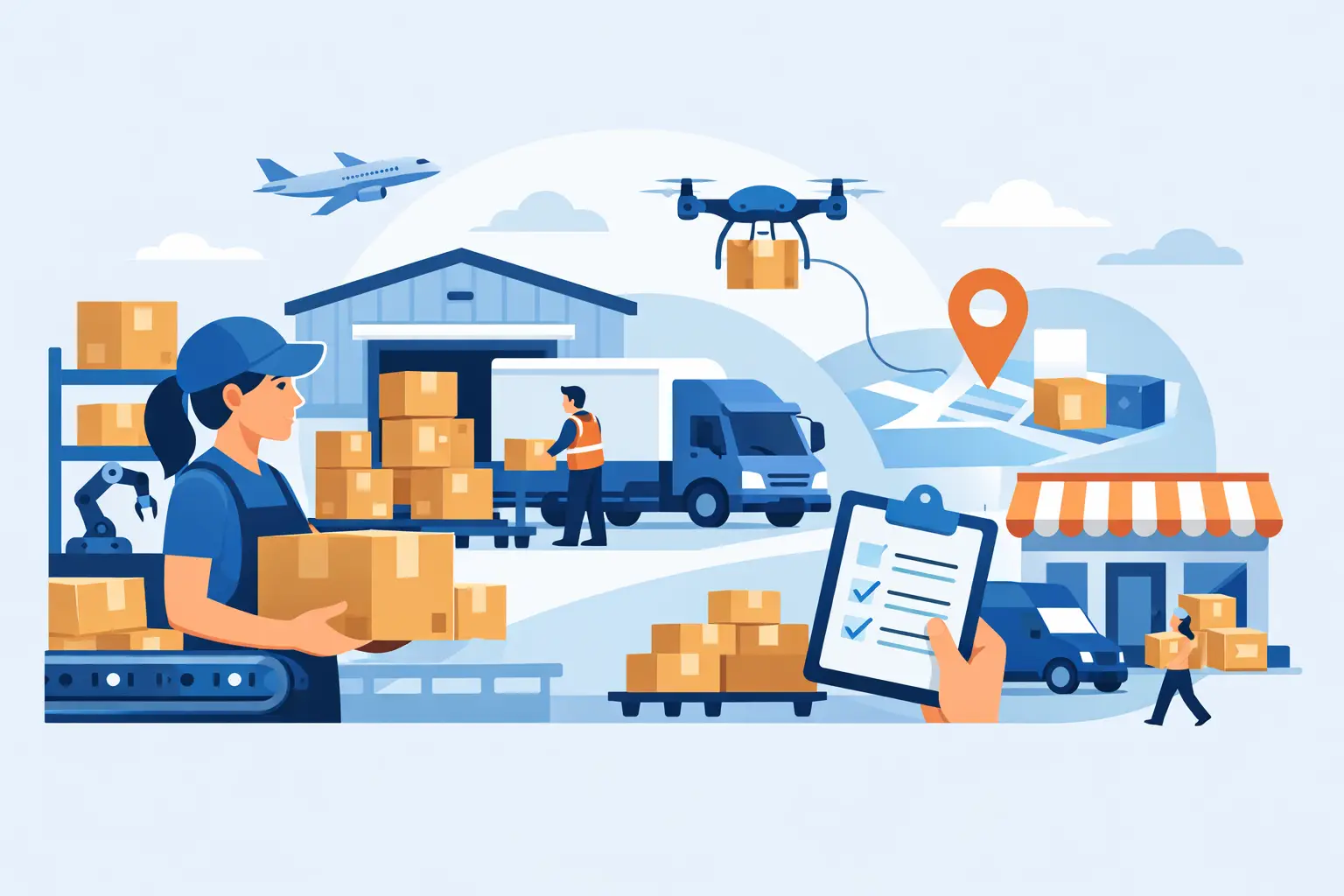
Order Fulfillment Services for Retailers
Late deliveries rarely start with the delivery vehicle. They usually start earlier – with inaccurate stock counts, delayed picking, poor handoff between warehouse and transport, or no clear process for peak order volume. That is why order fulfillment services for retailers matter far beyond packing boxes. They affect customer satisfaction, margin control, inventory accuracy, and the retailer’s ability to scale without losing operational control.
For retailers in Kuwait and across the GCC, the pressure is even more practical. Customers expect faster delivery windows, better visibility, and fewer stock issues, while businesses still need to manage customs, storage capacity, returns, and transportation across multiple sales channels. A fulfillment model that works for low order volume often breaks when online sales increase, seasonal demand spikes, or regional delivery requirements become more complex.
What order fulfillment services for retailers actually cover
Retail fulfillment is the operating layer between a confirmed sale and a completed delivery. In simple terms, it includes inventory receiving, put-away, storage, order processing, picking, packing, dispatch, shipping coordination, delivery, and in many cases returns handling.
For a retailer, this is not just a warehouse task. It is a connected process that touches customer service, procurement, store operations, e-commerce performance, and finance. If inventory is not visible in real time, online orders can be accepted for items that are not actually available. If picking is slow, same-day or next-day service becomes difficult. If transportation is separated from warehouse execution, handoff delays become common.
Strong fulfillment services close these gaps. They create one controlled process from inbound stock to final-mile delivery, with clear accountability at each step.
Why retailers outgrow in-house fulfillment
Many retailers begin with internal fulfillment because it gives them direct control. That approach can work when SKU count is limited, order volume is stable, and delivery geography is narrow. The problem comes when growth changes the operating requirements.
A business that sells through one store and a basic online channel may manage with a small internal team. But once the same business adds marketplace orders, wholesale deliveries, promotional campaigns, and regional shipping, the workload changes fast. Storage becomes tighter, order cut-off times become more demanding, and inventory errors become more expensive.
At that stage, in-house fulfillment often creates hidden costs. Labor becomes reactive. Warehouse space is used inefficiently. Dispatch planning gets rushed. Customer service teams spend more time fixing shipment problems than supporting sales. The issue is not simply capacity. It is process maturity.
That is where outsourced order fulfillment services for retailers can add value. The main benefit is not only additional space or labor. It is access to an operating structure built for consistency, speed, and volume changes.
The real business case for outsourced fulfillment
Retailers usually evaluate fulfillment based on shipping cost. That matters, but it is only one part of the picture. A lower shipping rate does not help if inventory accuracy is poor or if orders leave the warehouse late.
The stronger business case comes from four areas.
First, service performance improves. Orders are processed faster, delivery promises are more realistic, and customers receive better tracking visibility. This directly affects repeat purchases and brand trust.
Second, working capital is managed more effectively. Better inventory control reduces overstocking, duplicate purchasing, and stock losses caused by poor storage discipline.
Third, retail teams stay focused on selling. Instead of building internal warehousing capability, the business can concentrate on merchandising, channel growth, pricing, and customer acquisition.
Fourth, scaling becomes more practical. Seasonal demand, campaign spikes, and new market expansion are easier to support when warehousing and transport are already structured to handle variable volume.
What to look for in order fulfillment services for retailers
Not all fulfillment providers are built for retail operations. Some are set up for basic storage and dispatch, but not for the pace, SKU complexity, and service expectations that retail requires.
A retailer should look first at inventory control. If stock visibility is weak, every other service metric becomes harder to trust. You need confidence in receiving, cycle counts, stock status, and order allocation.
The next area is order processing discipline. Fast fulfillment depends on clear cut-off times, accurate picking, packing standards, exception handling, and dispatch coordination. This matters even more when a retailer manages both B2C and B2B orders, since carton labeling, packing configuration, and delivery timing may differ by channel.
Transportation capability also needs close review. A warehouse can process orders correctly and still fail the customer if domestic delivery, GCC distribution, or last-mile coordination is inconsistent. Retail fulfillment works best when warehousing and transportation are managed as one connected service.
Then there is compliance. For cross-border retail, customs processes, documentation accuracy, and shipment classification can affect both speed and cost. Retailers moving regulated goods, consumer products, electronics, or high-volume imports should not treat this as a minor detail.
Finally, consider accountability. If storage, customs, transport, and delivery are split across multiple vendors, delays are harder to diagnose and fix. A more integrated model often gives retailers better control because there is one operating partner responsible for execution.
Fulfillment models vary by retail business
There is no single fulfillment setup that fits every retailer. A fast-moving consumer goods brand has different requirements from a furniture retailer or an apparel seller with high return rates.
For example, a retailer with frequent low-value orders may prioritize picking speed and domestic last-mile delivery. A business handling higher-value products may focus more on accuracy, packaging standards, and controlled storage. A company serving both retail customers and wholesale accounts may need mixed fulfillment flows from the same inventory pool.
This is why the right solution depends on order profile, SKU behavior, storage conditions, delivery geography, and channel mix. The best provider is not always the one with the largest warehouse. It is the one with processes aligned to how your retail operation actually works.
Where retailers often misjudge fulfillment risk
One common mistake is treating fulfillment as a back-end cost center instead of a customer experience function. The customer may remember the product, but they also remember if delivery was late, if the item arrived damaged, or if tracking updates were unclear.
Another mistake is waiting too long to upgrade fulfillment operations. Retailers often delay change until order volume is already causing service failures. By then, the business is reacting under pressure. It is usually more effective to strengthen fulfillment before major expansion, promotional periods, or regional rollout.
Some retailers also focus heavily on warehouse rates while underestimating operational exceptions. Returns, split shipments, failed deliveries, address issues, damaged goods, and customs delays can create significant cost if the provider does not have structured exception management.
Integrated logistics gives retailers more control
Retail fulfillment works better when warehousing, freight, customs handling, and delivery are connected. This reduces handoff risk and improves visibility from inbound supply to outbound delivery.
For businesses importing goods, the connection between freight forwarding and fulfillment is especially valuable. If inbound shipments are delayed, incomplete, or poorly coordinated with warehouse receiving, inventory availability suffers immediately. A provider that can manage inbound freight, clearance, storage, and order distribution under one operating model gives retailers a more stable supply chain.
This matters in the GCC, where regional shipping timelines, customs requirements, and cross-border movement can affect launch schedules, replenishment cycles, and promotional planning. Retailers need more than storage space. They need a fulfillment structure that supports continuity.
A company such as K-Line is positioned around that integrated approach, combining freight, warehousing, customs, transportation, and fulfillment in one accountable service model. For retailers managing time-sensitive and high-volume flows, that kind of operating alignment can reduce friction across the full order cycle.
When it is time to change providers or outsource
Retailers usually see the signs early. Orders are increasing, but service levels are falling. Inventory adjustments become frequent. Customer complaints rise after promotions. Store replenishment competes with online orders for the same stock. Internal teams spend more time expediting than planning.
Those are not minor warehouse issues. They are signs that fulfillment capacity, process discipline, or systems support no longer match business demand.
The right response is not always full outsourcing. In some cases, a hybrid model works better, with selected product lines, regions, or channels moved to a fulfillment partner first. That allows the retailer to test service performance while keeping part of the operation internal. In other cases, a full transition makes more sense because fragmented operations are already creating delays and duplication.
The best decision comes from operational facts: order volume, delivery targets, SKU complexity, import flow, space constraints, and the real cost of service failure.
Retail growth is easier to plan than repair. If your fulfillment model cannot support accurate inventory, timely dispatch, and reliable delivery at scale, it will eventually slow sales, strain teams, and weaken customer trust. The right fulfillment partner should not simply move orders out the door. It should give your retail business more control over how those orders are executed every day.