


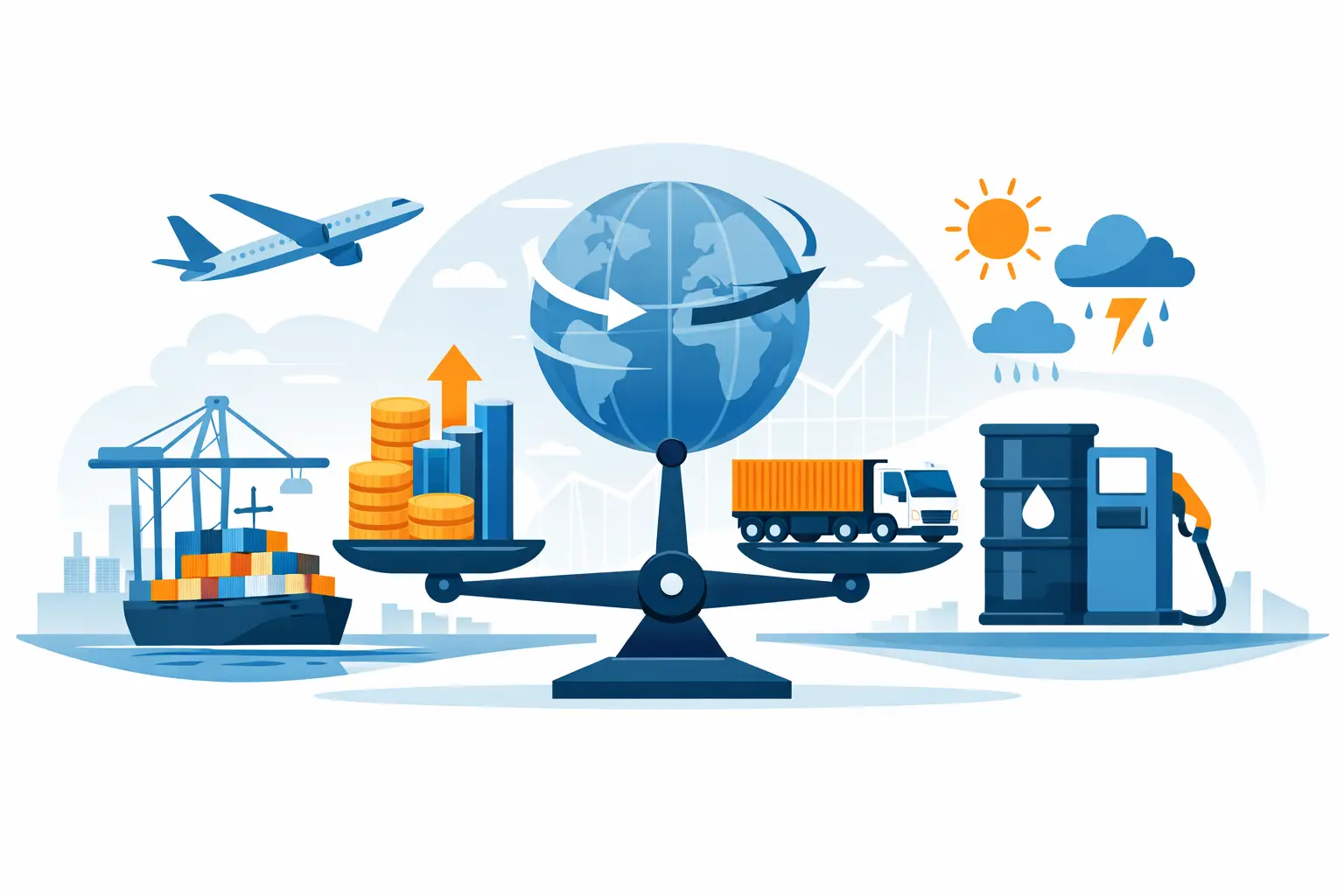
What Affects Freight Rates Most?
A shipment can move the same distance twice and still come back with two very different quotes. That is usually the first real lesson in what affects freight rates. Pricing is not built on distance alone. It reflects capacity, timing, cargo profile, documentation, market conditions, and the level of operational control required to move freight without delay.
For businesses in Kuwait and across the GCC, this matters because freight cost is rarely an isolated line item. It affects landed cost, inventory planning, delivery commitments, and customer experience. If you understand what pushes rates up or helps keep them stable, you can make better decisions before cargo is booked, not after costs have already moved.
What affects freight rates in day-to-day shipping
Freight rates are shaped by supply and demand first. When carrier space is tight and shipment volumes rise, prices move up. When capacity is available and demand softens, pricing becomes more competitive. This applies across air, sea, and land freight, although the way it shows up is different in each mode.
In air freight, rates can change quickly because capacity is limited and demand is often urgent. A surge in seasonal imports, a disruption on major trade lanes, or reduced airline capacity can tighten space within days. In sea freight, the swings may be tied to vessel availability, port congestion, blank sailings, or container imbalance. In land freight, rate pressure often comes from truck availability, border movement, fuel cost, and route demand.
That is why freight pricing should be viewed as operational pricing, not fixed pricing. The quote reflects current shipping conditions as much as the shipment itself.
Mode of transport has the biggest pricing impact
The clearest factor in freight cost is the transport mode you choose. Air is usually the fastest and most expensive. Sea is typically more economical for larger volumes, but transit times are longer and schedules can be affected by port operations. Land freight often sits between the two, especially for GCC distribution and regional cross-border moves.
The right choice depends on what the business is protecting. If the priority is speed, air may reduce the cost of stockouts, production delays, or missed delivery windows even if the freight invoice is higher. If the priority is cost per unit, sea freight may offer better value, particularly for replenishment cargo that can tolerate longer lead times. Land freight can be highly efficient for regional distribution when timing, route access, and customs coordination are managed well.
This is where many pricing discussions go wrong. A lower freight rate is not always the lower logistics cost. The shipment has to be evaluated against urgency, inventory carrying cost, risk of delay, and delivery commitments.
Shipment size, weight, and volume all matter
Carriers do not price freight based only on actual weight. They also look at dimensional weight or volume, depending on the mode. Lightweight but bulky cargo can cost more than expected because it occupies valuable space. Dense cargo may be more efficient from a pricing standpoint, even when total weight is higher.
In air freight, dimensional weight is a major factor because aircraft capacity is limited by both space and load restrictions. In sea freight, pricing may be based on full container use or less-than-container-load volume. In land freight, truck space, pallet count, loading pattern, and axle limitations can all influence the final rate.
Packaging also plays a role. Poorly optimized packing can increase chargeable volume, reduce stackability, and create handling challenges. Businesses that standardize packaging and pallet configuration often gain better shipping efficiency over time because they use space more effectively and reduce exceptions during loading.
Route, origin, and destination change the quote
Not all lanes are priced equally. A shipment moving between major trade hubs with regular service will often have more stable pricing than a shipment going to a secondary destination with limited frequency or added handling requirements. The number of transfer points, route demand, and regional infrastructure all influence the rate.
Origin and destination conditions matter as well. Port congestion, airport backlogs, road restrictions, or border processing issues can add time and cost. Some routes also carry higher operational risk because of security conditions, equipment shortages, or regulatory complexity.
For GCC and cross-border shipments, the route is not just geography. It includes border timing, customs readiness, local transport coordination, and delivery access at the final destination. A shipment that looks straightforward on paper can become more expensive if the route requires extra handling or faces regular clearance delays.
Fuel and carrier operating costs move constantly
Fuel is one of the most visible cost drivers in freight. When fuel prices rise, air, sea, and land carriers often apply surcharges or adjust pricing models to protect operating margins. Because fuel markets move independently of shipment demand, rate increases can happen even when cargo volumes are steady.
Beyond fuel, labor, equipment maintenance, insurance, port charges, airport fees, and regulatory compliance all feed into freight pricing. Carriers and forwarders absorb some variation, but significant shifts are typically reflected in customer quotes.
This is one reason short-term spot pricing can be volatile. Long-term shipping plans, forecasted volumes, and consistent shipment patterns often allow businesses to manage cost more effectively than ad hoc booking.
Seasonality and peak demand raise rates fast
Peak periods are a regular feature of freight markets. Retail cycles, holiday demand, pre-Ramadan stock building, year-end replenishment, and major promotional periods can all push volumes up. When too many shipments compete for the same capacity, rates climb.
The timing of peak impact depends on the mode and trade lane. Air freight may tighten sharply around urgent retail launches or delayed sea cargo rollovers. Sea freight may see pressure before major holiday closures or during import surges. Land transport can tighten when regional demand spikes and truck availability becomes limited.
The practical issue is not only higher pricing. Peak periods also reduce flexibility. Booking windows shrink, alternative schedules fill quickly, and service reliability becomes harder to maintain without advance planning.
Customs, compliance, and documentation affect cost
A shipment with clean paperwork usually moves faster and with fewer added charges. A shipment with missing, inaccurate, or inconsistent documentation can trigger inspections, storage, demurrage, rehandling, or clearance delays. Those costs often get grouped into freight-related spend even though the root cause is compliance.
Commodity classification, country-of-origin requirements, permit controls, and import restrictions can all affect the final price to move cargo. Certain goods require specialized declarations, safety documents, or approvals. Others may face duties, controlled handling, or route limitations.
For businesses moving frequent shipments, documentation quality is a pricing issue as much as an administrative one. The more predictable the paperwork and customs process, the easier it is to avoid avoidable charges and protect transit time.
Cargo type and handling requirements increase rates
Standard cargo is the easiest to price and move. Rates typically increase when freight needs special handling. That includes temperature-sensitive goods, hazardous materials, oversized cargo, fragile products, high-value shipments, and cargo that requires secure chain-of-custody controls.
These shipments often need trained handling teams, certified packaging, additional insurance consideration, special equipment, or restricted routing. Even when the distance is unchanged, the service level is not. That difference is reflected in the quote.
There is also a trade-off here. Specialized freight services cost more, but they reduce the risk of damage, non-compliance, and disruption. For sensitive cargo, the cheaper option can become the expensive option very quickly if it creates rework or loss.
Service level, speed, and visibility affect freight rates
Two shipments may move on the same lane but carry different prices because the service commitment is different. Express handling, priority uplift, direct routing, dedicated trucking, appointment delivery, and enhanced tracking can all increase the rate.
For many businesses, that added cost is justified. If production depends on a part arriving on time, or if an e-commerce operation is protecting customer delivery promises, service reliability has measurable value. The same applies when warehousing, customs coordination, and final-mile delivery are managed under one operating structure. Better control often reduces delays between handoffs.
This is where working with a logistics partner rather than booking shipment by shipment can help. A provider with freight, storage, customs, and delivery capability can often identify cost pressure early and offer alternatives before the shipment becomes urgent. K-Line supports this kind of control by aligning transport execution with warehousing, clearance, and visibility across the move.
How to manage the factors that affect freight rates
You cannot control market pricing, but you can control how exposed you are to it. Better forecasting helps avoid peak booking. Flexible mode selection improves cost options. Strong packaging reduces wasted volume. Accurate documents prevent delay charges. Consolidating shipments can improve efficiency, while splitting urgent and non-urgent cargo can protect both service and budget.
The key is to treat freight planning as part of operations, not just procurement. When logistics teams, commercial teams, and inventory planners share timing and volume data early, freight costs usually become easier to manage. The quote improves because the shipment plan improves.
Freight rates will always move. The businesses that handle that best are not the ones looking for a single cheap shipment. They are the ones building enough visibility and discipline into their shipping process to choose the right service, at the right time, for the right cargo.