Ecommerce Logistics Future Trends That Matter
A two-day delivery promise means very little if inventory is in the wrong warehouse, customs paperwork is incomplete, or last-mile capacity disappears during peak season. That is why ecommerce logistics future trends are no longer just a planning topic for strategy teams. For retailers, distributors, and fast-moving brands in Kuwait and across the GCC, they are now an operating issue tied directly to margin, customer retention, and business continuity.
The next phase of e-commerce logistics will not be defined by one breakthrough. It will be shaped by tighter coordination across warehousing, transportation, customs, delivery networks, and data visibility. Businesses that treat logistics as a back-office function will feel more pressure from rising customer expectations and inconsistent supply conditions. Businesses that build flexible logistics capacity into their operating model will be in a stronger position to scale.
The ecommerce logistics future trends businesses should watch
The most important change is that logistics is becoming more integrated with commercial planning. Sales campaigns, replenishment timing, stock positioning, and delivery promises can no longer sit in separate departments. If marketing runs a promotion without checking fulfillment capacity, service levels suffer. If procurement brings in stock without a warehousing and outbound plan, inventory starts creating cost instead of value.
This is pushing companies toward end-to-end logistics models where freight, storage, fulfillment, and delivery work as one controlled flow. The benefit is not only speed. It is also fewer handoff failures, clearer accountability, and better response when demand shifts unexpectedly.
For the GCC market, this matters even more because cross-border movement, customs handling, and mixed delivery requirements add complexity quickly. A business may need international inbound freight, domestic fulfillment, and regional dispatch at the same time. The providers that can coordinate these functions under one operating structure will become more valuable.
Inventory placement will become more strategic
For years, many businesses focused on total stock volume. The next step is focusing on stock location. If inventory is concentrated too heavily in one facility, delivery times increase and transportation costs rise. If it is split too aggressively across sites, stockholding costs and forecasting errors can increase.
The right answer depends on order density, SKU movement, and service area. Fast-moving items may justify positioning closer to major delivery zones, while slower lines may remain centralized. This is one of the clearest ecommerce logistics future trends because customer expectations are shortening delivery windows, while businesses are still under pressure to protect working capital.
In practice, companies will need better demand forecasting and stronger warehouse discipline. More storage space alone will not solve the problem. Placement logic, replenishment timing, and picking efficiency matter just as much.
Delivery speed will remain important, but predictability will matter more
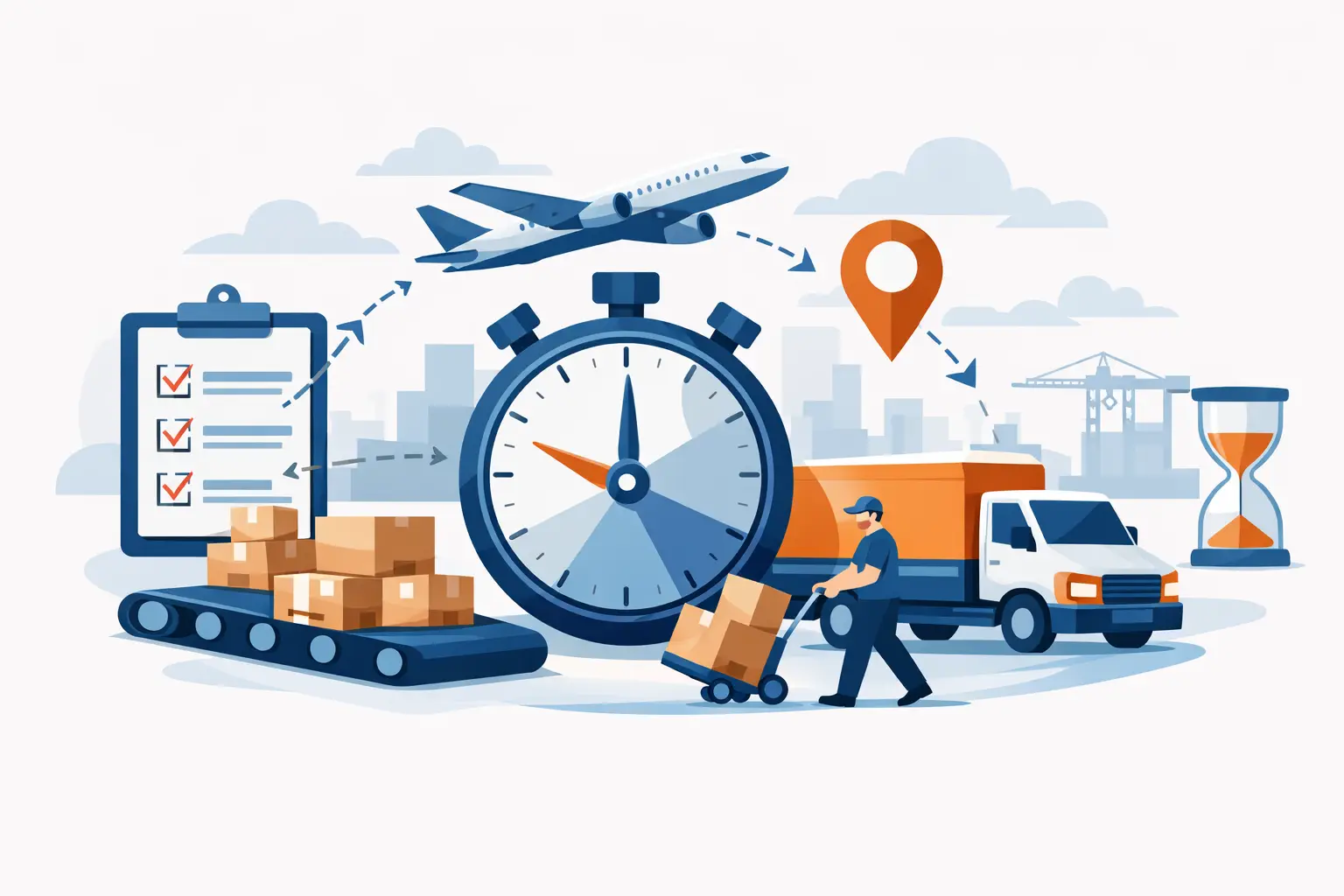
Customers still want fast delivery, but many businesses are learning that delivery reliability has a stronger effect on trust than headline speed. A realistic next-day promise is often better than an unreliable same-day option that fails during peak periods.
This will change how e-commerce operators set service levels. Rather than offering every speed option in every area, more businesses will segment delivery promises by location, product type, and order cutoff time. That approach protects the customer experience while keeping transportation costs under control.
For operations teams, this means carrier management and route planning will become more performance-driven. Delivery networks will be judged less by advertised speed and more by on-time rates, exception handling, and visibility during delays.
Automation will grow, but not every business needs the same level
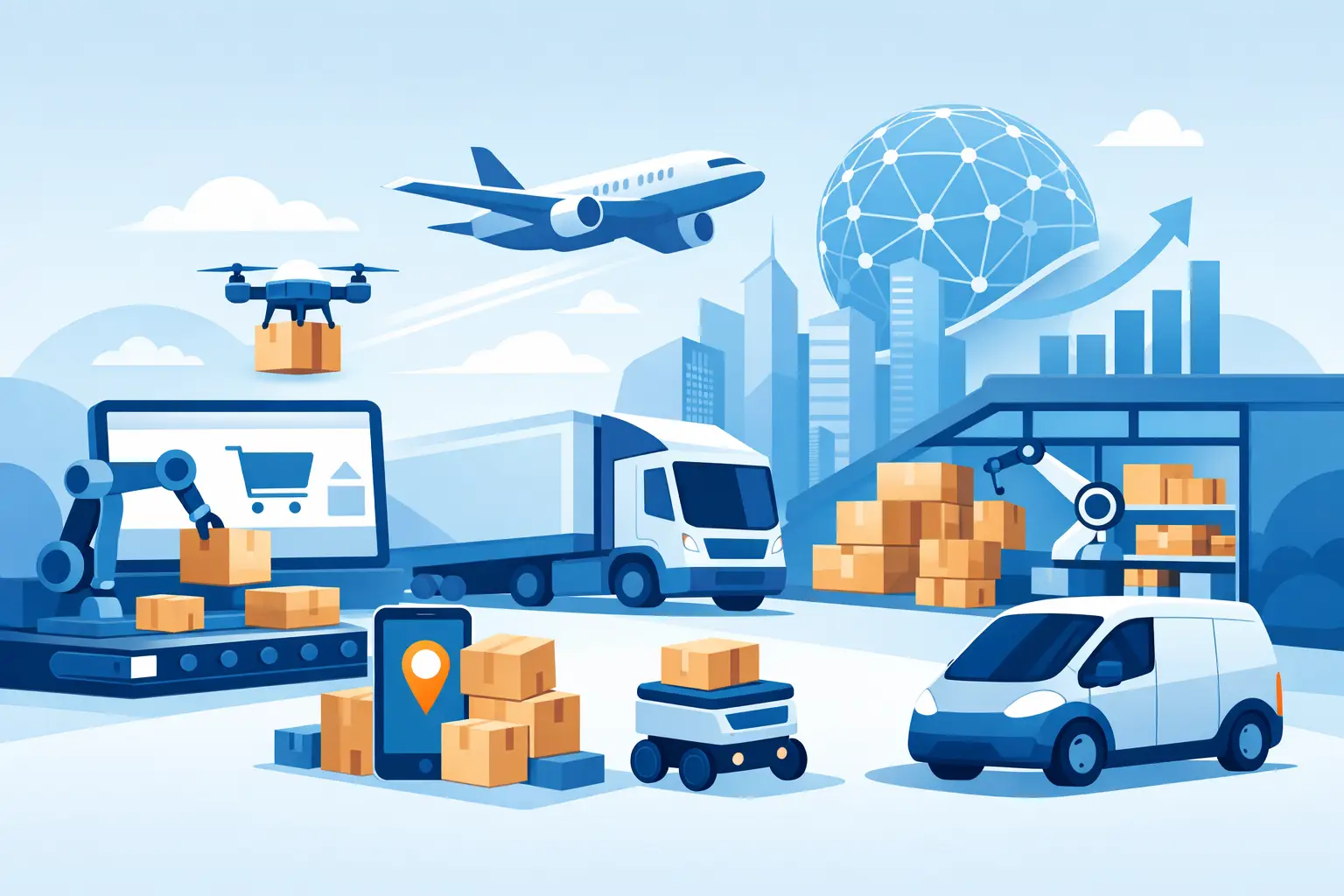
Automation is often treated as an all-or-nothing decision. In reality, most businesses will adopt it gradually. Barcode discipline, scanning checkpoints, order status integration, and warehouse management systems often deliver value before robotics ever enters the conversation.
For mid-sized and growing e-commerce businesses, the practical question is not whether automation is coming. It is where manual work is currently creating delays, errors, or labor pressure. In one operation, that may be receiving and put-away. In another, it may be order batching, pick confirmation, or dispatch reconciliation.
The trade-off is straightforward. Automation can increase throughput and accuracy, but it also requires process stability, training, and upfront investment. If a business has poor inventory accuracy, inconsistent SKU labeling, or weak system integration, adding automation too early can simply accelerate mistakes.
That is why the strongest operators will focus first on process control. Once core workflows are stable, automation becomes a multiplier rather than a risk.
Returns logistics will move closer to the center of the model
Returns have a direct effect on margin, resale timing, and customer confidence. Yet many businesses still treat them as an afterthought. That approach will become harder to sustain as online categories mature and customer expectations rise.
A better returns operation requires clear reverse logistics rules, fast item inspection, accurate status updates, and a path for restocking, disposal, or replacement. The faster returned goods are processed, the less inventory value is lost. The clearer the status, the fewer support inquiries a business has to manage.
This is especially relevant for apparel, electronics, consumer goods, and high-volume marketplace sellers. In these sectors, reverse movement is not an exception. It is part of the operating model.
Visibility is becoming a service requirement, not a premium feature
One of the strongest shifts in ecommerce logistics future trends is the move from basic tracking to operational visibility. Customers want to know where an order is. Businesses need more than that. They need to know what is delayed, why it is delayed, what inventory is available, and where intervention is required.
That changes the role of logistics data. Tracking updates are useful, but decision-making requires exception reporting, milestone accuracy, and a clear view across freight, warehousing, customs, and last-mile handoff. Without that, teams end up reacting late and manually chasing information across providers.
For commercial clients, visibility also supports planning. If inbound shipments are delayed, sales teams can adjust promotions. If customs clearance is pending, procurement teams can reset expectations. If a delivery route is under pressure, customer service can communicate early instead of after complaints arrive.
The point is not data for its own sake. It is operational control.
Cross-border compliance will stay a competitive factor
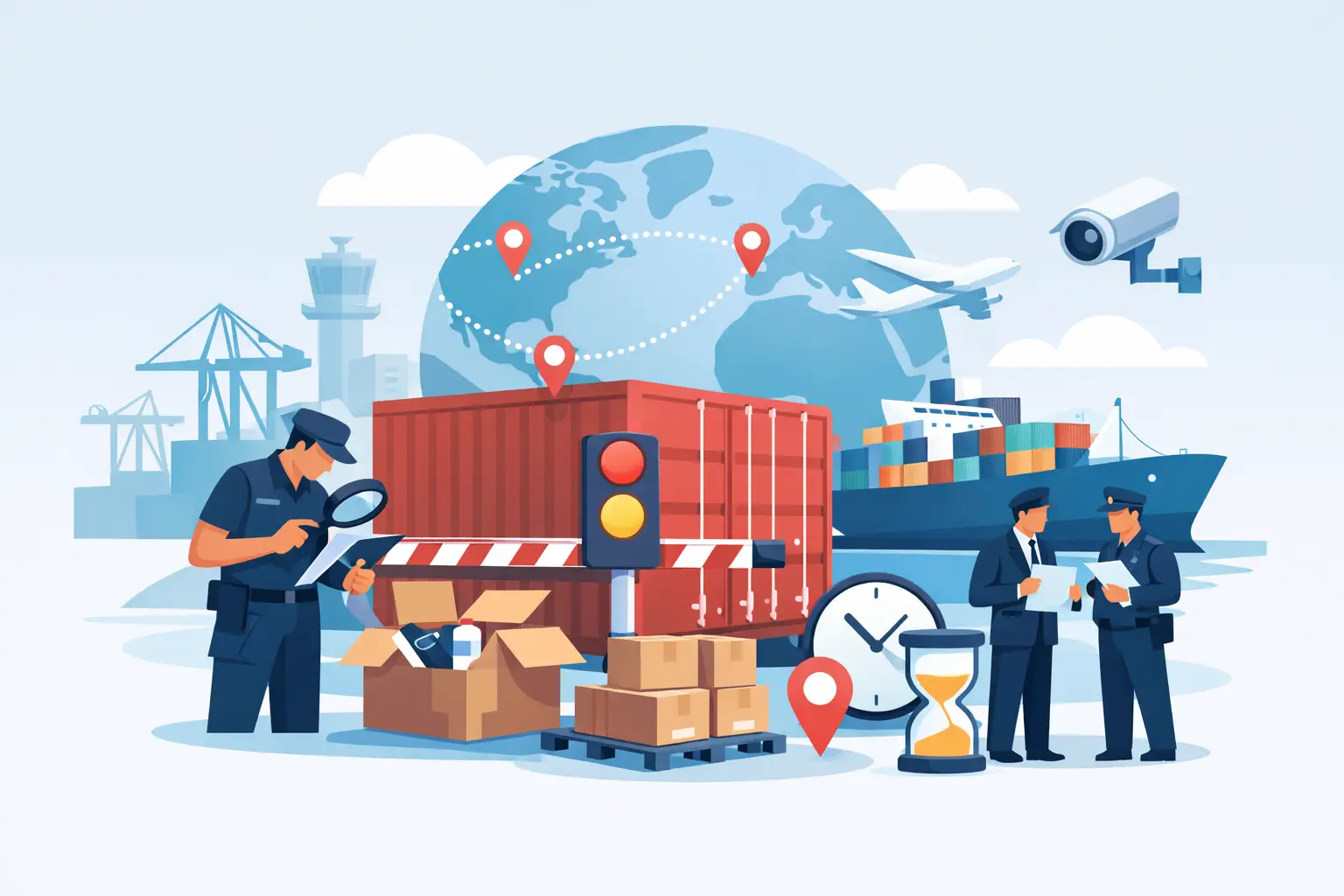
In the GCC, cross-border e-commerce growth depends on more than transport capacity. It depends on documentation quality, customs readiness, commodity handling rules, and the ability to move shipments without preventable delays.
As sales channels expand across borders, compliance becomes more commercial. A missed classification, incomplete invoice, or unclear product description can create disruption that affects customer experience and cash flow at the same time. Businesses that plan customs as part of the sales process, not just the shipping step, will perform better.
This is where experienced logistics coordination matters. A provider with freight forwarding, customs handling, warehousing, and domestic delivery under one structure can reduce friction because information does not have to be rebuilt at every handoff. For businesses managing regional growth, that kind of accountability is increasingly valuable.
Cost pressure will force smarter network decisions
Logistics leaders are under pressure from both sides. Customers expect better service, while transportation, labor, and storage costs remain sensitive. That means the future will not be won by offering every service level at any cost. It will be won by designing networks that are commercially sustainable.
Some businesses will move toward hybrid models where premium delivery is reserved for urgent orders or high-value customers, while standard delivery remains the default for broader volume. Others will reduce failed delivery attempts by tightening address validation, delivery communication, and cutoff management.
There is no single model that fits every operation. A marketplace seller, an FMCG distributor, and a B2B supplier will each need different fulfillment logic. What matters is aligning logistics promises with product economics and customer expectations.
Partnerships will matter more than provider count
Managing multiple providers can create flexibility, but it can also create fragmented accountability. When freight, warehousing, customs, and delivery sit with separate operators, delay resolution often slows down because each party controls only part of the process.
That is why many businesses are reassessing what they want from a logistics partner. The question is shifting from lowest unit cost to total operating reliability. K-Line and similar integrated operators are well positioned in this environment because businesses increasingly want one accountable structure that can support inbound movement, storage, fulfillment, and delivery without losing visibility between stages.
For high-volume or time-sensitive operations, that structure supports continuity. It also makes scaling easier during seasonal peaks, product launches, or regional expansion.
The businesses that adapt best to these changes will not be the ones chasing every new tool or trend headline. They will be the ones building tighter control over inventory, movement, compliance, and delivery promises. In e-commerce, growth is exciting, but stable execution is what customers remember.