


What Is Ecommerce Fulfillment?
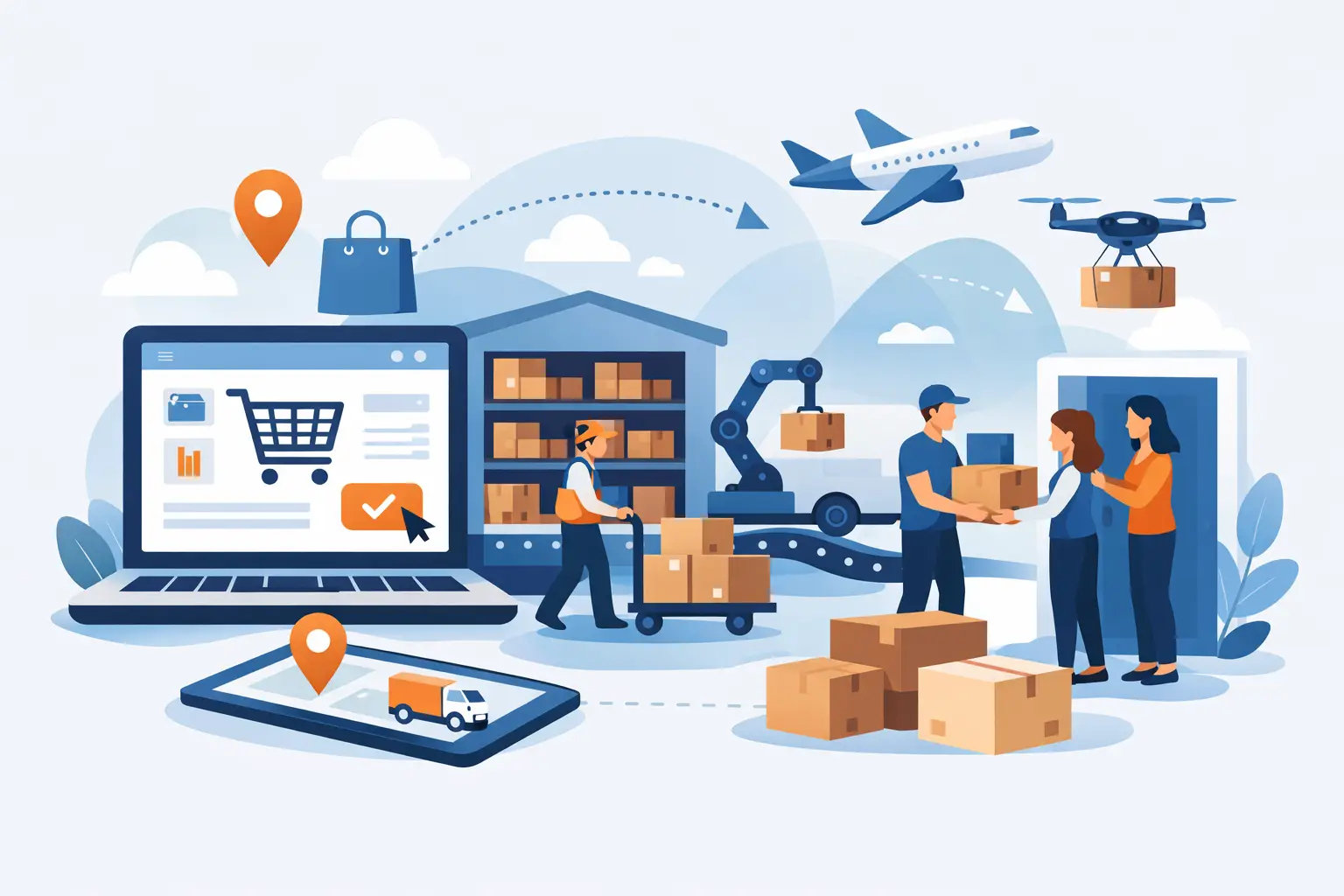
A customer clicks Buy Now at 2:00 PM and expects a delivery update the same day. That short window is where ecommerce brands win trust or lose it. If you are asking what is ecommerce fulfillment, the practical answer is this: it is the full operational process of storing inventory, receiving orders, picking products, packing them, shipping them, and handling returns.
For growing businesses, fulfillment is not a back-room task. It directly affects delivery speed, order accuracy, customer satisfaction, cash flow, and how well a business handles peak demand. For companies selling across Kuwait, the GCC, or international markets, fulfillment also connects to warehousing strategy, transportation planning, customs coordination, and shipment visibility.
What Is Ecommerce Fulfillment and Why It Matters
Ecommerce fulfillment is the set of logistics activities that moves an online order from inventory shelf to customer doorstep. It starts before the order is placed and continues after delivery if an exchange or return is needed.
That means fulfillment is broader than shipping alone. Shipping is one step inside the process. Fulfillment includes inventory storage, stock control, order processing, packing standards, carrier handoff, delivery coordination, and reverse logistics. When any one of those steps is weak, the customer feels it quickly through delays, incorrect items, damaged goods, or poor tracking.
For business operators, fulfillment matters because it shapes daily performance. A strong sales campaign means little if inventory is not available, orders are released late, or returns pile up without a process. Reliable fulfillment supports business continuity. It helps brands keep service levels stable even when order volumes change.
How Ecommerce Fulfillment Works
The process usually begins with inbound inventory. Products arrive from manufacturers, distributors, or import shipments and are received into a warehouse. At this stage, items are counted, inspected, assigned storage locations, and entered into inventory records.
Once a customer places an order through an ecommerce platform, the fulfillment workflow starts. The order is transmitted to the warehouse team or warehouse management system. Staff then pick the correct items from storage, verify quantities, and move the order to packing.
Packing is more than putting items in a box. It involves selecting suitable packaging, applying labels, including invoices or inserts if required, and preparing the shipment for the delivery network. Packaging choices affect cost, protection, dimensional weight, and customer experience.
After packing, the order is handed to a courier, domestic delivery fleet, or freight network depending on the product type, delivery promise, and destination. Tracking details are generated and shared so the business and end customer can monitor movement.
If the customer needs to return the order, fulfillment continues through reverse logistics. Returned items may be inspected, restocked, repaired, disposed of, or flagged for quality review. That part is often underestimated, but it has a direct effect on margin and customer retention.
The Core Parts of an Ecommerce Fulfillment Operation
Inventory storage is the foundation. If stock is not stored correctly, counted accurately, and visible in real time, every later step becomes harder. Businesses with seasonal demand or fast-moving SKUs need storage capacity that can adjust without creating delays.
Order management is the control point. Orders must flow cleanly from sales channels into fulfillment systems, with clear status updates and minimal manual correction. The more order volume grows, the more important process discipline becomes.
Picking and packing are where accuracy and speed meet. A warehouse can move fast and still create problems if quality checks are weak. It can also be accurate but too slow for customer expectations. Good fulfillment operations balance both.
Transportation is the final execution layer. This includes last-mile delivery, route planning, carrier selection, and shipment tracking. For cross-border orders, customs documentation and compliance requirements can also become part of the fulfillment chain.
Returns management closes the loop. Brands that make returns difficult often see more service complaints and less repeat business. Brands that make returns too loose may increase loss and abuse. The right process depends on product type, value, and customer profile.
In-House vs Outsourced Fulfillment
Some businesses manage fulfillment internally. This gives them direct control over inventory, staff, packaging, and daily priorities. For smaller volumes or specialized products, that can make sense. It may also work well when the warehouse is close to the customer base and order complexity is low.
But in-house fulfillment has operational demands. A business must secure storage space, hire and train staff, manage systems, maintain packing materials, coordinate couriers, and absorb peak-season pressure. As order volume grows, internal fulfillment can shift management attention away from sales, sourcing, and customer growth.
Outsourced fulfillment places those logistics tasks with a specialist provider. This model can improve speed, reduce fixed overhead, and give access to warehousing, transportation, and process infrastructure without building everything from scratch. It is especially useful for brands with fluctuating volume, regional delivery needs, or cross-border requirements.
The trade-off is that outsourcing only works well when the provider has strong controls, visibility, and service accountability. If reporting is weak or response times are slow, a business can lose control instead of gaining efficiency. That is why many companies prefer a partner that can handle warehousing, domestic delivery, freight movement, and customs support under one operating structure.
Common Fulfillment Challenges
Most fulfillment problems do not start with the delivery van. They start earlier, with inventory errors, disconnected systems, poor warehouse layout, or unclear ownership between teams.
Stockouts are one of the most common issues. A business may continue selling products that are not physically available, which creates order delays and refund pressure. Overstock is the opposite problem. It ties up capital and warehouse space, especially for slow-moving items.
Order inaccuracy is another recurring risk. Wrong items, missing units, and packing mistakes increase return costs and reduce trust. These errors are expensive because they affect labor, shipping, customer service time, and brand reputation all at once.
Late dispatch can come from many causes, including labor shortages, weak cut-off discipline, or poor coordination between warehouse and delivery teams. During promotions or holiday peaks, those small inefficiencies scale fast.
Cross-border ecommerce adds another layer. Customs clearance, restricted items, product classification, and documentation quality can all affect delivery timelines. For businesses serving GCC markets, fulfillment is not only about warehouse speed. It also depends on regional transport planning and compliance readiness.
What Good Ecommerce Fulfillment Looks Like
Strong fulfillment is measurable. Orders leave on time. Inventory records are reliable. Customers receive accurate tracking updates. Returns are processed consistently. Service levels remain stable during high-volume periods.
Just as important, good fulfillment supports decision-making. Business teams can see order status, inventory levels, and delivery performance clearly enough to act before issues spread. Visibility is not a bonus feature. It is part of operational control.
For many businesses, the best setup is not the cheapest one on paper. It is the one that reduces failed deliveries, protects inventory, shortens lead times, and gives the business confidence during volume spikes. That often means building fulfillment around process discipline rather than short-term cost cutting.
A dependable logistics partner can make a significant difference here. For example, a provider such as K-Line can support ecommerce operations through integrated warehousing, transportation, customs handling, and fulfillment execution, which reduces handoff delays and creates clearer accountability across the chain.
How to Evaluate an Ecommerce Fulfillment Setup
If you are reviewing your current operation, start with a few direct questions. Can you see inventory accurately across channels? Are orders leaving within your promised timeframe? Do you know your error rate, return rate, and average delivery performance? If the answer is unclear, the issue is usually process visibility before it is capacity.
It also helps to assess how your operation performs under stress. A fulfillment model that works for 30 orders a day may fail at 300. Peak readiness, backup transport options, labor flexibility, and system discipline matter more than usual when promotions, seasonal demand, or regional campaigns increase order volume.
For businesses selling fragile goods, regulated items, fast-moving consumer products, or temperature-sensitive stock, the right fulfillment setup may be more specialized. There is no single model that fits every sector. The correct design depends on order profile, SKU mix, geography, service promise, and compliance demands.
The Business Value Behind the Process
Fulfillment may look operational, but its effect is commercial. Faster and more accurate order handling supports repeat purchases. Better inventory control improves purchasing decisions. Lower return friction can protect customer loyalty, while tighter process controls help protect margins.
That is why the question what is ecommerce fulfillment is really a question about how a business delivers on its promise after the sale. Products create demand, but fulfillment proves reliability.
For any company planning to scale online sales, the real priority is not simply moving parcels. It is building an order-to-delivery operation that stays accurate, visible, and dependable when the pressure rises.