


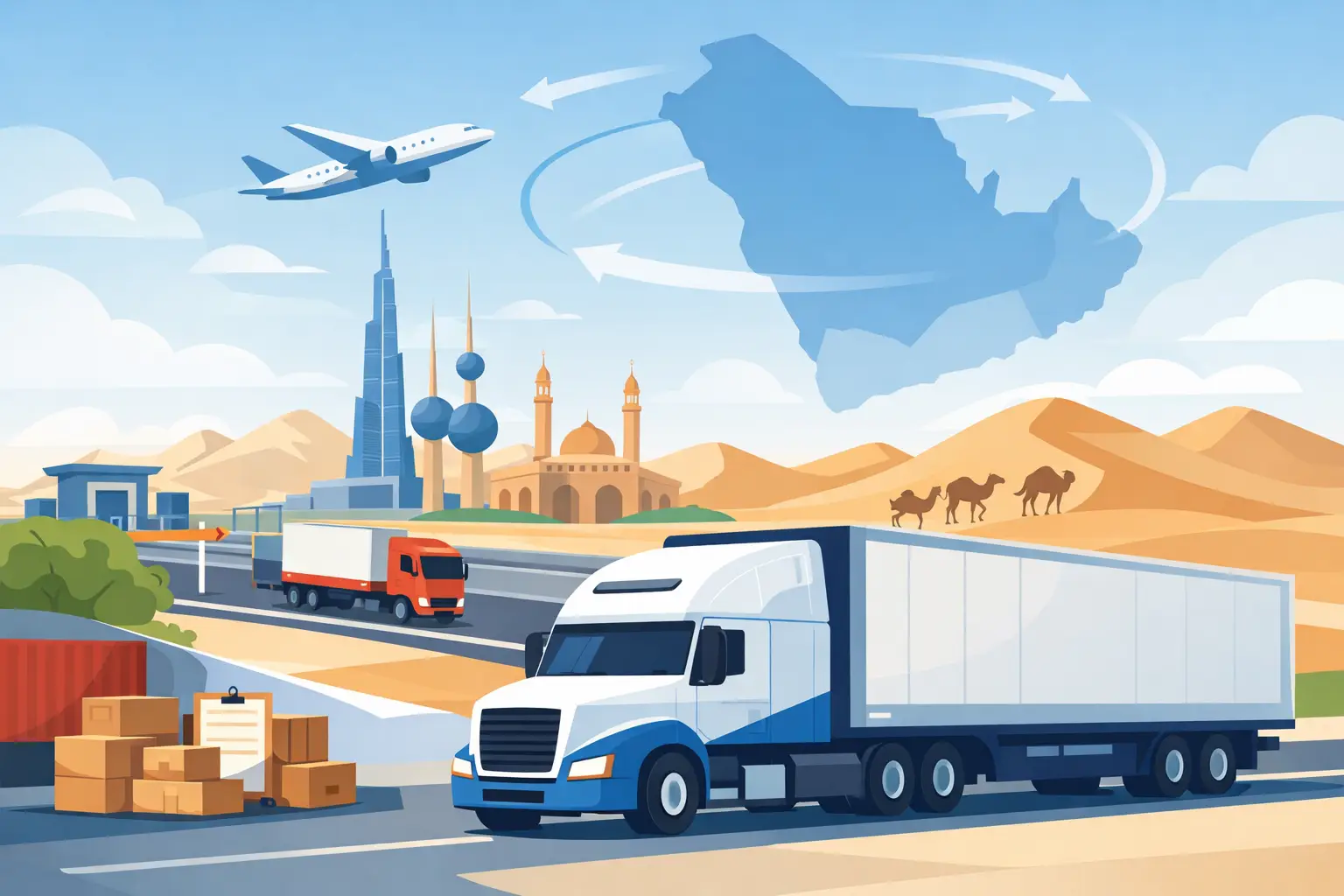
Land Freight Service Benefits for GCC Businesses
A delayed truck at a border crossing can affect far more than one delivery. It can interrupt retail replenishment, hold up production inputs, create missed customer promises, and force teams to spend time chasing updates instead of managing operations. For businesses moving cargo between Kuwait and neighboring GCC markets, land freight service benefits come from having a practical, controllable transport option for the routes that keep regional supply chains moving.
Road freight is not the right answer for every shipment. Air freight is often better for urgent, lightweight cargo, while sea freight can offer advantages for certain high-volume international movements. But for regional distribution, cross-border replenishment, and scheduled commercial transport, land freight provides a balance of speed, capacity, flexibility, and cost control that many businesses rely on every day.
Why Land Freight Matters for Regional Operations
Kuwait-based businesses operate in a market where delivery expectations are rising and inventory cannot always remain in one location. Retailers need stock moved to stores or distribution points. E-commerce operators need a dependable flow of goods into fulfillment networks. Industrial and B2B suppliers need materials delivered according to site schedules, often with specific handling and documentation requirements.
Land freight supports these needs through direct road connections across the GCC. It allows cargo to move from warehouse to consignee, or from one distribution center to another, without the additional airport or port handling that some freight movements require. This can simplify planning for cargo traveling to Saudi Arabia, the UAE, Qatar, Bahrain, and other accessible regional markets, subject to route availability and border requirements.
The value is not simply that a truck can move goods across a border. The value is the operating control around that movement: booked capacity, correctly prepared documents, clear handovers, shipment tracking, and a defined contact point when schedules change.
Land Freight Service Benefits That Support Growth
More practical control over cost
For many regional shipments, road freight can be more economical than air freight, particularly when cargo is heavy, palletized, oversized, or moved regularly. Businesses can plan transport around full truckload, less-than-truckload, or consolidated shipping requirements instead of paying premium air rates for goods that do not need to arrive immediately.
Cost control also comes from better shipment planning. Combining compatible orders, scheduling recurring departures, and using the right vehicle type can reduce avoidable transport expense. This matters for FMCG distributors, retailers, and suppliers whose margins are affected by frequent regional deliveries.
The lowest quoted rate is not always the lowest operating cost. A cheaper service that lacks document support, tracking, or reliable delivery communication can create additional costs through missed receiving windows, inventory gaps, customer complaints, and internal follow-up. A dependable land freight plan should make total logistics cost easier to manage, not just reduce the line-item transport price.
Flexible capacity for different cargo needs
Road freight can accommodate a wide range of commercial cargo, from cartons and pallets to machinery, project materials, temperature-sensitive products, and large-volume replenishment loads. The available vehicle, loading method, and route should match the shipment rather than forcing every order into the same service model.
That flexibility is particularly useful during seasonal peaks. A retailer preparing for promotions, a food distributor responding to increased demand, or an e-commerce company processing high order volumes may need additional transport capacity quickly. Land freight can be adjusted through planned departures, dedicated vehicles, consolidation, or staged deliveries.
Capacity still needs to be secured early. Peak seasons, border congestion, public holidays, and sudden demand changes can affect vehicle availability and transit times. Businesses that share forecasts with their logistics provider are better positioned to protect service levels when demand rises.
Faster regional movement than slower alternatives
For many GCC lanes, road transport offers transit times that are well suited to scheduled replenishment and time-sensitive commercial delivery. It may not match air freight for emergency shipments, but it often provides a more practical speed-to-cost balance for cargo that must move within days rather than hours.
Direct trucking can also reduce handling points. Fewer transfers can mean less risk of cargo damage, fewer opportunities for paperwork errors, and clearer accountability from pickup through final delivery. For businesses shipping products with specific packaging, labeling, or handling requirements, this continuity can be a significant advantage.
Transit time is never guaranteed by distance alone. Border processing, customs inspections, documentation accuracy, weather, route conditions, and delivery appointment availability all influence the final schedule. A responsible freight provider sets realistic expectations and communicates early when an exception needs attention.
Better inventory positioning
Inventory sitting in the wrong location is often as costly as inventory that is out of stock. Land freight helps businesses reposition goods between Kuwait, regional warehouses, stores, project sites, and customer locations without relying on a single fixed inventory point.
This supports a more responsive inventory model. Instead of holding excessive stock at every location, a business may use central storage and replenish regional demand based on actual sales, forecast changes, or project requirements. The approach depends on product lead times and service commitments, but it can reduce unnecessary stockholding while maintaining availability.
When transport is connected to warehousing and fulfillment operations, inventory decisions become easier to coordinate. K-Line can support this through integrated freight, storage, customs handling, and delivery services, helping businesses reduce handoffs between separate providers.
Where Land Freight Delivers the Most Value
Land freight is especially effective when shipments are recurring, commercially important, and moving within a defined regional network. A Kuwait distributor sending regular palletized orders to customers in Saudi Arabia has different needs from an individual sending a small urgent parcel. The distributor may prioritize scheduled departures, proof of delivery, customs coordination, and predictable pricing. The urgent parcel may be better suited to express transport.
E-commerce and retail businesses benefit when land freight feeds inventory into fulfillment centers or stores before stock reaches critical levels. B2B suppliers benefit when delivery is planned around receiving hours, site access, unloading equipment, and customer documentation. Industrial operators may need dedicated vehicles, specialized loading arrangements, or coordinated delivery to project locations.
For each of these use cases, the freight service should begin with the shipment profile. Cargo dimensions, weight, commodity type, delivery deadline, route, Incoterms, and customs status all affect the best transport plan. Treating land freight as a standard truck booking without this information creates avoidable risk.
The Trade-Offs Businesses Should Plan For
Land freight has clear advantages, but it also has limitations. Border crossings can introduce variability that domestic transport does not face. Customs requirements can differ by commodity and destination. Restricted goods, incomplete invoices, incorrect country-of-origin details, or missing permits may delay a shipment regardless of how quickly the vehicle is ready to depart.
Road freight may also be less suitable for extremely urgent cargo, high-value items requiring specialized security arrangements, or routes where air connections provide materially faster access. In these cases, a mixed transport strategy may be more effective. For example, urgent samples can move by air while replenishment stock follows by road.
Cargo protection must also be considered. The correct vehicle, packaging, load securing, temperature control where required, and insurance approach should be agreed before pickup. A shipment is only efficient if it arrives in the required condition and with the documents needed for acceptance.
How to Build a Dependable Land Freight Plan
A reliable service starts with accurate shipment data. Provide cargo weight, dimensions, number of pallets or cartons, commodity description, pickup and delivery addresses, readiness date, and any special handling needs. This allows the provider to select the correct vehicle and identify documentation requirements before the cargo is loaded.
Next, align the transport plan with your business priorities. If delivery timing is fixed, communicate the receiving appointment and consequences of delay. If cost is the priority, ask whether consolidation or a planned departure can reduce the rate. If inventory continuity is critical, establish regular reporting and escalation procedures for shipment exceptions.
Customs preparation should not be left until the vehicle reaches the border. Commercial invoices, packing lists, certificates, permits, and product-specific documents should be reviewed early. This is particularly important for regulated products, food items, chemicals, electronics, and cargo intended for government or major organizational projects.
Finally, measure performance over time. Review pickup reliability, transit consistency, document accuracy, delivery confirmation, cargo condition, and response time when issues arise. These measures show whether a freight provider is supporting business continuity or simply moving cargo from one point to another.
Land freight works best when it is treated as part of the wider supply chain, not as a last-minute transport task. With clear cargo information, realistic scheduling, customs readiness, and consistent visibility, businesses can use road transport to keep regional inventory moving with greater confidence and control.