


3PL Versus Freight Forwarding for Growing Businesses
A delayed container, a missed customs document, or an order backlog can quickly become a sales problem. The decision between 3PL versus freight forwarding determines who manages each part of that pressure: the movement of cargo, the storage of inventory, the final delivery, or the complete operating chain.
For businesses shipping into, out of, or across Kuwait and the GCC, the right choice is rarely about finding the lowest rate for one shipment. It is about building a process that keeps products moving, gives teams clear visibility, and continues to perform when volumes increase.
What Freight Forwarding Does
A freight forwarder organizes the transportation of goods from origin to destination. The forwarder works with airlines, shipping lines, trucking providers, and customs parties to arrange the route, capacity, documents, and movement of cargo.
Freight forwarding is especially valuable when a business needs international shipping expertise without managing multiple carriers directly. A forwarder can coordinate air freight for urgent replenishment, sea freight for containerized cargo, or land freight for regional movements. The service normally includes shipment planning, carrier booking, freight documentation, customs coordination, and status updates during transit.
The core responsibility is moving freight efficiently through a transport network. If your business imports finished goods from Asia, ships machinery from Europe, or supplies customers across the GCC, freight forwarding helps control the journey between points.
That responsibility may end once the cargo arrives at a port, airport, warehouse, or designated delivery location. Some freight forwarders offer additional services, but their primary function remains transportation management.
What a 3PL Does
A third-party logistics provider, commonly called a 3PL, manages logistics operations beyond the transportation leg. This can include receiving inventory, warehousing, inventory control, picking and packing, order fulfillment, domestic delivery, returns handling, and shipment reporting.
A 3PL is often the operating extension of a company’s supply chain team. Rather than renting warehouse space and hiring separate staff to receive, store, prepare, and dispatch orders, a business can place those activities with a provider that has facilities, systems, labor, and delivery capacity already in place.
For an e-commerce retailer, a 3PL may receive imported stock, store each SKU, process online orders, pack them according to brand requirements, and arrange last-mile delivery. For an FMCG distributor, the same provider may hold palletized inventory, prepare retail orders, and schedule daily deliveries to stores or distribution points.
The value is not simply storage. It is operational control over inventory and order flow. A capable 3PL gives commercial and operations teams a clearer picture of what is in stock, what has been dispatched, and what needs attention before it affects customers.
3PL Versus Freight Forwarding: The Core Difference
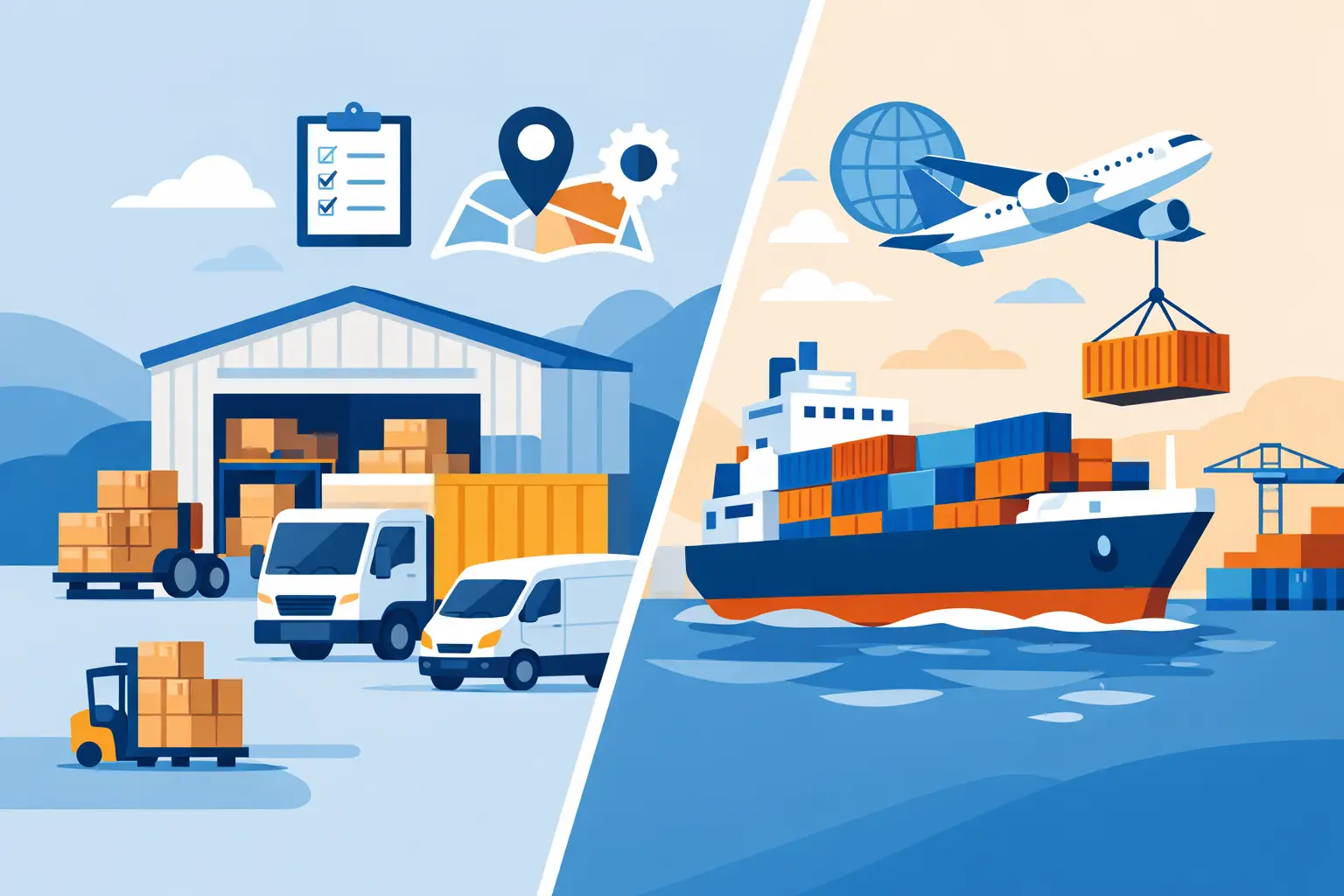
The simplest distinction is this: freight forwarding manages the movement of cargo, while 3PL services manage the handling of goods and orders before, during, and after movement.
Freight forwarding answers questions such as: Which route should this cargo take? Which carrier has capacity? What documents are required? When will the shipment arrive? A 3PL answers a wider set of operational questions: Where will the goods be stored? How will orders be fulfilled? Can inventory be prepared for multiple sales channels? How will local deliveries be controlled?
The two models can overlap. A logistics company may provide both freight forwarding and 3PL services under one operating structure. This can reduce handoffs between an international shipment, customs clearance, warehousing, and final delivery. But businesses should still understand which service they need at each stage, because the commercial scope, performance measures, and cost structure are different.
When Freight Forwarding Is the Better Fit
Freight forwarding is usually the right fit when transportation is the main requirement. This is common for project cargo, periodic imports, direct business-to-business deliveries, or shipments that move from supplier to a customer site without needing inventory storage or order processing.
A construction supplier importing specialized equipment, for example, may need a forwarder to coordinate ocean or air transport, clearance, and delivery to a project location. The equipment does not need to sit in a fulfillment center or be picked into individual customer orders.
Freight forwarding also works well when a business already operates its own warehouse and delivery fleet. In that case, the company may only need support with international routing, carrier negotiation, customs requirements, and cross-border execution.
However, freight forwarding alone may create operational gaps if cargo arrives before your warehouse is ready, customs release requires immediate collection, or a growing order volume overwhelms your internal fulfillment team. Transport may be under control while inventory and customer delivery are not.
When a 3PL Is the Better Fit
A 3PL is the stronger choice when logistics is a daily operating function rather than an occasional shipping requirement. Businesses with regular inbound stock, multiple orders, seasonal demand, or customer delivery commitments often benefit from putting warehousing and fulfillment under a structured service model.
This applies particularly to e-commerce brands, retailers, B2B distributors, subscription businesses, and companies entering Kuwait or the GCC without their own local logistics infrastructure. A 3PL can provide the physical capacity and operating discipline needed to begin serving customers without building a warehouse operation from the ground up.
The model becomes more valuable as order complexity increases. One shipment arriving at the airport is a forwarding task. Receiving that shipment, checking it against a purchase order, placing it into inventory, picking hundreds of orders, and dispatching them on time is a 3PL task.
A 3PL also helps businesses manage peaks more effectively. Promotions, holidays, product launches, and tender-driven demand can create sudden pressure on warehouse staff and delivery capacity. A provider with established processes can scale labor, storage, and dispatch activity more predictably than an internal team that is already operating near its limit.
Customs Clearance Matters in Both Models
Customs clearance is a critical point of control in Kuwait and throughout the GCC. Incorrect documentation, classification issues, missing certificates, or a lack of coordination between parties can delay cargo and increase cost.
Freight forwarders commonly coordinate clearance as part of an import or export movement. A 3PL may support clearance when it is connected to inbound inventory and warehouse receiving. The important question is not simply whether customs support is offered. Ask who is accountable for document preparation, communication, cargo collection, and the handoff into storage or delivery.
For regulated, high-value, or time-sensitive goods, this accountability should be clear before the shipment leaves the supplier. A low freight rate has limited value if cargo remains held because the operating plan did not cover clearance requirements properly.
How to Choose the Right Model
Start with the point where your internal process becomes difficult to manage. If carrier bookings, international documents, and cross-border coordination consume too much time, freight forwarding may solve the immediate problem. If stock accuracy, order processing, warehouse capacity, and delivery performance are causing disruption, a 3PL is likely the more relevant solution.
It is also useful to examine your order profile. A company that receives one full container each month and sends it directly to a single customer has very different requirements from a retailer receiving containers and shipping hundreds of individual orders each day. The first may need freight forwarding with customs support. The second needs a wider fulfillment operation.
Ask prospective providers how they measure performance. For forwarding, useful measures include transit times, shipment milestones, document accuracy, and exception management. For 3PL services, focus on inventory accuracy, receiving turnaround, order accuracy, dispatch timing, delivery success, and reporting visibility.
The best choice may be an integrated provider that can manage both functions while maintaining clear accountability. K-Line, for example, combines freight forwarding, customs handling, warehousing, and delivery support for businesses that need fewer operational handoffs across their supply chain.
Avoid a Handoff-Heavy Supply Chain
Using separate providers for freight, clearance, storage, fulfillment, and delivery can work, particularly for large companies with strong internal logistics teams. But every additional handoff creates another point where information can be delayed, responsibilities can become unclear, and cargo can wait.
An integrated model is most useful when speed and visibility matter. If an inbound shipment is delayed, the warehouse team needs to know when to prepare receiving capacity. If inventory is released earlier than expected, fulfillment planning should adjust immediately. Those decisions are easier when the teams handling the shipment and the inventory operate through coordinated processes.
The right logistics model should make your operation easier to run, not harder to explain. Choose freight forwarding when transport is the primary need, choose 3PL support when daily inventory and fulfillment require control, and combine both when business continuity depends on cargo moving from supplier to customer without unnecessary gaps.