


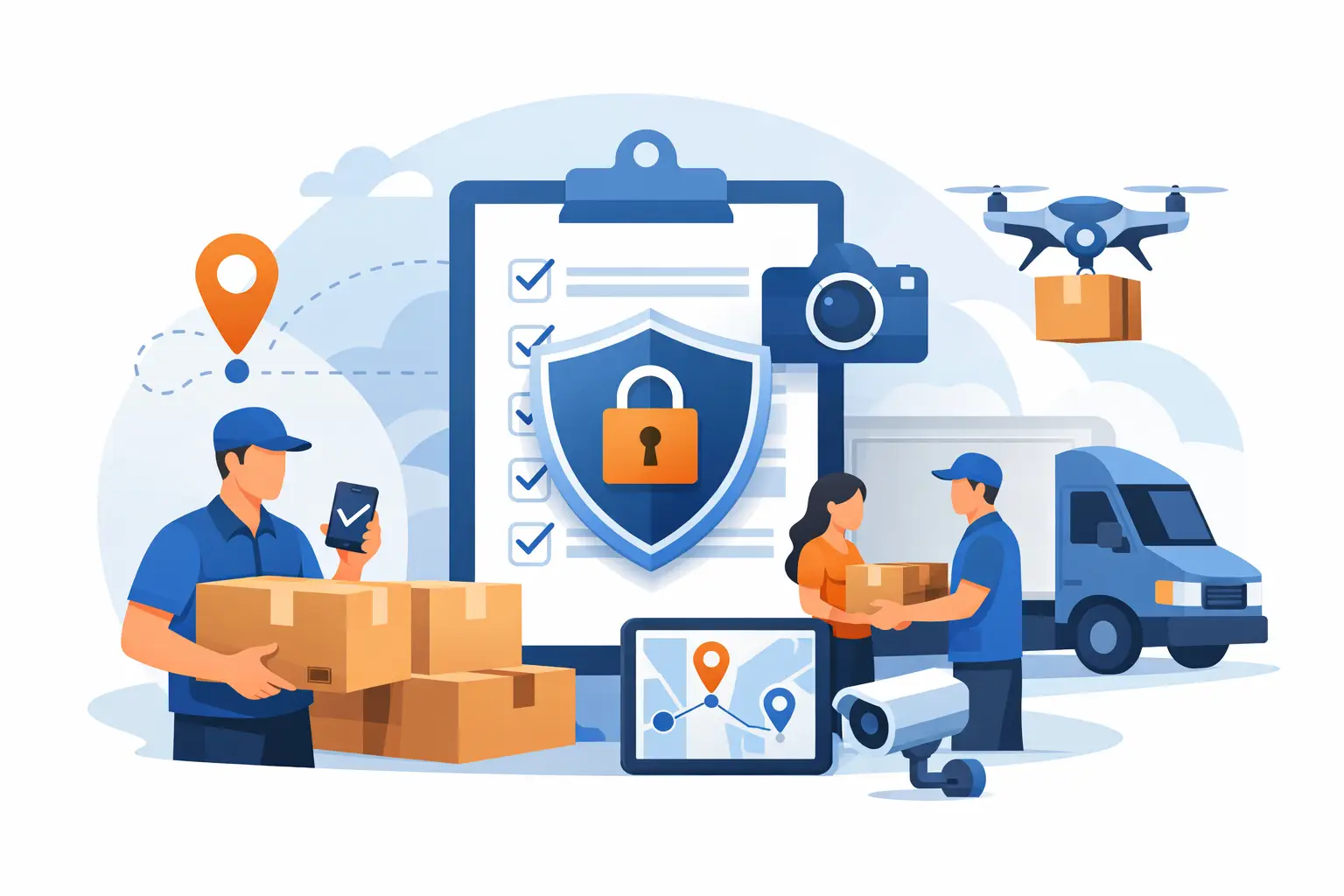
Proof of Delivery Systems That Protect Every Order
A delivery marked complete is not always a delivery successfully received. For retailers, e-commerce teams, B2B suppliers, and operations managers, proof of delivery systems provide the operational record needed to verify what happened at the final handoff. That record can protect revenue, reduce disputes, and give customers a clear answer when an order is questioned.
In Kuwait and across the GCC, the final mile often involves gated facilities, busy commercial districts, residential towers, site security, cash-on-delivery processes, and recipient availability. A basic delivery status is rarely enough. Businesses need evidence that is accurate, timely, and connected to the shipment record.
What Proof of Delivery Systems Record
A proof of delivery system captures confirmation that a shipment reached the intended recipient or approved delivery location. Depending on the shipment type and customer requirements, the record may include a recipient signature, recipient name, delivery time, GPS location, photo evidence, one-time passcode confirmation, or a scan of a company stamp.
The right combination depends on the risk of the shipment. A low-value residential parcel may require a timestamp, location confirmation, and customer notification. A B2B shipment to a retailer, warehouse, construction site, or government facility may require a signed delivery note, purchase order reference, consignee name, and documented quantity received.
The purpose is not simply to collect more data. It is to create a usable chain of accountability from dispatch through final handoff. If a customer says an order was not received, the operations team should be able to review the delivery event without relying on a driver’s memory or a paper document that has not yet returned to the office.
Status Updates Are Not Proof
A status such as “delivered” is useful for shipment tracking, but it does not explain who accepted the shipment, where it was handed over, or whether the package condition was acceptable. That distinction matters when disputes involve expensive goods, time-sensitive documents, regulated items, or recurring commercial deliveries.
Proof should answer practical questions: Was the delivery made to the correct location? Who received it? At what time? Was the recipient authorized? Was there an exception, such as a refused shipment, damaged carton, or partial delivery?
When those answers are captured at the point of delivery, customer service and finance teams can act with confidence rather than start a lengthy internal investigation.
Why Proof of Delivery Systems Matter to Business Operations
Delivery evidence supports more than customer complaints. It affects cash flow, inventory control, service performance, and contract compliance.
For businesses that invoice after delivery, an approved proof of delivery can support billing and reduce delays caused by missing receiving documentation. For suppliers delivering to multiple branches or retail locations, it confirms that stock has entered the customer’s location and helps reconcile shortages quickly. For e-commerce brands, it can reduce avoidable refund claims while giving support teams a documented basis for responding to customers.
The value increases during peak periods. When order volumes rise, manual calls to drivers and paper-based delivery notes create bottlenecks. A digital record allows dispatchers, customer support teams, and account managers to access the same information quickly. It also helps identify recurring issues, such as incomplete addresses, failed delivery attempts, specific locations with long waiting times, or customers who require advance appointment scheduling.
There is also a service-quality benefit. If delivery completion data is captured consistently, managers can measure first-attempt delivery rates, average delivery time, exception reasons, and driver compliance with required handoff procedures. These measures help improve operations before customer complaints become a pattern.
Better Evidence Does Not Replace Good Delivery Practices
A proof of delivery system is only as reliable as the process behind it. A signature collected from the wrong person, a blurred photo, or an inaccurate GPS point can create false confidence rather than useful evidence.
Drivers need clear instructions on acceptable proof, especially for business locations with receiving departments, security desks, or restricted access. Dispatch teams also need defined escalation steps for exceptions. If a recipient is unavailable, the driver should not select “delivered” simply to close the route. The system should capture the failed attempt reason and trigger the next action, whether that is a customer call, rescheduling, return to warehouse, or delivery to an approved alternate location.
Choosing the Right Delivery Confirmation Method
There is no single proof method that fits every shipment. The appropriate level of confirmation should reflect the item value, delivery environment, contractual terms, and customer experience expected.
A recipient signature remains valuable for B2B deliveries and high-value shipments because it identifies a person accepting responsibility. However, signatures can be difficult to read, and contactless delivery policies may make them impractical in some situations. Photo proof can show where a parcel was placed, but it must be handled carefully to avoid capturing unnecessary personal information or exposing sensitive locations.
One-time passcodes can provide strong recipient confirmation for residential and high-value deliveries. They work best when the customer has received advance communication and understands that the code should only be shared after the shipment is physically handed over. GPS verification adds useful context, although location accuracy can vary indoors, in dense urban areas, and around large facilities.
For many organizations, the best approach is a layered one: location and timestamp for every delivery, plus signature, passcode, photo, or company stamp when the shipment category requires additional control.
Requirements for Regulated and Commercial Shipments
Industrial operators, healthcare suppliers, government contractors, and large organizations may need more than standard recipient confirmation. Their process may require asset serial numbers, temperature observations, seal checks, delivery appointment references, or receiving department documentation.
These requirements should be agreed before shipments begin. Waiting until a delivery dispute occurs is too late to decide what evidence should have been captured. A logistics provider should configure the delivery workflow around the customer’s operating requirements, not force every shipment into one generic process.
Connecting Proof to the Full Logistics Process
Proof of delivery is strongest when it is linked to the entire shipment journey. The delivery record should connect with the order number, tracking reference, dispatch scan, route assignment, customer details, and any exception history. Without that connection, teams may still need to search across separate systems to understand a delivery issue.
For businesses using warehousing and fulfillment services, this linkage begins when inventory is picked and packed. The order record should show what was prepared, when it left the warehouse, and what was confirmed at delivery. If a customer reports a missing item, the business can compare the packing process, shipment weight, delivery evidence, and recipient comments before deciding whether a replacement or investigation is needed.
This is particularly useful for multi-channel sellers. Orders may arrive through a website, marketplace, sales representative, or wholesale account, but the delivery standard should remain consistent. Centralized proof records help commercial teams avoid conflicting updates and give customers a more dependable experience regardless of how they placed the order.
K-Line supports this level of control by combining transportation, warehousing, shipment tracking, and business logistics support under one accountable operation. For customers managing frequent deliveries, the goal is straightforward: fewer information gaps between the warehouse, the driver, and the recipient.
Building a Process That Holds Up in a Dispute
The most effective proof of delivery systems are designed for the moment something goes wrong. That means records should be easy to retrieve, clearly tied to the shipment, and protected from casual alteration.
Start by defining which deliveries require standard confirmation and which need enhanced proof. Set rules for authorized recipients, photo use, signatures, failed attempts, partial deliveries, damaged shipments, and returns. Then train drivers and dispatchers on those rules using real delivery scenarios, not only system instructions.
Review exceptions regularly. If several deliveries fail at the same commercial location because receiving hours are unclear, update the customer profile. If customers regularly dispute deliveries without an approved recipient name, make that field mandatory. If paper delivery notes delay invoicing, prioritize digital capture where customer procedures allow it.
Data retention also deserves attention. Delivery evidence must remain accessible long enough to support customer inquiries, invoices, claims, and contractual obligations. The required period varies by industry and agreement, but records should not disappear before a commercial dispute can reasonably be raised.
A completed delivery should be a confirmed business event, not an assumption. When proof is captured correctly, it gives every team involved – from dispatch and customer service to finance and account management – a factual starting point. That clarity helps businesses protect customer relationships while keeping their delivery operation moving.