


Multimodal Shipping for Manufacturers Explained
A production line rarely stops because of one major logistics failure. More often, it stops because a component is delayed at a port, a truck is unavailable for the final delivery, or customs paperwork does not match the shipment. Multimodal shipping for manufacturers addresses these handoff risks by coordinating more than one transport mode under a controlled freight plan.
For manufacturers serving Kuwait, the GCC, and international markets, the objective is not simply to select the lowest freight rate. The real objective is to keep raw materials, spare parts, finished goods, and packaging moving at the right cost and at the right time. That requires a transport plan that accounts for production schedules, inventory levels, border requirements, warehouse capacity, and delivery commitments.
Where Multimodal Shipping for Manufacturers Fits
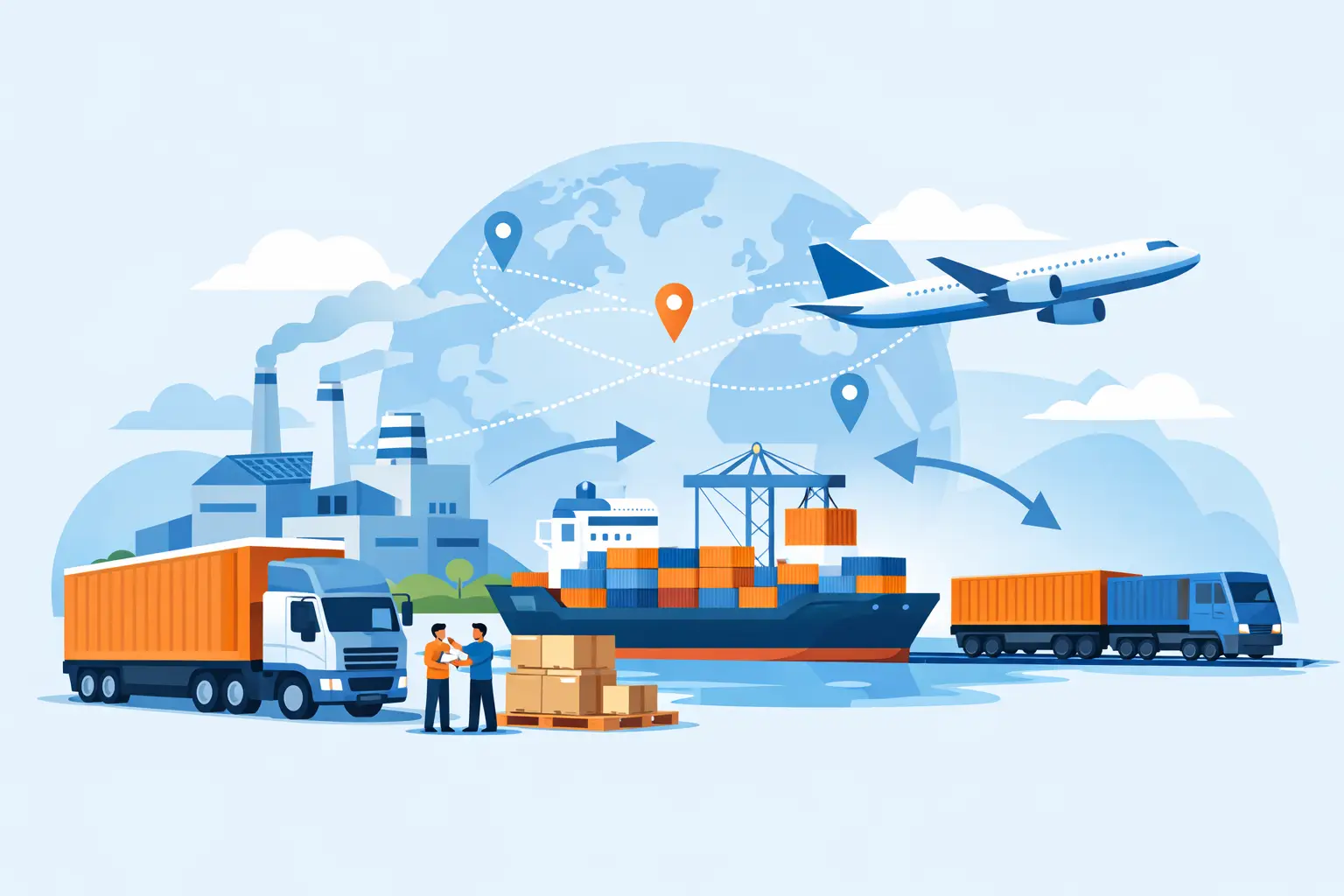
Multimodal shipping combines two or more transportation modes within one supply chain movement. A shipment may arrive by sea freight at a regional port, clear customs, move by truck to a warehouse, and then continue through domestic delivery or cross-border land freight. For urgent components, air freight may be used for the international leg, followed by road transport to the plant or distribution center.
The approach is especially useful when no single mode can meet every requirement. Sea freight is generally suited to high-volume cargo and planned replenishment. Air freight supports urgent, high-value, or production-critical shipments. Land freight connects ports, airports, warehouses, factories, retailers, and GCC destinations. Warehousing provides the buffer between inbound freight and outbound fulfillment.
There is an important distinction between multimodal and simply using several carriers. A manufacturer may book each leg separately, but that creates multiple points of responsibility when a delay occurs. A managed multimodal plan coordinates schedules, documents, cargo handling, and tracking across the full movement. That clarity matters when a late container affects a production run or a delayed export order affects a customer contract.
Start With the Production Requirement, Not the Transport Mode
The best shipping plan begins with the operational need. Procurement teams often request an air freight quote when a supplier shipment is late, while finance teams may push for ocean freight because of the cost difference. Both decisions can be valid, but neither should be made without considering the production and inventory impact.
A low-cost route can become expensive if it causes downtime, expedited local trucking, overtime receiving, or emergency purchasing from another supplier. Conversely, using air freight for every inbound shipment can raise logistics costs without materially improving service. The right decision depends on the cargo’s value, urgency, predictability, and effect on manufacturing output.
Separate Critical Cargo From Planned Replenishment
Manufacturers benefit from classifying inbound and outbound freight by its operational consequence. Line-stopping parts, maintenance components, regulated materials, and customer-specific finished goods need tighter transit control than standard replenishment stock. They may justify priority air freight, direct trucking, or faster customs handling.
Planned replenishment, bulky materials, and non-urgent finished goods can usually move through lower-cost sea and land combinations. The savings are meaningful when shipment forecasts are accurate and warehouse inventory can absorb normal transit variation. The key is to avoid treating every shipment as either an emergency or a commodity.
Plan Around Handoffs
Most freight delays happen at the points between transport modes: cargo collection, airport or port receiving, customs clearance, container unloading, warehouse receiving, and final-mile dispatch. A multimodal plan should define who manages each handoff, what documents are required, and when exceptions must be escalated.
For example, sea freight may arrive on schedule but remain unavailable because the consignee documentation is incomplete or the receiving warehouse has not prepared a delivery slot. Visibility into vessel arrival alone does not solve that problem. Manufacturers need visibility into cargo release, delivery appointment status, and warehouse receipt confirmation as well.
Balance Cost, Transit Time, and Inventory Exposure
Multimodal freight gives manufacturers more routing options, but more options do not automatically mean better results. Each transfer adds handling, coordination, and potential delay. The trade-off must be measured against the cost of holding inventory and the cost of production interruption.
Sea freight combined with road delivery may be the most economical choice for stable import volumes. Air freight combined with direct delivery can reduce lead time for urgent goods, but it requires accurate shipment details and fast clearance preparation. A mixed strategy is often more practical: use sea freight for the base demand forecast and reserve air freight for demand spikes, supplier delays, or critical replacements.
This approach also helps prevent warehouse congestion. Bringing in large volumes early may lower freight cost per unit, but it can consume storage space and increase handling. Bringing goods in too late creates stockout risk. Freight planning and warehousing decisions should be managed together, particularly for manufacturers with seasonal demand or limited production space.
Customs Control Is Part of the Transport Plan
For international manufacturers, customs clearance is not a separate administrative task at the end of the shipment. It is part of transit planning from the moment a purchase order is issued. Incorrect product descriptions, inconsistent values, missing certificates, and incomplete origin information can delay cargo regardless of whether it arrived by air or sea.
A controlled process begins with accurate commercial invoices, packing lists, commodity descriptions, harmonized classification, and any product-specific permits or certificates. The exact requirements depend on the goods and destination, particularly for industrial equipment, chemicals, food-related items, electronics, or controlled products.
Manufacturers should also align their supplier instructions with their customs process. If suppliers use inconsistent descriptions or send documents after cargo departure, the local clearance team has less time to identify issues. Document review before shipment departure is often cheaper than solving a clearance issue after cargo reaches the port or airport.
Use Warehousing as a Supply Chain Buffer
Warehousing makes multimodal shipping more reliable because it creates a controlled point between inbound freight and outbound delivery. Instead of sending every shipment directly from a port to a factory or customer, manufacturers can receive, inspect, store, consolidate, and dispatch cargo according to production or sales demand.
This is valuable for businesses importing components from multiple suppliers. Cargo can arrive through different modes, be received into one facility, and be released in planned batches to the production site. It can also support finished-goods distribution by holding inventory closer to local customers and reducing the pressure on factory dispatch operations.
The warehouse must be managed as more than storage. Manufacturers need clear inventory records, receiving confirmation, stock rotation where applicable, order accuracy, and defined dispatch cutoffs. If freight visibility ends at the warehouse door, operations teams still lack the information needed to plan production and customer delivery.
Build a Practical Multimodal Shipping Process
A reliable process does not require a complex redesign on day one. It requires consistent shipment data and clear operating rules. Start by reviewing the last three to six months of inbound and outbound shipments. Identify which lanes create the most expediting cost, which suppliers miss shipping windows, and which cargo types cause clearance or receiving delays.
Then set service rules by cargo category. Define when air freight requires approval, which shipments can move by consolidated sea freight, how much lead time suppliers must provide, and what inventory threshold triggers a replenishment order. These rules help procurement, operations, and logistics teams make faster decisions without treating every shipment as a special case.
Reporting should focus on useful measures: planned versus actual transit time, customs clearance time, delivery performance, freight spend by mode, damage or shortage incidents, and expedited shipment frequency. A rise in air freight usage may indicate poor planning, but it may also reveal a supplier performance issue or an inaccurate demand forecast. The data needs operational context.
Choose One Accountable Logistics Partner
Manufacturers need a logistics partner that can coordinate freight forwarding, customs clearance, warehousing, and domestic or regional delivery without passing responsibility between separate providers. This is particularly relevant when cargo moves from an international origin through Kuwait and onward to GCC markets.
Ask how exceptions are handled, not only how standard shipments move. A capable provider should explain who monitors shipment milestones, who communicates a delay, what information is required for clearance, and how cargo is moved from arrival point to warehouse or final destination. The answer should be specific and operational.
K-Line supports this model by bringing air, sea, and land freight together with customs handling, storage, tracking, and delivery coordination. For manufacturers, that means fewer disconnected handoffs and a clearer point of accountability when cargo schedules change.
A useful next step is to select one high-volume lane or one recurring critical component flow and map every handoff from supplier collection to plant receipt. The gaps usually become visible quickly, and the right multimodal plan can turn those gaps into predictable operating controls.