


Return Logistics for Ecommerce That Protects Margin
A return is not complete when a customer hands a parcel to a courier. For an ecommerce business, the real work starts when that item re-enters the supply chain. Effective return logistics for ecommerce determines how quickly a customer receives a refund, whether inventory can be sold again, and how much margin is lost on every returned order.
For retailers operating across Kuwait and the GCC, returns can become especially complex when delivery routes, payment methods, warehouse locations, and cross-border customs requirements are involved. A clear operating process turns returns from an uncontrolled cost center into a managed part of fulfillment.
Why Return Logistics for Ecommerce Requires Control
Returns affect customer confidence, warehouse productivity, inventory accuracy, and cash flow at the same time. A delayed return approval can create support tickets and refund disputes. A parcel that arrives at a warehouse without identification can sit unprocessed. A returned item placed back into stock without inspection can create a second customer complaint.
The cost is not limited to transportation. It includes pickup coordination, receiving labor, inspection, repackaging, storage, refund handling, and possible disposal. Businesses that only measure the outbound delivery cost often underestimate the true impact of their return rate.
The goal is not always to make returns free or effortless at any cost. The right policy depends on product value, category, condition requirements, and customer expectations. A low-value item may cost more to collect and inspect than it is worth. A high-value electronic product, on the other hand, requires secure recovery, documented inspection, and clear chain-of-custody records.
Build the Return Process Before the First Pickup
A return process should begin at checkout and continue through final inventory disposition. Customers need to know which items are eligible, how long they have to request a return, what condition the item must be in, and whether a pickup fee applies. Ambiguous policies create exceptions, and exceptions consume operational time.
Internally, every return should receive a return authorization number before collection or drop-off. This number connects the customer request to the original order, payment record, reason for return, and expected item. Without it, warehouse teams are forced to investigate unidentified parcels manually.
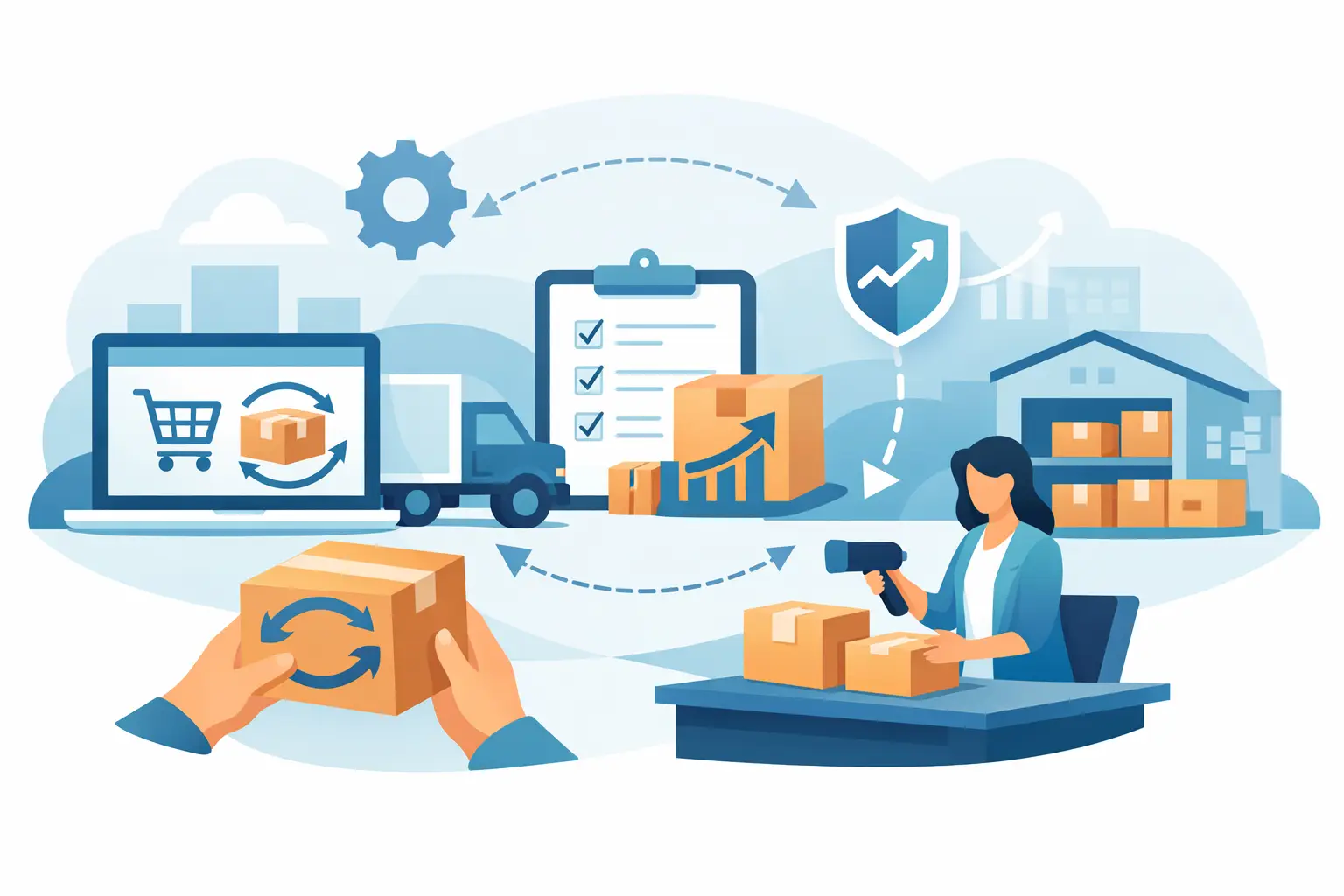
A practical workflow follows a clear sequence: the customer submits a request, the return is approved under defined rules, a pickup or drop-off is arranged, the parcel is tracked to the warehouse, the item is inspected, and the business decides whether to refund, exchange, restock, repair, liquidate, or dispose of it.
Each handoff should have an owner. Customer service may approve the request, the logistics team manages collection, warehouse staff verify the item, and finance releases the refund after the required checks. When responsibilities overlap without clear ownership, returns take longer and customers receive inconsistent answers.
Set return rules by product category
One policy rarely fits every product. Apparel may be eligible for return if unused and in original packaging. Cosmetics, food products, personal care items, and temperature-sensitive goods often require stricter conditions. Electronics may need serial-number validation, accessory checks, and functional testing before any refund or restocking decision.
For B2B orders, the process may also need purchase order matching, delivery confirmation, and quality documentation. Bulk returns should be scheduled as controlled collections rather than treated like individual consumer parcels. This protects warehouse capacity and provides better visibility for both parties.
Make Collection Convenient Without Losing Visibility
Customers expect return options that match the original delivery experience. Depending on the business model, this may include scheduled home pickup, return through a retail location, drop-off at a designated point, or return shipment by courier. Convenience matters, but control matters more.
A scheduled pickup is useful for bulky, high-value, or sensitive products because it creates a known collection event. The driver can scan the parcel, confirm the package count, and generate a status update immediately. For lower-value items, drop-off options may reduce collection costs while still offering an acceptable customer experience.
The return label or digital request should contain the authorization number, sender details, warehouse destination, and handling instructions. If a product includes batteries, fragile components, liquids, or regulated materials, these requirements must be identified before transportation begins.
Tracking should not end at pickup. Operations teams need visibility from the moment a return is requested through receipt, inspection, and final disposition. This allows customer service to give accurate updates instead of asking customers to wait while multiple teams search for the parcel.
Use the Warehouse to Recover Inventory Value
The returns area should be a controlled receiving function, not a corner where parcels accumulate. Returned goods need to be separated from sellable inventory until inspection is complete. Mixing unverified items with available stock creates inventory errors and quality risks.
At receiving, warehouse staff should scan the return authorization, compare the item with the original order, document the package condition, and record the stated reason for return. Photos can be useful for damaged, incorrect, or disputed items. For higher-value products, serial numbers, seals, accessories, and functionality should be checked before the item moves to the next stage.
A simple disposition framework helps teams act consistently. Products in new, complete condition may return to active inventory. Items with minor packaging damage may be repacked or sold through a separate channel. Products requiring repair should move to a quarantine or technical inspection area. Unsellable goods need approved disposal, recycling, or supplier return procedures.
Speed is critical here. A product that sits uninspected for ten days is unavailable for resale and may delay the customer refund. Setting service-level targets for receipt, inspection, and disposition helps prevent backlogs, especially after promotions, seasonal peaks, or large campaign periods.
Connect Refunds to Physical Confirmation
Fast refunds support customer trust, but businesses need controls that prevent losses. The appropriate trigger depends on risk. Some retailers issue refunds once the courier scans the return at collection. This works best for low-risk, low-value categories and can improve the customer experience.
For higher-value products, refunds should usually follow warehouse receipt and inspection. This reduces exposure to empty boxes, incorrect items, counterfeit products, or items returned in used condition. The policy should explain this clearly so customers understand when their refund will be processed.
Exchanges need equal attention. If a replacement is sent before the original item is recovered, the business is temporarily carrying the cost of two units. That may be commercially justified for priority customers or urgent product categories, but it should be a deliberate service rule rather than an automatic response.
Measure the Returns That Affect Profitability
A return operation improves when it is measured by more than total return volume. Operations managers should track return rate by product, reason code, delivery location, sales channel, and customer segment. A high return rate on one item may indicate inaccurate product information, a sizing issue, damage during delivery, or a supplier quality problem.
The most useful measures usually include time from request to pickup, pickup-to-warehouse transit time, time to inspection, refund cycle time, restock rate, and cost per return. Damage rates and non-resellable inventory value should also be monitored. These figures show whether the problem is product quality, transport handling, warehouse processing, or policy design.
Reason codes need discipline. “Other” should not become the default option. Specific reasons such as wrong item shipped, damaged on arrival, size issue, changed mind, incomplete order, or product defect provide information that commercial and operations teams can act on.
Plan for GCC and Cross-Border Returns
Cross-border return logistics introduces additional decisions. Sending every item back to the original country of dispatch may not be economical, particularly for low-value goods. Businesses may need a local consolidation point, a regional returns warehouse, or an approved disposal process where recovery costs exceed resale value.
Customs documentation also requires attention. A returned item should be correctly identified as a return, repair item, replacement, or re-export shipment. Incorrect declarations can create delays, unexpected duties, or difficulty reconciling the return with the original shipment.
A logistics partner that manages domestic collection, warehousing, customs handling, and freight coordination can reduce these handoff risks. K-Line supports businesses that need return flows connected to wider fulfillment and transportation operations, with one accountable process from collection through inventory handling.
Treat Returns as an Operating Signal
The strongest return programs do more than process parcels quickly. They use return data to improve product pages, packaging, picking accuracy, supplier performance, and delivery quality. When the same reason appears repeatedly, it should trigger investigation rather than become accepted as routine.
A well-run return process gives customers a clear path forward while giving the business control over inventory, cost, and accountability. Start by mapping the actual return journey, assigning ownership at every step, and setting realistic service targets. The result is a return operation that protects customer confidence without allowing avoidable costs to move unnoticed through the supply chain.