


Best Shipping Methods for Retailers Explained
A late delivery does more than disappoint one customer. For a retailer, it can create canceled orders, tied-up inventory, extra customer service work, and pressure on already narrow margins. The best shipping methods for retailers are therefore not defined by the lowest rate alone. They are the methods that protect delivery promises, fit the product, and keep costs predictable as order volumes change.
For retailers serving local, regional, and international markets, shipping should be managed as a connected operation. Inventory location, order cut-off times, customs requirements, delivery capacity, returns handling, and tracking visibility all affect the final customer experience. The right method often changes by shipment type, destination, and urgency.
How retailers should choose a shipping method
Start with the order profile rather than the carrier name. A retailer shipping small e-commerce parcels has a different requirement from an FMCG distributor moving palletized stock to stores, or a supplier importing seasonal inventory ahead of a promotional period.
Consider five operational questions: How quickly does the customer need the order? What is the shipment’s size and weight? Is the destination local, within the GCC, or international? Does the product need special handling? What is the cost of a late delivery or stockout?
A practical shipping plan also separates inbound and outbound movements. Sea freight may be the best choice for bringing bulk inventory into the country, while domestic delivery is needed to fulfill individual customer orders. Treating both movements as one logistics strategy helps retailers avoid carrying inventory in the wrong place or paying premium freight to correct a planning gap.
Domestic delivery for daily retail orders
Domestic delivery is the foundation for retailers that serve customers within the same country. It is particularly effective for e-commerce orders, store replenishment, documents, small parcels, and scheduled B2B deliveries. The benefit is control over the final mile, where customers form their strongest impression of the retailer.
For standard orders, next-day or scheduled delivery usually offers the best balance between service and cost. Same-day delivery can be valuable for urgent categories, high-value purchases, replacement products, or competitive urban markets, but it should not become the default unless margins support it. Fast service is only useful when order processing, picking, and dispatch are equally reliable.
Retailers should define clear cut-off times and delivery zones. An order placed after the warehouse cut-off should not receive the same promise as an order ready for dispatch earlier in the day. Accurate tracking and proactive delivery updates also reduce failed delivery attempts and customer inquiries.
Land freight for regional and store distribution
Land freight is often the most practical option for road-connected GCC shipments, store replenishment, and larger commercial deliveries. It works well for cartons, pallets, and full truckloads that do not require air freight speed. For retailers with regular movement between distribution centers, stores, suppliers, and wholesale customers, scheduled road transport can create stable costs and dependable delivery patterns.
The main trade-off is border timing. Documentation, customs procedures, shipment classification, and congestion can affect transit time. Retailers should allow realistic lead times and work with a provider that manages customs clearance as part of the transportation process. A truck may be ready to move, but the shipment is not operationally complete until the paperwork is correct.
Land freight is also useful when retailers need flexible capacity. Less-than-truckload services can support smaller, recurring replenishment shipments, while full truckloads may be more cost-effective for high-volume launches or seasonal stock transfers. Consolidating orders can reduce cost per unit, although it may add a day or more to transit time.
Air freight when speed protects revenue
Air freight is the right choice when time has greater value than the added transport cost. Retailers commonly use it for urgent replenishment, product launches, high-value goods, low-volume fast-moving stock, samples, and inventory needed before a fixed sales event.
It is not always the best option for every urgent request. Before booking air freight, check whether the problem comes from supplier delays, inaccurate demand planning, slow warehouse receiving, or an actual need for faster transit. Repeated emergency air shipments can signal that inventory planning needs attention.
When used selectively, air freight protects revenue and customer commitments. A retailer that runs out of a high-demand item during a major promotion may lose more in missed sales than it spends on faster transportation. The decision should be based on margin, forecasted demand, stock on hand, and the date the inventory must be available for sale.
Sea freight for planned inventory and bulk goods
Sea freight is generally the most economical method for large, non-urgent shipments. It suits retailers importing container loads, bulky products, heavy merchandise, fixtures, packaging materials, and planned seasonal inventory. The unit cost can be significantly lower than air freight, particularly when shipments are consolidated effectively or moved in full containers.
The trade-off is lead time. Sea freight requires earlier purchasing decisions, disciplined forecasting, and enough warehouse capacity at destination. Retailers should account for origin handling, sailing schedules, port activity, customs clearance, and final delivery to the warehouse, not just the time spent at sea.
For many businesses, sea freight becomes the base method for planned replenishment, with air freight reserved for exceptions. This combination supports cost control without leaving the business exposed when demand changes. It also reduces the risk of relying on last-minute shipping for products that should have been ordered earlier.
International express for urgent parcels
International express services are built for small, time-sensitive cross-border shipments. They are useful for documents, replacement parts, samples, small high-value orders, and urgent customer deliveries. Compared with standard international freight, express shipping generally provides faster transit and more detailed tracking, though at a higher cost per shipment.
Retailers should use express shipping where speed and visibility matter more than shipment size. It is rarely economical for large or heavy inventory orders. For cross-border e-commerce, it can be a strong option for premium delivery tiers, provided customers clearly understand the delivery window and any duties or taxes that may apply.
The best shipping methods for retailers use a mix
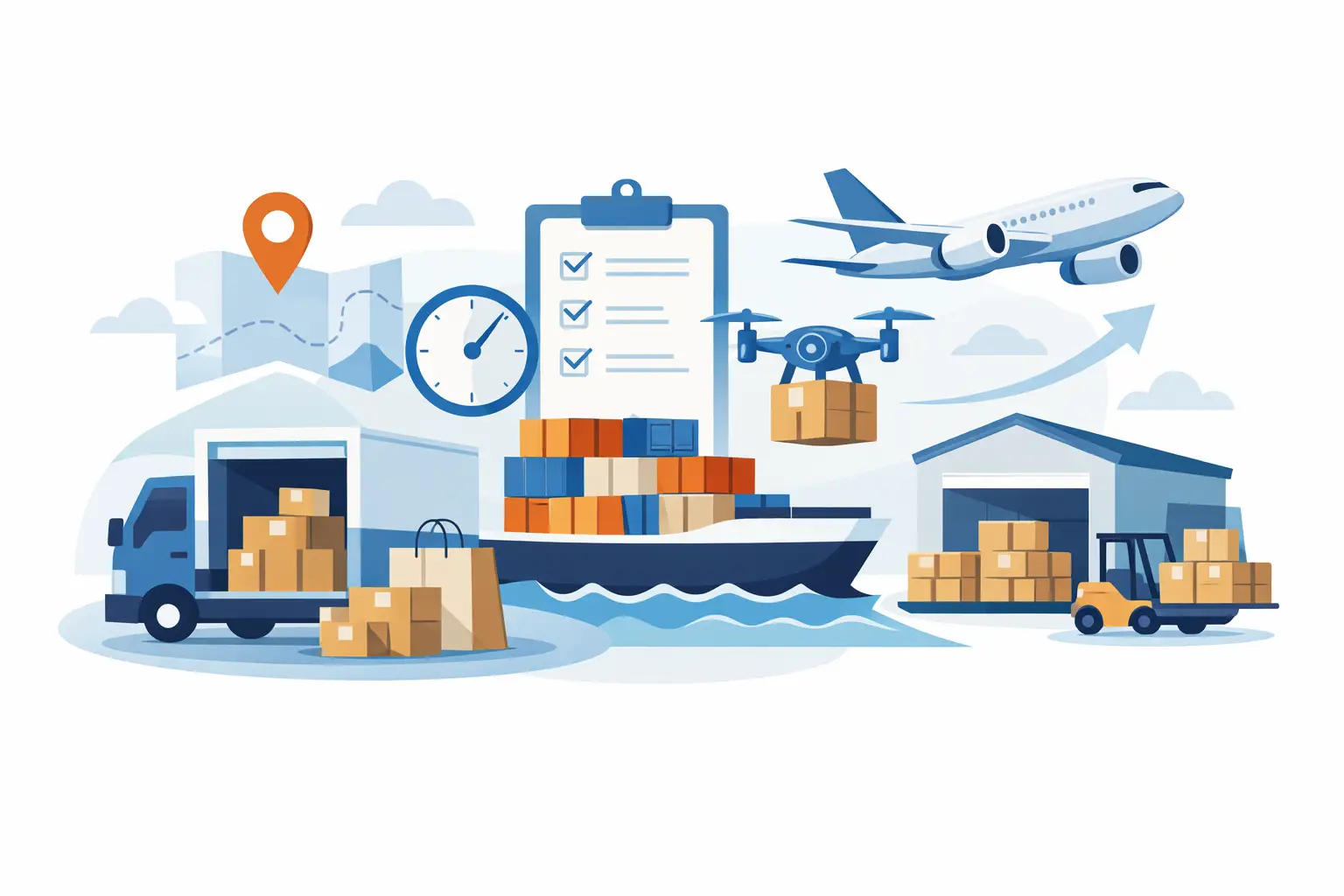
Most established retailers do not rely on one shipping method. They build a shipping mix around demand patterns and service commitments. Sea freight can support planned imports, land freight can move regional stock, domestic delivery can fulfill daily orders, and air freight or express can address urgent exceptions.
This approach creates operational control because each method has a defined role. It also makes cost reporting more useful. Instead of viewing shipping as one broad expense, a retailer can identify how much is spent on planned inbound inventory, store distribution, e-commerce fulfillment, urgent replenishment, and returns.
A simple service matrix helps teams make consistent decisions. Standard local orders may move through next-day delivery; oversized commercial shipments through road freight; bulk imports through sea freight; and urgent, high-margin stock through air freight. The matrix should include shipment size, target delivery date, approval requirements, and the person responsible for escalating exceptions.
Do not overlook warehousing and customs
Shipping performance depends heavily on what happens before and after transport. A retailer may select the correct freight mode and still miss delivery targets because stock was not received, counted, stored, picked, or documented correctly. Warehousing and fulfillment processes should support the shipping promise, not operate separately from it.
For cross-border retail, customs clearance is equally critical. Incorrect product descriptions, missing invoices, inaccurate values, or incomplete permits can delay cargo and add unplanned cost. Retailers should maintain accurate product data and use consistent shipping documentation across suppliers and destinations.
K-Line supports this connected model by combining freight forwarding, customs handling, warehousing, fulfillment, and delivery services under one accountable operation. For retailers managing frequent shipments, a coordinated provider can reduce handoffs and give operations teams clearer shipment visibility.
Build for normal demand and peak demand
A shipping method that works in an average week may fail during Ramadan, holiday promotions, product launches, or end-of-season clearance. Retailers should forecast peak volumes early, reserve transport and warehouse capacity, and review whether delivery zones, staffing, and cut-off times need adjustment.
The most reliable shipping plan is not the fastest plan for every order. It is the one that gives each shipment the right level of speed, handling, visibility, and cost control. When retailers match freight methods to real operational needs, they can keep products moving without making every shipment an emergency.