


Freight Consolidation Guide for Smarter Shipping
A truck leaves half full, a container waits an extra day for space, and your team pays premium rates to move inventory that could have shipped together. That is usually where a freight consolidation guide becomes useful – not as a theory, but as a practical way to control cost, timing, and shipment flow across routine operations.
For businesses moving stock across Kuwait, the GCC, or international lanes, freight consolidation is often one of the simplest ways to improve transport efficiency without changing suppliers, product lines, or customer promises. The value is straightforward. You combine smaller shipments into a larger, better-utilized load, then move that load through the most appropriate freight mode, handling point, and delivery schedule.
That sounds simple because, at a high level, it is. The challenge is execution. Consolidation only works when shipment timing, storage capacity, customs handling, documentation, and final-mile planning all stay aligned.
What freight consolidation actually means
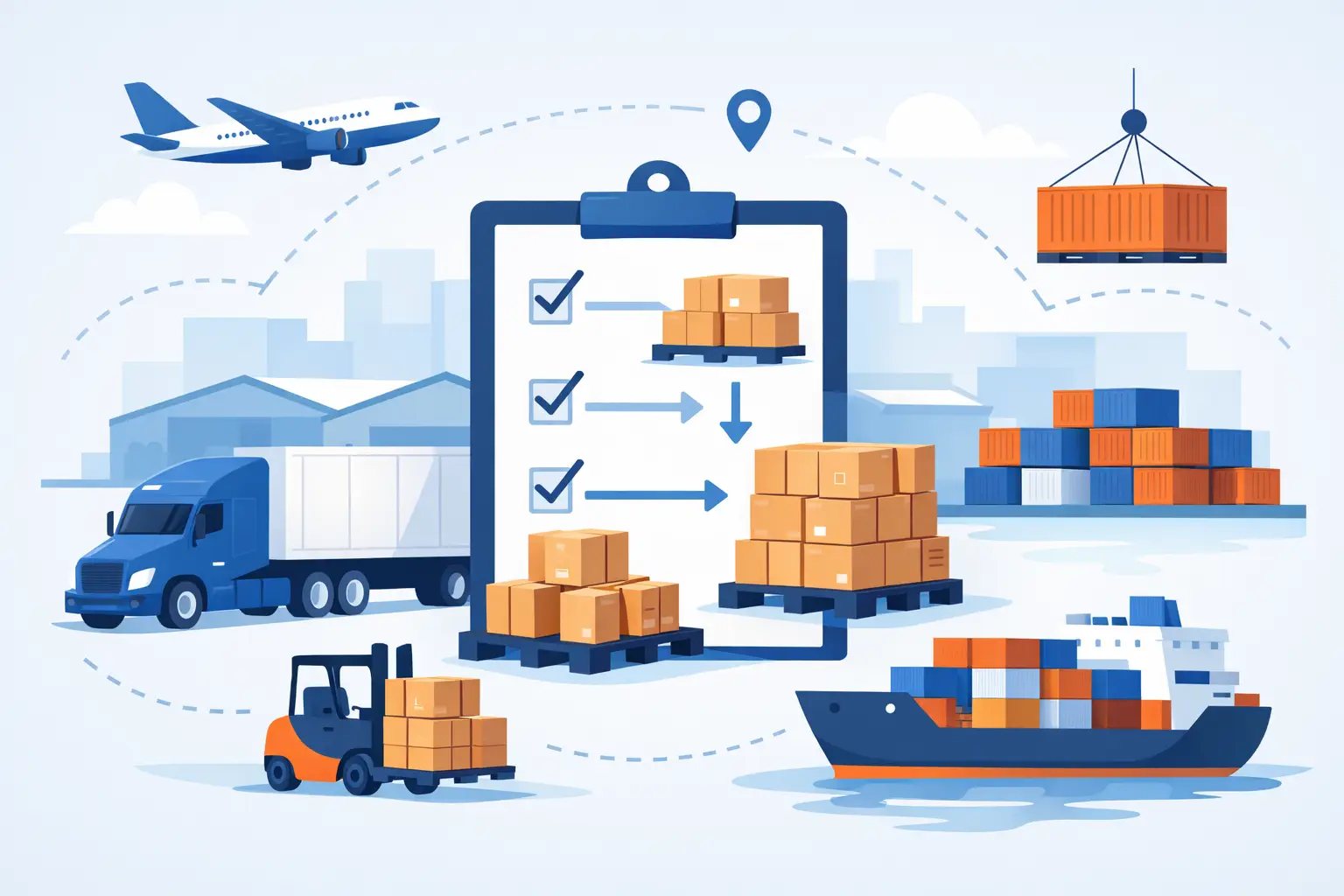
Freight consolidation is the process of grouping multiple smaller shipments into one larger shipment so transport space is used more efficiently. Those smaller shipments may come from one business moving multiple orders, or from several suppliers shipping into a shared destination flow.
In practice, consolidation can happen at a warehouse, a freight station, a cross-dock facility, or an origin handling point. Goods are received, sorted, staged, documented, and loaded together based on destination, route, delivery windows, and shipment type.
For an operations team, the goal is not just to fill a truck or container. The real objective is to reduce unnecessary transport spend while keeping service levels stable. If a consolidated movement saves money but creates stockouts, customer delays, or customs exceptions, it is not an operational improvement.
Why businesses use a freight consolidation guide
A good freight consolidation guide helps businesses decide when consolidation creates value and when it adds risk. Not every shipment should wait for combination, and not every route benefits equally.
The main advantage is lower unit shipping cost. When you move goods in better-planned loads, you reduce wasted capacity and often improve carrier pricing. That matters for retailers replenishing stores, e-commerce operators balancing order volume, FMCG distributors managing frequent dispatches, and industrial suppliers shipping on recurring schedules.
There is also a planning benefit. Consolidation creates more structured shipment flow. Instead of reacting to multiple small dispatches throughout the week, your team can work around agreed cut-off times, staging windows, and transport schedules. That usually improves warehouse coordination and reduces rushed handovers.
A third advantage is visibility. When one logistics partner manages warehousing, transport, customs support, and delivery coordination under a single process, there are fewer handoff gaps. For businesses that need operational control, that matters as much as freight savings.
When freight consolidation works best
Consolidation performs well in steady, repeatable logistics environments. If your business ships similar products on predictable lanes and can tolerate a short staging window, the model is usually effective.
It is especially useful when you have frequent smaller orders moving to the same city, distribution point, or customer network. Instead of dispatching each order separately, you group them by route or timing and move them as one planned load.
It also works well for inbound logistics. If you are collecting goods from multiple suppliers into one warehouse or project site, consolidation can reduce the number of arrivals your team has to receive and manage.
That said, it depends on product sensitivity and service expectations. High-urgency spare parts, medical goods, critical project cargo, or time-definite replenishment may not be suitable if waiting for consolidation creates business risk. Freight planning should support continuity, not delay it.
The main models of freight consolidation
The most common model is origin consolidation. This is where goods are grouped before the main transport leg. Multiple supplier shipments or internal orders are brought to one point, then shipped together by air, sea, or land.
There is also destination consolidation, where freight arrives in bulk and is then broken down for local distribution. This model is useful when businesses want better line-haul efficiency but still need multiple final delivery points.
Some operations use continuous consolidation through a warehousing network. Goods are received daily, staged by route, and dispatched on recurring schedules. This is common in retail, B2B distribution, and e-commerce fulfillment environments where volume fluctuates but route patterns remain consistent.
The right model depends on where delay is acceptable, where storage is available, and where transport cost is highest.
What to assess before you consolidate freight
Start with shipment frequency. If orders are sporadic and destination patterns are inconsistent, consolidation may not produce reliable savings. The volume has to justify the handling effort.
Next, review delivery windows. Some customers accept scheduled replenishment. Others expect immediate dispatch. If your service promise requires same-day or next-flight movement, consolidation may not fit.
Storage and handling capacity matter just as much. Consolidation needs controlled staging space, accurate labeling, and disciplined receiving procedures. Without that, mixed freight becomes harder to trace, and loading errors become more likely.
Documentation is another critical factor. For cross-border cargo, shipment data, customs paperwork, commodity descriptions, and invoice accuracy must be aligned before freight is grouped. One documentation issue can hold a larger consolidated load and affect multiple orders at once.
Finally, consider product compatibility. Goods with different handling requirements, temperature needs, hazard classifications, or security controls may not belong in the same consolidated movement.
Common risks and how to manage them
The biggest risk is delay through waiting. Businesses often assume consolidation always lowers cost, then discover that inventory arrives late because freight is held too long to build a full load. This is why clear cut-off rules matter. A shipment should wait only within a defined operational window.
Another risk is reduced flexibility. When freight is grouped, rerouting one order becomes harder. If your customers frequently change delivery instructions, highly consolidated transport may create friction.
There is also the issue of error concentration. If a single shipment moves alone and something goes wrong, the impact is isolated. In a consolidated load, one problem can affect several orders. That is why scanning, labeling, pallet control, and shipment visibility are essential.
Customs exposure should not be underestimated either. For international freight, combining shipments can improve efficiency, but it also requires stronger documentation discipline. Mixed commodities, different consignees, and varying import requirements need careful review before dispatch.
How to build a workable consolidation process
The most effective consolidation programs start with shipment mapping. Look at your order flow by lane, frequency, weight, cube, urgency, and destination cluster. This shows where repeatable consolidation opportunities exist.
Then define shipment rules. Set clear thresholds for when an order ships immediately and when it enters a staging cycle. These rules should be based on service level, inventory priority, and customer commitment, not guesswork.
From there, align warehousing and transport operations. Receiving teams need to know how freight is tagged and staged. Transport teams need fixed dispatch schedules and load plans. Customer service teams need accurate milestone visibility so they can communicate realistic delivery timing.
Technology helps, but process discipline matters more. A simple, well-managed operation with clear scans, organized staging, and accountable handoffs will outperform a complex setup with poor execution.
For businesses handling recurring regional or cross-border volume, working with one provider that can manage freight forwarding, warehousing, customs coordination, and delivery planning reduces operational friction. K-Line supports this kind of integrated approach by keeping shipment execution and control within one accountable logistics structure.
Freight consolidation by mode
Land freight consolidation is often the most flexible for regional distribution. It works well for recurring store replenishment, B2B deliveries, and GCC cargo that can move on planned schedules.
Sea freight consolidation is valuable when businesses do not need a full container but still want structured international shipping at a lower cost per unit. The trade-off is that sea consolidation usually requires more planning time and tighter document control.
Air freight consolidation can reduce cost on smaller urgent shipments, but only when the timing still supports the business need. If speed is the reason for using air, waiting too long to build a consolidated move can remove the benefit.
What good performance looks like
A successful consolidation program should lower shipping cost per unit, improve load utilization, and reduce unplanned dispatches. It should also maintain or improve on-time performance.
If your team sees lower freight spend but more delivery exceptions, more stock pressure, or more customer escalations, the model needs adjustment. The best freight plan is not the cheapest one on paper. It is the one that protects service while improving operational efficiency.
The strongest consolidation setups are usually the least dramatic. Orders move on schedule, warehouse staging stays controlled, customs documents are prepared correctly, and transport runs with fewer surprises. That kind of consistency is what turns freight consolidation from a cost tactic into a dependable operating advantage.
If you are evaluating your current shipping model, start with one question: where are you paying for space, trips, or urgency that better planning could remove? That is often where consolidation begins to make business sense.