


Freight Insurance for Shipments Explained
A delayed delivery can disrupt a schedule. A damaged pallet, missing carton, or water-affected container can create a more immediate problem: unrecoverable inventory value. Freight insurance for shipments gives businesses a defined financial response when cargo is lost or damaged during transit, subject to the policy terms.
For operations teams, insurance is not a substitute for proper packing, carrier selection, shipment tracking, or customs documentation. It is one part of a controlled shipping process. The right cover helps protect cash flow when an unexpected transit event affects goods that must be replaced, resold, or delivered to a customer on time.
What Freight Insurance Is Designed to Cover
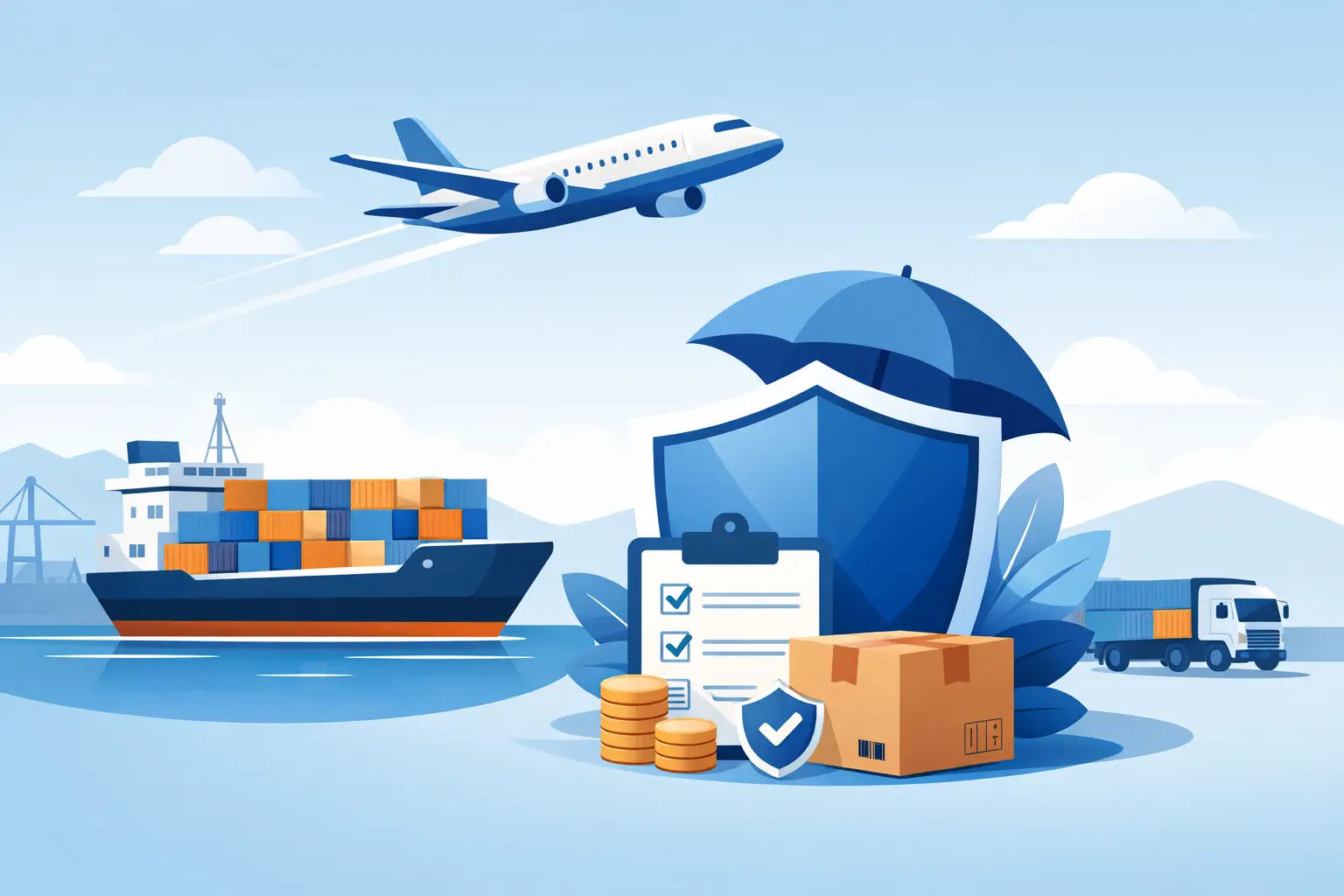
Freight insurance protects the declared value of cargo against specific risks while it moves by air, sea, or land. Depending on the policy and route, covered events may include theft, accidental damage, fire, vehicle collision, handling incidents, and certain weather-related losses.
Coverage is usually arranged for a specific shipment or through an ongoing annual policy for businesses with regular cargo movements. It can apply from the point goods leave the supplier through delivery to the final destination, but the exact transit period must be confirmed. Some policies cover warehouse-to-warehouse movement, while others have narrower terms.
The insured value commonly includes the commercial invoice value of the goods, freight charges, and sometimes a small additional percentage to account for expected profit or replacement-related costs. The correct value matters. Under-declaring a shipment may reduce the amount payable if a claim occurs, while over-declaring can result in unnecessary premium cost.
Carrier Liability Is Not the Same as Insurance
A common planning mistake is assuming that a carrier’s liability will reimburse the full cargo value. Carrier liability is usually limited by international conventions, transport terms, weight-based calculations, or the carrier’s contract of carriage. It may pay only a fraction of the value of high-value, lightweight goods such as electronics, components, samples, or branded retail products.
Freight insurance is intended to close that gap. Rather than relying only on the carrier’s limited responsibility, the cargo owner can insure the shipment at an agreed value under defined conditions.
This distinction becomes particularly relevant for international freight. A sea shipment may involve an origin trucker, port handling, ocean carrier, destination terminal, customs procedures, and final-mile delivery. Each stage has its own operational risks and liability limits. A single accountable logistics plan should identify who is responsible at every handover and what financial protection applies if cargo is affected.
Choosing Freight Insurance for Shipments
The best level of cover depends on the cargo, its value, its route, and the commercial impact of a loss. A routine domestic shipment of low-value replenishment stock may not require the same approach as temperature-sensitive products, machinery parts, or urgent inventory moving across borders.
Start with the goods themselves. Consider their invoice value, fragility, packaging requirements, shelf life, and exposure to theft. Then consider the shipment plan: transport mode, number of transfers, origin and destination, storage points, transit duration, and any seasonal weather exposure.
For many commercial shipments, broader all-risk coverage is the practical starting point. Despite the name, all-risk coverage does not mean every event is automatically covered. It generally covers accidental physical loss or damage unless an exclusion applies. Restricted-perils coverage is narrower and may only respond to named events, such as fire, collision, or vessel grounding.
The lower premium of restricted coverage can be appropriate when cargo has a lower value or a business accepts more financial risk. For higher-value or sensitive cargo, a broader policy may provide stronger protection. The decision should reflect the cost of replacing the goods and the cost of operational disruption, not simply the freight charge.
Questions to Confirm Before Cargo Moves
Before confirming coverage, businesses should verify the insured value, policy period, deductible, and geographic scope. They should also confirm whether loading, unloading, temporary storage, and inland delivery are included.
Ask how the insurer classifies the goods. Certain categories, including used equipment, fragile items, temperature-controlled products, hazardous materials, artwork, and high-value electronics, may require special conditions or may have lower coverage limits.
It is also necessary to understand packaging requirements. If goods are inadequately packed for the transport mode, a claim may be rejected even when damage occurred during transit. Export packing for sea freight, for example, should account for moisture, stacking pressure, vibration, and longer handling cycles. Air freight may require different protection for compression, handling, and security screening.
Exclusions That Can Affect a Claim
Policies are valuable when their limits are understood before a shipment leaves. Exclusions vary, but several issues appear frequently in cargo claims.
Normal wear and tear, gradual deterioration, inherent vice, inadequate packaging, and delays are often excluded. Inherent vice means a problem within the goods themselves, such as perishables spoiling because of their natural characteristics rather than a covered incident. Market loss caused by late delivery is also typically not insured, even if the delay creates a commercial problem.
Some policies exclude losses caused by war, strikes, civil disturbance, sanctions, or government action unless separate coverage is arranged. Temperature variation, mechanical breakdown of refrigeration equipment, and cyber-related events may also need specific endorsement.
Misdeclaration creates another serious exposure. Incorrect descriptions, undervalued invoices, unapproved changes to the route, or failure to disclose the nature of sensitive cargo can limit coverage. Accurate shipping documents are not just a customs requirement. They are part of the insurance record.
What to Do When Cargo Is Damaged or Missing
Fast, organized action protects both the claim and the business’s ability to recover. If visible damage is found at delivery, record it on the delivery receipt before signing where possible. Take clear photos of the outer packaging, seals, labels, damaged goods, and shipping marks. Keep all packaging and do not dispose of damaged cargo without instruction, unless safety requires it.
Notify the carrier and insurance contact promptly. Many policies require notice within a specific time period. A delayed report can make it harder to establish where the loss occurred and may affect claim eligibility.
Prepare the documents needed to support the claim. These commonly include the commercial invoice, packing list, transport document, insurance certificate, delivery receipt, photographs, survey report if required, and evidence of the amount claimed. If goods can be salvaged, document their remaining value as well. The claim usually applies to the actual financial loss, not automatically the full declared value.
For businesses managing regular shipments, establish a simple internal incident process. Warehouse personnel, receiving teams, procurement staff, and customer service teams should know who records damage, who contacts the logistics provider, and who gathers documents. A claim is easier to manage when evidence is collected on the day the issue is discovered.
Build Insurance Into Shipment Planning
Insurance works best when it is arranged before dispatch, not after cargo is already in transit. Include it in the quotation and shipment approval process alongside freight rates, delivery terms, customs requirements, and packaging specifications.
For recurring freight, review coverage as inventory values, shipping lanes, suppliers, and sales channels change. A policy that was suitable for occasional pallet shipments may not be sufficient once a business begins moving container loads, high-value e-commerce inventory, or time-sensitive stock across multiple markets.
A logistics provider can help coordinate freight movement, documentation, customs handling, tracking visibility, and insurance arrangements as part of one operating plan. K-Line supports businesses that need this level of control across domestic, regional, and international shipments.
The practical goal is simple: know the value at risk before cargo moves, confirm the cover in writing, and keep the records needed to act quickly if an incident occurs. That preparation protects more than the shipment. It helps protect customer commitments, inventory continuity, and the confidence to keep business moving.